Introductory Notes
This work is a fanfiction for J. R. R. Tolkien's posthumous work The Silmarillion. With the exception of a handful of invented characters, all characters and settings come from his work and I lay no claim to them. The section of The Silmarillion I work with in this fanfiction is the 'Beren and Luthien' section, contained mostly in Chapter 15 ('Of Beren and Luthien').
The plot and contrivances of this work come largely from a medieval Welsh work usually referred to as The Mabinogion. The original author of the work is unknown to modernity. The Mabinogion is one scribe's collection to tales, retold in their own fashion, intended to show off their literary abilities and learning. The first four tales in the Mabinogion are connected to each other and are referred to collectively as the 'Four Branches.' The branches retell and reform a cycle of pre-modern Welsh mythology that is otherwise largely lost.
The fourth of four branches is titled 'Math fab Mathonwy' ('Math son of Mathonwy'). MfM is an especially convoluted, confusing medieval tale. Many scolars have spent much time untangling the threads of the Four Branches (see bibliography at the bottom of this page) but there are a few knots in MfM that it seems they cannot untangle no matter how they try. One, in particular, seems to confound people; a certain medieval punishment. They seem to find it too disgusting to want to really get their hands into it.
Similarities between plot, character, and themes in these two tales-within-tales ('Beren and Luthien' and 'Math fab Mathonwy') haunted and distracted me for some time, and I knew I desperately needed to write something that compared them, and that thing was going to be itself a fiction, not an essay. It took me some time to figure out exactly what fiction I wanted to write, which elements of both work I wanted to use, combine, or remake. The end result is a strange mixture that, like a child, has distinguishing features from both its parents as well as traits it has developed for itself.
You, reader, have two paths before you; you can go into this story having read the source material for the plot first, or not having done so. If you want to read my source material first, here is a link to my favorite translation of Math fab Mathonwy. If you do not want to, scroll down.
I presume the reader has read The Silmarillion if they have come this far; if not, I insist on that being read first. The notes at the bottom of the page do not explain anything that can be found in The Silmarillion as published as it is assumes the reader has read it in its entirety and that their knowledge is reasonably fresh.
Archive of Our Own Version
This work was initially posted here on Archive of Our Own. That link goes to the original copy of the fic on my account. I am the fic author, that is my account.
The text here and there should be exactly the same. The formatting is slightly different (in example, on A03 the final chapter is split into three parts but it is one large chapter on this page) and the notes are different. I am taking more time to set up the notes and annotated bibliography on my own page, where I am not bound by character limits, and in my opinion this version is superior just because of that.
What this self-hosted version does not have, however, are the comments posted by other readers and my responses to them. Many readers had perceptive and interesting things to say about this work as it was being posted, and I think those comments are worth a read. However, keep in mind that I responded to many of those comments, and in those responses I discussed authorial intent and my own thoughts about what I wrote.
I find that people tend to value an author's thoughts about their own work above anyone else's thoughts. I don't know that that's fair. I do have my thoughts about what I wrote, but they do not have to supersede or replace your own. Be warned that, as the human brain tends to weigh certain things unfairly, it may overvalue my authorial thoughts if you choose to read them.
The AO3 version also has tags and content warnings. This version does not. If you like content warnings, incomplete and spoiler-filled content warnings exist on the other version.
Prologue: Vision
What many do not realize is that they live upon the weft, the single strand of time that stretches ever on, and turns around, and ever on again. All motions, events, and histories revolve, and peoples circle back to where they began. All things are visible from the sight of The One as a divine, labyrinthine pattern, revealed and lost and revealed and lost again. But the many live and die and live on the weft, the forward strand of time, and have even their moments of clarity and revelation on that single strand. They never touch the warp, the thousand taught lines placed by the Powers upon which all else bends.
To touch one of those, to feel its rigidity and yet pluck it, sounds a terror that not everyone can live with. Mortal men can bear it because their time is short, and they do not have to live with divine knowledge for long. Elves, however, tend to be twisted by it. Rarely does the knowledge serve them well.
It is hard enough to see and know the divine underpinning, the web of warp; there is no help for the one who sees the weaver’s hand, or worse, the needle.
Celegorm, once beloved by the Powers, watched the wand be raised in King’s hand, and then the strings pulling his arm, and his gaze went through the stone ceiling of Nargothrond and above the ground and above the trees and rested finally on the Hunter’s hand, high, high, high above.
Chapter 1: Two Princes, Brothers
“What ails you?” Curufin asked.
He had taken one of Celegorm’s hands in both of his and Celegorm could feel that they were warm and gritty with the work of the forge. “You’re not yourself.”
Celegorm saw his hand inside of Curufin’s, a pale stone braced by firm copper on either side. That hand would never tell that he was the son of brazen Nerdanel. The wan, white spirit of Miriel had passed under one generation and appeared in the next, over the thread again.
“There’s nothing to say,” he said, and took his hand away.
It had taken Curufin some courage to ask at all, and that in itself made Celegorm testy. It was not the place of a younger brother to ask such a gentle question, with such kind consideration, and Celegorm disliked reversals such as those.
“What is it?” Curufin asked again, the fingers of one rejected hand curling in. “Do not think to hide it from me. I see through you, and will know if you speak false to me.”
Curufin did not see through him. But figuratively, his metaphor was apt enough. Curufin had sensed the depth of Celegorm’s discontent and would only be satisfied if he revealed a weapon enough to make that hole. “I am disquieted by our guest,” he said.
“Thingol’s daughter,” Curufin knew. “You need not tell me more; I know you love her.”
The heaven-touched princess had come to Nargothrond on bloodied feet a fortnight past, when the moon was new, and King Orodreth had taken her in. She had revealed that she was the very daughter of Doriath that the son of Barahir had sought, who had stolen Finrod Felagund from his kingdom to fulfill his mad oath. That incident had been working rather well for the sons of Feanor, that was, until Luthien revealed the terrible news that had brought her sprinting bloody to the hidden kingdom: she had found gentle Beren and bold Felagund both dead at the hands of Sauron the Necromancer. In her anguish she had banished him from Ennor, but as he vanished he had cast some curse on her, which now kept her in its strange chains.
Since then for two weeks she had slept often, and often cried out in her sleep, and when waking was lost and strange, foreboding when she spoke, making predictions without warning. She had spoken only once directly to Celegorm, and it was to tell him that she saw the eternal darkness gathered over his head, like descending night.
What had then struck him with love? Not grief or melancholy, and not mere beautiful form, though that would be what he let others believe. She was beautiful, a beauty like a bird lifting from a branch, or the sound of waters over stone, the thoughtless, stunning, and feral beauty of the wild world that could not be imitated by artifice. In it was the same power to entrance that nature always had, the glory of the golden sunset, the arresting splendor of the moon.
He was not the only one entranced by her. That could be said to be a condition of having eyes to behold her. Yet he was the one too restless to sleep, too bitter to enjoy his meat. He felt no better than a moth.
The death of Finrod did not rest easy on him either, as much as it benefitted him. Nargothrond was divided; her people had traveled thirty years across the grinding ice, but now one could not know for sure whether any man would follow Finarfin’s son or Feanor’s once he was called. Orodreth knew that so many would rise to Celegorm’s command that he dared not make one himself, and instead sat bowered in his own chambers, where he sequestered the recovering princess.
That surely sat ill with Celegorm, because though Orodreth’s stanch defendants would extoll his virtues, he did not believe any man was virtuous under enough temptation, just like no wolf followed its summer code of honor in bleak winter. The temptation of the maia princess in his rooms would be too much for him, and it would prove too much for Orodreth, once he finished his little dance of self-denial and propriety. His kind were so proud of their ability to dance it, yet it ended in bed anyway, as all such dances.
So Celegorm watched the every touch of Orodreth’s hand on Luthien’s wrist as he took her to and from dinner, her bowed and vulnerable with grief. (Or the Princess Finduilas, who attended her as often as her father, though with maiden awe and deference.) Celegorm even tried to convince himself he was only envious, hungry for what this petty king appeared to have. Yet even when he tried to convince himself that his whole desires were grim and unwholesome, in moments when he spied Luthien’s starlight eyes looking into the distant future he found himself feeling unaccountably lost and naked, outside himself, as thought a gentle hand had stripped him of clothes and fashion and seeming and made him young again, and wild.
Curufin waited through Celegorm gritting his teeth for an actual reply, which was, “There’s nothing to gain from discussing it.”
“Then let’s not,” Curufin replied, but nowhere in his firm voice was a hint of submission. “Let us arrange it instead.”
Celegorm looked deliberately away from his headstrong younger brother. “I have said I will not discuss it.”
“And I won’t. I will arrange it.”
“It cannot be.”
“And why not? She is a maiden unwed and you a man unmarried. She loved, but unwisely, and besides the man is gone. Moreover with Luthien not just this kingdom but many might be ours, with rival houses wedded and diverse aims finally directed at the winning of Beleriand. Idleness and charity have given half the land to Thingol, who does not defend it, and half to Fingon, who does not appreciate it. Let us do better.”
He should have known that that was how the situation looked from Curufin’s point of view. “You might marry her yourself,” he said, “since you sound so keen on it.”
“Do not mock me. I am already married, would I be or not. Nor would I take that which you desired,” he said, and he sounded even to Celegorm’s hunter’s ears perfectly sincere.
Sometimes, though an ocean separated him from the boy he once was, Curufin could still act like him. Sweet, anxious for the happiness and approval of others, and so sensitive that he sometimes had to remove himself to another room to cry. Like all such boys he had discovered eventually that becoming angry instead would earn him less shame and embarrassment.
Celegorm extended a hand to him, but not all the way. He let a few curled fingers gesture as if he would tap his chin, but he did not. “She does not desire me in return.”
“She is grieving. She will not desire anyone. She beds only with Princess Finduilas, where I presume they shed delicate tears and sigh together. But I will tell you what she does desire: the silmarils.”
Celegorm paused, and thought. “She desired one as her bride-price.”
“And might still. But more importantly, that bride-price was set by her father. He would have to go back on his word to not accept it now.”
“And did you find one this afternoon while out walking, then?”
“No, but hearken to this: that she alone, though a mere maiden, banished Morgoth’s lieutenant from this land. What might be done with our focus and her force? I say this: win her, and with her hand we win the silmarils and Thingol with them.”
“But we are back to the beginning: win her. How am I to do that, her without any eyes for me and besides locked in Orodreth’s rooms, where he might chastely gaze upon her, as we wholly trust him to do without any oversight?”
“Leave this also to me,” said Curufin, and did not elaborate.
Celegorm saw steely resolve in his silver eyes, but like a shield they did not reveal anything beneath. Whatever he plotted, Celegorm knew he could not do, and even if he did, it would not accomplish his aims. “Then,” he finally said, “if you make it possible, then I will do it.”
–
Celegorm had been a prince. When his name had been Prince Celegorm, he had been a different man indeed.
In undying Aman the lines between mortal and immortal had been thin, and his apprenticeship to the Hunter, the Vala Orome, had been accepted among elvenkind as both possible and desirable. The Valar had favorite elves; they judged them by their skill and beauty, compared them as if paintings, and taught those with innate talent skills of shaping and naming.
Though some chose only a very few and very select, Celegorm had never been Orome’s only apprentice. The great Hunter needed an entourage, a whole company to ride behind him, to loose arrows and hounds at the bodies of the rebel spirits that had followed Morgoth. To that end Orome taught his followers how to harm maiar and how to hold such weapons as could harm them.
In Celegorm’s memory those weapons were bone-white, and hot to hold, like they trapped the heat of the forge that made them. He once had arrows tipped with that light, but when he tried to remember them, it was as though their radiance burned away their exact shape in his memory. But he could remember the radiance, and could recognize it if he saw it again. In Huan a smoldering remnant remained; in the daughter of Melian, it was surpassing bright.
The only way to harm a maia was to unweave them, to pick at the threads behind them. Not their body, not their spirit. Past those. Behind them. Celegorm had learned how to see that place, though usually one of them had to be present with him for him to find the way to see it. He could remember pulling a divinity-tipped arrow from his ivory quiver and nocking it, and aiming at the face of a fell spirit, and opening his eyes until he saw the substance behind the spirit, of the spirit, the weaving of the world, and could aim into it and pierce it.
The weapons he had now were not like that, and could harm the spirit as easily as they could cut a hole through time. Sometimes, without warning, he could suddenly see the way to make such a wound again, but was powerless despite that to do so. So he used words, steel, and men to fight for him, and each tool despite its keenness felt as blunt as a punch, and each act of war as brutal as holding a man down and squeezing the life out of him through his neck. He was praised for it no matter how it felt for him, called a prince by those loyal and great and terrible by those who hated him, and he did it for a cause he knew was just, and let how it felt to him morph and change and sour and delight as it would.
–
“I tell you the truth,” said Curufin. “Minas Tirith is empty, its master banished by Princess Luthien, and in hunting them we believe that its wolves and werewolves and shades are fled and scattered. What was once your seat waits only for you to reclaim it, and the body of your brother buried in it. Why will you not ride to secure it? Why leave him to rot in it?”
“Because that is madness,” Orodreth replied firmly. “The tower may have been unguarded a day, but it is fully within the Enemy’s territory now that Ard-Galen is no more and Dorthonion claimed. By now it is surely swarmed again by the Enemy’s fiends. Even to get there we risk losing many men.”
“As ever, Orodreth, you think like a hare and may defend your own house that way,” Curufin replied icily, “or might not.”
“Watch your tongue.”
“I do watch, and you would be served to do so as well,” continued Curufin, so unabashed and unafraid that no real king would tolerate it. “The Enemy creeps forward nightly, closer and closer still. Waiting earns us nothing but the territory we defend being slowly chipped away, and you will not even turn your eyes outside these halls to heed it. Did you walk the Helcaraxe for the freedom to sit inside your room with the doors locked and fear to travel the world outside?”
Orodreth stood.
Curufin stood his ground also, unmoving, except for the arch of his black eyebrows.
“I see you have no such fear,” Orodreth finally said. “Go you, then, and recapture Minas Tirith, if you believe it will be no hard task. And bring me my brother, and the princess her lost Beren, and then for all I care have the fortress and Tol Sirion around it and all its lands as your own, and defend Beleriand from there as our friends and allies, since you claim that is what drives you.”
Celegorm knew that Curufin’s frozen smile did not mask fear or discontent. Rather, he was controlling his face so that he did not smile wider, like a snake upon finding a nest of hen’s eggs. “I will do all these things, and gladly,” said he, and left to muster his men.
–
“Well, congratulations,” Celegorm said, all but throwing the saddle onto his own horse. “You are now prince of Tol Sirion if you can manage it, but we ride from Nargothrond and take all those who side with us and against Orodreth away, leaving Luthien in his control.”
“Nonsense. You are prince of Tol Sirion; you’ll need a power base. And Luthien can live closer to her own people if we go there.”
“Fantastic. Has your head split in half?”
“I knew Orodreth was not going to ride to battle himself. He’s a coward, and losing Finrod has him depressed, which is even worse. I suppose I would have been pleased if he actually decided to get off his ass and ride out, but this is what I expected.”
“Minas Tirith is not empty,” Celegorm argued. “At least, we have no proof it is.”
“I don’t expect that either. I believe that it was briefly empty, when Luthien harrowed it, but by now it is surely full up with whatever scum would let its cursed stones shelter them. No, actually taking the fortress would be a fight. Perhaps a fight we could win, and I would welcome that twist of fate too.”
“...And if we don’t?” Celegorm asked warningly.
Curufin laughed. While his voice was not and had never been exact, his laugh was such a plaster cast of their dead father’s that he could not cackle at a jest without freezing the listener’s blood solid. “I would surprise you with the rest! As I said, I will arrange it all.”
Celegorm detested again this reversal of roled he had unwittingly choreographed. Now instead of leading he was stuck following, a position he had not put himself into willingly except for two he had consented to call Lord. (Once the Hunter; once his father.) He reminded himself that the consent he had given to Curufin was conditional. If he could fix the meal, Celegorm would eat it.
If not, he was going to hold the little bastard’s head under a river for as long as it took him to become afraid that he actually would kill him.
Chapter 2: Troops on the March
More than half of the fighting people of Nargothrond rode with them. Among them was everyone who had come to Nargothrond with them and a fair number of those who had been Orodreth’s. Some more considered themselves loyal to Finrod and wished to avenge him, some of even those Celegorm had won to his own service in their hearts, and some would fight the Enemy no matter who was in their heart. They rode up along the Narog just high enough to break from forests and into fields, and then went boldly through them on a road of their making. They met some wandering malcontents, bandits and wolves and blackguards of Sauron, but they were a warband. Anything that did not flee was mastered.
They passed groves of Sinda and villages of Edain on the way, each hurrying in dwindling daylight hours to take in poor harvests. Some opened their doors to them and some barred them. Passing through one gloomy grove of oaks, stuck to each other with thick hanging moss, Celegorm was asked by a Sinda woman seated low and boldly on a branch what army they were, and where from. He would have been overheard if he had said it was his army, so he said it was King Orodreth’s, from Nargothrond.
“From Nargothrond,” the Sinda woman scoffed, and pulled herself up into the branches. “The wild hunt, more like.”
“You think it not real?” Celegorm asked her, but received no response.
Curufin did not reveal any more of his designs to him. Nor to Celebrimbor, though that was no surprise. Celegorm did not think father and son had spoken to each other with more than an icy greeting or hollow platitude for five years now, and he gave it five more before one of them found a way to swallow his stubbornness.
Celegorm did catch Curufin speaking in private with a lieutenant, a man he had inherited from their father, his eyes glimmering. But Celegorm doubted he revealed the whole of his designs to that man either, or to anyone. Curufin deviated from his father and most princes that Celegorm had known in his life by not needing to brag, or to force acclaim out of his underlings. He much preferred the moment of realization, and the fuller it swelled before it came, the better. He would not spoil his enjoyment for mere praise.
Celegorm did not share that trait, but he knew from whence it came: stone-hearted Nerdanel, who had more time to wait than the river that cut the ravine. He might have questioned his younger brother more stringently if he didn’t understand him, but he didn’t want to spoil his fun either.
He waited, less patiently. He minded his blade, its perfect edge. He hadn't used it in a while, as his bow had been more useful in hunting Sauron’s lost wolves. Now he fingered it, checking for cracks in its unnatural sheen, finding none, watching and listening. He let his men speak their concerns to him, returned their questions as would satisfy them individually, and let them drift away again.
He laid by the fire at night instead of setting up a tent, as was his preference. It was comfortable to him, had been made comfortable to him long ago, when he rode with that wild hunt that some now thought a legend. The smell of pine or cedar smoldering was a comfort that lulled him to sleep, and so was the shimmer-like crackle of sparks, the rustle and cries of night-birds and crickets and creeping things around him, or rain, when it came, tapping its white fingers on the leaves over his head. The forest or field that gossiped and chattered was safe. All good things stilled their songs when servants of the Enemy drew near, but even then, those things usually circled their war-camp, disguised by the smoke, not quite daring to break inside.
He slept alone on his watches by the fire. He could not stand a bed-companion. He disdained the meager acts a man could do to a body without rashly wedding it. His thoughts turned to Luthien even in absence, and compared to her, every other body was like tarnished silver, cold stone, rough straw, and the thought of acting out love with them was filthy, like foul, stagnant water, but the thought of her like a purification. She could walk through fire unscathed; the touch of her hand, if she would only deign to give it, could untangle that which had become terribly twisted.
–
When he was a young man, he was given the honor of becoming Lord Orome’s apprentice.
All members of the wild hunt lived in common in Yavanna’s woods, whether seasoned or green, elven or maiar. Those divine spirits were of lesser power and purity than the Hunter was, some of them much less, and they often had less wisdom as well. They would form themselves half-real bodies that they pulled on and off like dresses, man and animal, woman and river and tree. They became packs of wild wolves or hunting falcons, loyal hounds or doves. They would tease the elves, take their shapes to trick them, or make ugly faces and bodies to startle them, and laugh.
Celegorm hunted with them and fought with them. He raced them, and learned the tongues of beasts from them. Then in the soft white mingling, as he learned on his very first gloaming in Orome’s train, he bedded with them.
It was a ritual, by that time, to have each new apprentice lay with the maiar on their first night. If they wouldn’t do it, couldn’t get past the fear of their supernatural bodies and plunge in, the hunt of fallen spirits wasn’t a calling fit to them anyway. It wasn’t intended to be a cruel practice, necessarily, unless one was too precious about intercourse or perturbed by being watched in the act, and made themselves too ripe for mockery. Celegorm had himself only felt a rough copy of the shame he was supposed to feel, an emotion that he had manufactured to fit in well enough at his grandfather’s court. The other hunters had giggled, and hissed ‘Prince Tyelkormo,’ and picked at his jewels as he undressed himself and unbound his ghost-white hair in front of them all. He thought at first that he was meant to enjoy the others, but could not believe it, because he could not figure out how they intended to give him what was offered without sullying him for marriage.(1) (And ‘them’ was all of them, not just thick-thighed and sun-tanned Vanyar women, not just heavy-breasted and sweetly smiling Teleri women, not just those few Noldor ladies haunting the back of the mob with their familiar sharp smiles and the gold bands clamped on their naked arms, but men; even men looking down his white-downed chest as he opened his shirt. He felt vividly, passionately disturbed when their eyes traced him, their strong hands flexed.)
“Not us,” they laughed, and a tall Vanya with beautiful eyes reached and pushed him backward, to be caught by one of Orome’s attending maiar, and that creature wrapped arms around his chest and pressed a lingering kiss on the lobe of his ear.
The maiar could not be caught by marriage like elves could, not if they were careful (and Orome’s were careful). They spread beneath him and pulled him down and laughed and laughed; they were always laughing. It was funny to them. Charming. Cute. He hardly ever saw one really aroused. That took work, and an amount of patience the rarely had himself. Actually feeling what they were doing was dangerous to them. Most of them wouldn’t even put anything between their legs, nothing real, just purpled flesh, shaped into mounds, approximate, and flushed warm. Awful things could happen to a maia who felt too much. They would fake and approximate their bodies, and being false and unafraid they would let him roll them over and rut between their legs as they giggled and teased, play with their breasts or swollen pecs, let him grip and tug at their hair (it wasn’t solid, it didn’t hurt them) when he came jolting and shouting and spilling on their thighs—and shake with laughter that rang around him.
While they were fully aware of what doing this meant to the elves, they did not and could not feel it themselves. Some of them would kiss him when he was done, or call him good, but that was another trick they had learned. Some of the other elves would kiss or cuddle each other, and he would tease and wrestle but he wouldn't cuddle or hold hands or play lovers with any of them.
He had been afraid of falling in love when he was young. He watched several of the other hunters accidentally marry each other, and thought that demonstrated poor skill in a hunter. He was not going to be bound eternally by accident. He knew what he wanted, and it was a greater quarry than that. He had been terribly afraid of failing in it, and would not even let other elves lay close to him in rest.
Nor now, as thin white dawn came crawling back from the West to cast black shadows all over the hard body of Beleriand.
–
In the north they forded river after river until the white water of tumbling Sirion rose as a mist on the horizon. The herds of wargs and wolves increased and were put down as they came. It was not impossible that Curufin’s unsubstantiated claim that Tol Sirion was empty would turn out to be true, or else it had been so packed with monsters there hadn’t been air to breathe.
Celegorm had not been in that region in some time. It was now strange to him. Barad Eithel stood unflinching in the north, but alone. It and Fingon inside of it were practically behind enemy lines, a sword across the throat of the barren north. He figured that pleased his hot-hearted cousin, who would love to have any kind of royal business interrupted by a skirmish; he doubted it pleased all the remnants of the force that his ill-fated father had left behind.
Celegorm wondered, as he peered into the far north, trying to spot those white towers, if Fingon knew yet of the death of Finrod and what had transpired in Nargothrond since. Perhaps so, perhaps not, but when he did, he and Curufin had better be prepared with a base of power that would resist Fingon’s messengers. He was more likely to send out a call for their arrest than anything else, and he might come with it himself.
Try it, little cousin, he thought, as if the gutsy usurper on the throne could hear him, if you know not what is good for you.
Curufin had been hanging at his left side, but he now rode up to him. “What do you see?”
“Hm. Perhaps a bird, an eagle on the wing,” he replied, “perhaps a tenant thrashing with the breeze.”
“Then you have become far-sighted indeed. Do you see Barad Eithel a hundred leagues away, or Thangorodrim, a hundred more?”
“Do you think I would confuse them? I—” he began, but then stopped abruptly.
He did see something. To the north, over the mountains, beneath the sunlight. A mountain higher than all others and a woman in white, standing with her feet on its very peak. As he raised his hand up to shield his eyes, Aredhel, too, raised hers, and aimed an arrow down at him.
He blinked. The impossible vision dissipated. Even the strange high mountain he had just seen was gone, and the unfamiliar white towers behind it, superseded suddenly by the range which had always stood there.
“...What do you see?” Curufin repeated.
Celegorm hesitated.
“A falcon,” he said. “Not an eagle.”
“Really.”
“Easy mistake to make.”
Curufin sighed.
“The eagle is of course more prized,” Celegorm continued, his eyes still on the silent and motionless ridge of mountains, “because they are loved by Manwe. But if you were a rabbit or a mouse, you’d know the falcon is a better hunter; quicker, smaller, sharper besides. The eagle is a king and he has a king’s arrogance. The falcon is a prince and shares his bloodthirst.”
“Make yourself a flock of young, Tyelko, and teach your hunter’s lessons to them. I’ve heard them already.”
“Perhaps I will, if the maid be amenable.”
“Are we worried about amenable?”
Celegorm looked at Curufin, but Curufin did not return his gaze. “How else would a child come? Are we dogs or wolves, that breed bodies without fea?”
“Oh. Of course,” Curufin said, and Celegorm wondered exactly what he had been talking about, if it wasn’t the biological necessity for mutual consent in the making of an elven child. “Yes, at that point, she would have to be amenable.”
“How did you win that wife of yours,” Celegorm asked him, and not nearly for the first time.
“I will not take judgement from a man unwed,” snapped a man whose wife had refused to sail with him.
Celegorm laughed at him, and relaxed in his saddle. If Curufin had any idea what things he had done—but he did not, nor anyone who had not lived in Orome’s sacred grove. All those things were kept secret, and the thin rumors which had once spread had been supplanted by other troubles.
Despite himself, he raised his eyes to the mountains, again, to the place where he had seen the vision of Aredhel. There was nothing, and the mountains empty, and Aredhel nothing but a memory, as she had been for so many years.
Chapter 3: A Maiden in Love
Finduilas(2) swept the fingers of her right hand along the soft ridge of bone that curved and turned beneath Luthien’s brow, beside her ear. She watched her face tense in her sleep, and then relax, as she repeated the gentle motion.
She watched, for a minute, until she was sure that Luthien was really asleep, her beautiful, black face settled into mirror-still calm, her violet lips slightly parted. Then slipped off of the bed—her bed—and backed a few steps away. Still she watched.
She did not know except that she loved her, though with what love she could not say. Some of her most beloved people sat in the sitting-room just beyond, waiting for her; her betrothed, whom she loved with a sun-like warmth, and her twin, whom she loved with tidal constancy. She wondered if she loved Luthien instead like devotees loved the Valar, the brilliant beings whom she, Beleriand-born, had never seen except as distant lights. Was that like loving the moon, and the stars, and their patient, guiding light in the trackless dark, except that they moved, and spoke, and could reach out and take her hand?
Yet when she tried to mentally place Luthien in the lofty firmament, where she ostensibly belonged, Finduilas found herself discontented. She liked that she had Luthien in her room, like she had unexpectedly caught her whole heavenly body in a jar when she went to bottle a moonbeam—she liked even more that Luthien was not elsewhere. She did not usually find herself so suspicious, but she had started jumping to see anyone reach out to grasp Luthien, even her own father.
It was because of the sons of Feanor, she thought; she was glad they were away. Both of them looked at her with such open lust that her hands balled into fists when she saw it.
She left her room, shutting the door quietly behind her, and locking it with her own key. She put it then in her breast, cold for a minute, but warming as she breathed. She walked a short walk down the hallway and found, just as she expected them, Gwindor and Gil-Galad(3) in her sitting-room together, drinking and speaking.
She smiled to see them together, as though it were a rare sight. It wasn’t. Gwindor and Gil-Galad had become such fast friends that it was sometimes the easiest thing to rely on her connection to her twin in order to find her fiance. Gil-Galad saw her coming into the room first, and looked up, but it was Gwindor who stood and walked to her to enfold her in his arms. She breathed in his scent and his solidity, and closed her eyes for a moment.
“She sleeps,” she said at length, leaning back. “Or, she did as I left.”
“One might wonder if you get to use the bed anymore,” Gwindor teased as he walked her over to the low cushioned seats and her brother. The floor-tables and lounging seats were Sindarin furniture, and many Noldor desested to be so physically low. Her father screwed up his nose when he saw a room set up that way, though he tried to hide it and would sit himself down without complaining. Everyone in this room, though, was as much a Sinda as anything else, or more. When Gwindor settled back onto the low seat Finduilas sat beside him and draped her legs on his thigh, which was more than she would ever dare around her father or his lords, and then leaned her head on his shoulder.
Gil-Galad never said a word, of course. Neither had her uncle the King, who had been free with smiles and sparing with scowls. But even that glancing thought of her uncle, his patience and acceptance, made her curl more tightly around herself.
Gwindor passed a hand through her hair. She sighed.
“Faele,” Gwindor whispered.
“Oh,” she said. “Oh, I mean—I practically don’t need it. I’ve had the hardest time sleeping, lately.”
Gwindor hummed. She saw Gil-Galad nod, and knew he was seeing the same departed loved one in his mind’s eye. “I think it’s well that you and the Princess are so fond of each other.”
“I don’t know that we are,” Finduilas admitted. “I’m fond of her, but half the time, I don’t know if she knows that I am there, or even who I am.”
“She knows you are trustworthy, judging by how she follows you around in the hall. She likes you even while not being sure who you are, which I think is an even higher compliment.”
More embarrassed than she ought to be—what a mess she had been these past few weeks—Finduilas felt herself flushing. “I wonder if she thinks I’m her handmaiden. But even so, I don’t mind.”
“There are some who grumble that the daughter of Orodreth serves the daughter of Thingol,” Gwindor admitted as his fingers threaded through her hair.
“Well, how…” she searched for a word. “...miserly. If someone needs help, should a princess be too good to help them? And I supposed to just drink up the attention of others instead? And what a thing to deny someone, the joy of helping others.”
“You can be friends with Luthien,” Gwindor laughed at her. “It’s fine.”
“I would love to be friends with Luthien.”
Gil-Galad began, “She doesn’t mean to—”
“—I know she doesn’t.” Finduilas stole the sentence from him, which was a habit they had. “She is in mourning, even deeper than my own. I know that. I do not begrudge her her feelings, but I do feel some measure of—fear.”
“Fear?”
“When she speaks omens…” she began, but hesitated.
“What has she spoken to you?”
Finduilas fixed her eyes down, swimming, in her mind, through the swamp of things Luthien had uttered, in falling asleep or jolting awake, or even as she lay asleep in Findulas’ bed, leaking through her lips. “They are mixed with nightmares, with things that cannot possibly be. I do not know what to credit as true.”
“Is there a pattern?”
“It will sound odd.”
“Then let it.”
“Weaving.” She picked uncomfortably at Gwindor’s tunic. “She speaks of different things which are, or may be, or cannot be, but ever about a weaving. A string being pulled, or the warp and the weft growing tangled or frayed. She seems to think that something in the very fabric of things has become disturbed. I have several times heard her call her lost love her ‘broken thread’. I do not know if it is grief alone, or if it means more.”
Both of the men went silent for a while as they thought. Finduilas was fortunate to be surrounded by thoughtful and considerate people; then again, she might instead be lousy with people trying their best to imitate Finrod’s considerate thoughtfulness. “Grief distorts it,” Gil-Galad eventually decided, “but only a fool would throw out the picture entirely. Because of her heritage Luthien is closer than any of us to the inner heart of things, and may see things we cannot.”
“Still, I cannot sort out the things she sees true from the things she sees distorted. Or whether the curse of the Enemy has clouded her sight.”
“Listen anyway,” Gil-Galad advised her, “and trust your instincts to know what is true and what is false. You may think she does not heed you, but I can tell already that you two have a connection. It’s a shame you were not raised knowing each other, like you should have been.”
Findulas turned her face into Gwindor’s chest to hide her flush. Gil-Galad laughed at her. “What did I say?”
“We don’t have a ‘connection,’ I just—” she grabbed Gwindor’s tunic so she could shove her face even further into it.
“You baby! Gwindor, you’re the one who needs to take heed,” Gil-Galad laughed. “Your bride’s face is turned to the beautiful princess.”
“Oh, you fox!” Findulas snapped, whirling her head around to glare at her brother.
“I can’t be expected to compete with Luthien,” Gwindor complained, playing contrite. Finduilas could hear the smile in his voice. “I can barely pull off a robe, let alone a proper gown. And how will I learn to sing like that?”
“Gwindor, I wish that you would learn to sing at all.”
“It’s not like that,” Finduilas protested hotly.
But what was it like? She had never felt quite like this about someone before. She worried that she only clung to Luthien because of her grief, and because they both grieved; that she made up a person who understood and cleaved to them. And yet, when she was with Luthien, the two of them alone in silent room, and especially if they laid in bed together, she felt as though she had been carried away to the Undying Lands her father’s people remembered so well, Luthien’s breaths the tides that bore her away, and she dwelled in perfect peace and bliss. Even though she sorrowed she had never felt so at peace, like she floated on her tears.
“But were those not your ribbons I saw braided into Luthien’s hair at dinner today?” Gil-Galad asked.
Finduilas picked up the nearest object, which was a whole entire seat cushion, and threw it at her brother, and then the pad of rushes it sat upon. He laughed, and she snapped, “You beast! Hound! You pig! You don’t understand in the least! When has your head been turned by a woman or man? Do you even know what you’re talking about? You won’t be so proud when the day comes for you, mark my words!”
“Peace—”
“How about you travel far and long and in travel spy some fair maiden? Seeing as you have never noticed or been noticed by one before. I would be glad to have you out of my hair.”
“Ah—” Gil-Galad, and she saw just the barest hint of a twitch in his smile.
She narrowed her eyes at him, lowering the plate she had picked up. (Gwindor, behind her, sat as still a cat deciding if it needed to bolt.)
Gil-Galad cleared his throat.
“Damn it,” said Finduilas. “Where are you going? Why now?”
Gil-Galad breathed out, slowly, and his face fell from a smile to its barest remnants. “Now that they are far from Nargothrond, there’s never going to be a better time than now for me to ride to Barad Eithel to meet with Uncle Fingon,” he said quietly. “The High King and the court do not yet know Finrod is dead, or what has transpired here since he left. I know that Curufin’s people were intercepting the mail, and responding dishonestly. It’s possible they have been sending half-lies to Uncle Fingon for some time, and though I know he is too canny to believe them, if the truth has reached him it was only in rumors. I would go when there are none of their people here to mark my going or my heading, and bring the truth to him myself. He fostered me when our father sought to have me educated, and he will believe me now, when he may not believe another.”
“Oh.”
“I will go another route, one that will keep me safely out of their way.”
“I suppose you should,” she said. “Will you go alone?”
“Only with a companion. I won’t take your Gwindor. I tried to convince Tyelpe, but…” A brief, unhappy noise vaguely conveyed what had surely been a long and difficult conversation. No conversation with their prickly older cousin was easy; he was a good man overall, but contrary, and often worked against himself, bound by obligations he did not like to fulfill. Finduilas pitied him, though she tried not to let him see that.
“No,” she said suddenly. “Take Gwindor.”
“Fin—”
“We had to put off the wedding for the last ten years. It won’t happen in the next three months either. I’ll be fine. I’ll feel better if you’re together.”
“I’ll feel better if you’re together,” Gil-Galad countered. “They’ll surely come back here before we can get to Barad Eithel and back.”
“I don’t like them, but they don’t care at all about me. Father won’t let anything happen, anyway.”
“You don’t have to do this, Faele,” said Gwindor from behind her, shocked.
“I know you want to go with him,” she said. “And I—think you should. You’ll be safer together. It’s… a feeling I have. I can’t explain, but…”
…But when she thought of either of them staying with her and Luthien much longer, she grew anxious. She wanted them both out of Nargothrond. She did not know why.
Gil-Galad stood, and walked to her. Then he knelt in front of her, took her chin in his hand, and touched their foreheads together, like brothers-in-arms did.
What was odd was that she would normally feel that it was all horrifically unfair, that she should be allowed to journey with him, or instead of him, or to do something of equal import. They were twins , carried in the same womb together. She could feel his own heartbeat.
But that feeling did not come this time. She wanted to stay with Luthien, very badly. And as if one of Luthien’s invisible threads had gotten caught on her, and looped on her finger or her ear, she felt a strange but persistent conviction that she was already doing the important task, the one that required her to be in the right place, at the right time.
Here. With Luthien.
Chapter 4: The Tower
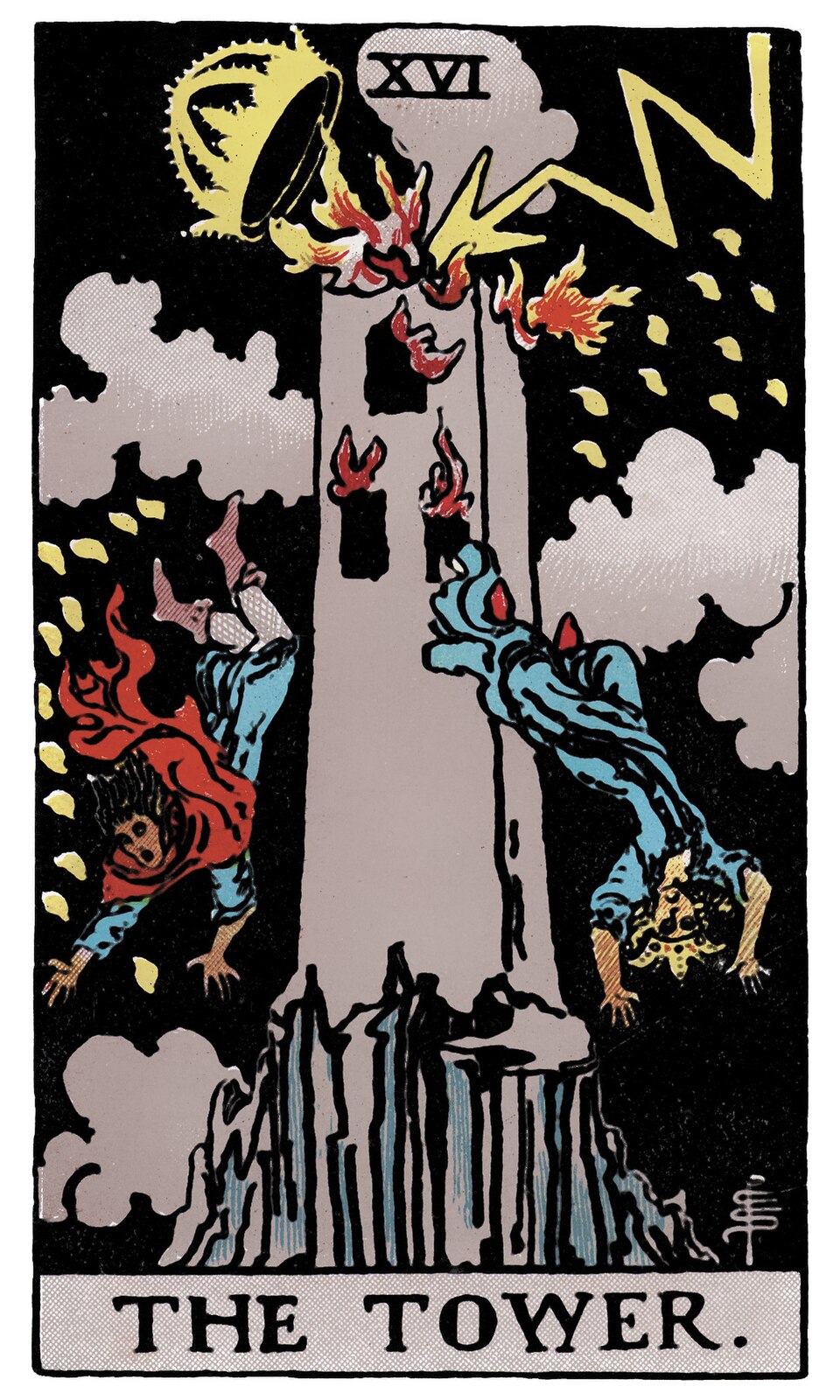
Curufin observed the lands around Tol Sirion with a feeling he eventually had to admit was appreciation.
The land blackened as they drew close. At first that blackness was only the absence of green, as leaves withered on the vine and vines curled up like dying snakes, waters stagnant and dark. But soon it became true blackness as a layer of coal, first dusty, then thick, grew over all things. Great ridged half-circles were scooped out of the earth as though massive wheels had dug in, and scar-like ravines laced the earth by the roadside, gathering shadow. Trees lay on their backs, dug out but not drug away, and poles and posts and fences of metal stood in army-like array, rigid blocks, turning the countryside into a game-board, pitted here and there with blackened, standing, dead pieces. All those, too, were heavy with ash and coal.
As they drew closer yet to the island itself, to the lands that had once been the town around it and outlying farms, where Orodreth had met and wed his Queen, what was once bucolic was now some hadean wasteland of black stone, massive and malformed. At first, Curufin did not understand what he was looking at, and had to bend his mind around its shape.
What he was looking at was all of the stone and metal that had been ripped out of the surrounding countryside, built into a forge the size of a town but laid out like an animal, a complex which was lungs here, and one which was a liver there, arms, eyes, each with specific purpose and that purpose built into its form with vision and precision. There was one building meant only for burning coal, and one only for pouring iron into molds, but those were some of the few that he could still see enough of to make such determinations. Everything else was covered in heavy, black, wrinkled, scaly, awful rock.
He understood it was lava-flow, based on descriptions of the phenomena he had read. He knew there were none of the archaic fire-breathing mountains that once covered the land left here. They only still thrived on the very edges of existence, where the Valar had not hushed their mouths. But lava-flow all the same, with only one possible origin: Minas Tirith itself, wherein had dwelled a spirit indistinguishable from a volcano, except that he spoke.
That spirit had fled, banished by the princess half of his race, and now as they were drawing nigh Curufin could see the tower he had fled had been encased in his primordial fury as well. It looked almost like a mountain itself, limed with rock that crackled and burst and was, illogically, still hot. Not boiling, and fortunately not still flowing, but still seizing and releasing around the tower, which was visible through it only in patches.
Wracking his brain to figure out how it could be, Curufin landed on only one conclusion: the fire-spirit’s burst of fury had been so hot that the tower itself was still cooling, weeks later. He felt, as if a physical convulsion, a sharp pulse of fascination. His eyes drank in the destroyed ground, the stone, the strange substances made when divine fire warped gentle earth into shapes it was not meant to inhabit.
No wonder only ice-hearted Luthien survived the destruction.
He did not like her. He found he did not hate her, either, as he had so viciously hated two-faced Finrod and nearly as much craven Orodreth. Both of them he wanted to strike as soon as they spoke. But for the odd, faun-faced maiden he felt only dull distaste, or perhaps even discontent, as he always felt a little as if nothing was upright around her, and everything out of order. He would try to dissuade brother away from her, despite it not being his place as a younger brother, were it not for the fact that Celegorm was so besotted with her. He had not seen him so passionate, or so content, in a very long time.
Content was what he was, even though he did not even have her. When Luthien was in the room with them Celegorm would watch her, and soften, around his eyes and in his arms and through the whole leaning line of his body, happier to even look at her. She did not return his gaze, did not seem even to recognize him, but Celegorm was less weary and unhappy than he had been for many years with only her presence. Curufin did not know what he so loved about the strange and disrespectful woman, but he would be happy to treat her as politely and respectfully as befit a brother’s wife all the rest of his life anyway. The change that had come over Celegorm in only the past few weeks was so total Curufin could think of nothing that could cause it except love.
All that remained was for her to recognize it, and Curufin realized that it was her present misery in the way, but he did not have time to wait for that. They were on course to have Nargothrond mastered in mere weeks and after that they would need her for getting the silmarils, so, it was really better she snapped out of it sooner.
He noted that Celegorm was looking at him, though subtly, out of the corner of his eye. His visor was still lifted on his steely helmet, or otherwise even that glance would have been obscured. It was worthwhile for Celegorm to forgo safety for sight, as much as it sometimes made Curufin nervous. He had seen the shaft of an arrow sticking out of a gushing eye socket before, and could see it now in his mind’s eye.
“What have you spotted?” Curufin asked.
“Nothing yet, except that the island is certainly not empty.”
Curufin could not see anything under the black stone. “Do you know what it is not empty of?”
“Not yet.”
Celegorm looked at the high tower and fortress walls surrounding it with penetrating eye. If he couldn’t tell what was in there, then they wouldn’t know until they got there. After a moment, he grumbled, “I see no tower worth taking, that’s for certain.”
“Ha! It’ll take some work.”
“Some work. It would take less work to topple it all down and start again.”
“Never. Under this stone is a forge like I have never seen; I would topple the mountains first. It will take work to uncover it, but it will be work worth the while.”
Celegorm chuckled at him, though he kept his gaze ahead. His gauntlet-gloved left hand tightened and then relaxed on the reins of his mare. “Then provided you work whatever master plan you have in your gold-clad head, little brother, I will have the maiden and you can have the kingdom; it is a fair trade to me, and you will clearly have more joy of it.”
Curufin felt like a stone had been dropped in his stomach. He turned fully to Celegorm and said “I would never take your birthright from you.”
Celegorm’s eyes widened. “Hey—”
“I would never supplant you like that. Whatever I should take will—”
“—Hey. Hey, now. I know. I meant you can have the blasted, decrepit forges to do whatever you like with, idiot. You can consider it a gift if it makes it make sense to you.”
Curufin was glad that he was himself dressed in arms and prepared for war; Celegorm couldn’t see him flushing and tease him for it. “Don’t joke about that.”
“Are you nervous?”
Curufin set his teeth for a second, breathed out, and forced himself to be honest with his older brother, who would get the truth out of him anyway. “A little.”
The fields burnt black did not call up good memories for him. Or anyone, he assumed.
Celegorm hummed. He looked over the landscape, as devastated by Morgoth’s conniving lieutenant as all of Ard-Galen. Though one could see green in the distance here, and in what used to be the beautiful north there was nothing, no matter how far you rode. Curufin could see that he thought on a sore subject, and he wondered whether to break the silence.
Since now they were approaching the island, and soon they would have to turn all their attention to commanding their troops, Curufin asked, “What is it about the princess to you?”
“Oh?”
“I know that you love her. I don’t think I’ve seen you so affectionate with anyone but the dog for years. But what is it about her?”
“You dislike her,” Celegorm noted, though lightly.
“I find her unsettling.”
“It is her grief.”
“It is her nature. She is a sort of creature I think our world was not made to carry; you know I mean the fact of her birth. I don’t count it as her fault, but it makes her strange all the same. She…” he began, but trailed off, because he had no words at all to describe how Luthien unnerved him. He would feel better, he thought, if he did.
“I think it is natural to find that unsettling,” Celegorm replied, nonchalant. “When you mark eyes watching behind you, you find it uncanny; so too does the hare mark the shadow of the preying bird, and so too does the utterly silent forest cause your skin to prickle in warning. So too the towering thunderstorm, and even more the silence between lightning and thunder as it stretches, and stretches, and you cannot tell how far off or how great it is. Your sense of scale is disrupted, and you have no way of knowing the size of what it is you are looking at.
“Most are not really prepared to dwell among ainur, not for longer than it takes to receive an omen or a blessing. They have more eyes than two, and they do not blink, and that will unsettle you. You may even find her more unnerving once she is not grieving and can see you clearly. The truth is this, though you will not like to hear it: if you are unsettled with an ainu, you are unsettled with yourself. Most of them are not people, exactly, and what you are seeing is not the solid body of a person but your impression of the ainu in question, and that thing is of course yourself. You are the cloth upon which they embroider their appearance, and your eyes the stabbing needle. Luthien is a person, yet she retains in part that discomforting ability. I think some that dislike her are lacking things that they would like to see in themselves, and therefore they see something hollow when they regard her. You do not understand that I feel that discomfort myself, and I enjoy it.
“But mark your son; he’s being weird again.”
Curufin grasped his reins and swore. He was unwilling to let his brother slip away without comment after saying all that, but unfortunately, he was right. His son was being weird again, and people were noticing.
“Do not think I will let it go at that,” he threatened, but left Celegorm’s smile behind him and directed his horse toward Celebrimbor, who had dismounted while still in his armor and was now, to all appearances, digging in the dirt. Huan was with him, and was helping him. The hound followed him around as often as his master, these days.
Curufin rode up behind him, grabbing the reins of the horse Celebrimbor had let stand. “What are you doing?”
Celebrimbor did not even respond to him at first, except in straightening up and lifting whatever it was that was in his hands. He shook the dust off of it, and with the metal folds of armor over his knuckle cracked a bit of black stone off of it, and revealed it to be a ring-gauge of miniscule complexity.
“Do you hear me?” Curufin asked, tamping down his ire.
“I do. Do you see all this around us?”
Celebrimbor turned ninety degrees to take in the ruins of the forge-complex around them. Curufin, though knowing it would be better to keep being strict with him, considering his behavior as of late, was outdone by the bright-eyed curiosity on his face. “I would like to see more of it. It seems the last master was a sore loser, and left in a bit of a huff.”
“I can’t believe—I am sure he was unhappy, but I wouldn't wreck a place like this even if I was forced out of it.”
“You do not think like the Enemy,” Curufin told him, “or like a general. His priority was to ensure his enemies could not use a valuable resource, which would have given us so much benefit it would have nearly negated the work he had done with it.”
“Then you do think like the Enemy,” Celebrimbor said to him, immediately, not even looking at him, “for I would have never thought of that.”
Curufin carefully and methodically steadied his breathing. He did not want to snap at him, even if he was acting far under his years and station, as usual. “We will undo the damage as we can, in any case, and then you will have use of it. Your uncle has no interest in these buildings except in whatever burrows of hares he can root out in it, so if you like you can play in the rubble to your heart’s content.”
“What, are we claiming someone else’s lands again?”
“Whose lands? Orodreth lived here last and he said it is ours if we can claim it, and that looks like it will be easy work.” Really, he agreed with Celegorm that there was yet something sinister in that tower yet a few miles away and past the river, but still the closer he got without pushback the more he began to entertain the thought that they might get this stronghold as well as his other aims, which would be a pleasant surprise.
“Orodreth told me that the Sindar already lived here, before he built a fortress.”
“I’m sure?”
“There have to be a lot of bodies in those buildings,” Celebrimbor noted, and a bit of teasing wind pulled one of his braids almost out of its lazy fastening.
“What are you—fix your hair. What are you even being so obstinate about? Do you want this place or not?”
“I would love nothing more than to get into these forges,” Celebrimbor replied, still too stubborn to even look at his father. “I mean, didn’t you notice as we walked through—every single building has a special purpose, a particular task it is meant to do with utmost efficiency. That’s incredible. I don’t know how one person or even a team would run it, you’d have to have an army, and chained to the tables. I’d get lost in these buildings like a maze, but don’t you think it’s weird to get that into the Enemy’s work?”
“May my father’s memory give strength to us both, but you’ll learn to think like a warrior before you get yourself killed. We need to use the resources we get our hands on, whether some enemy used them before or not. He did the same thing, didn’t he? These were ours before he took them. Now stop digging like a hound, get on your horse, and at least look the part if you can’t act it.”
Celebrimbor had never been able to act the part, no matter who asked or what occasion demanded it; general, soldier, prince, gentleman, he wouldn’t do it. He had all the air of command and natural charisma a full-blooded descendant of Finwe and Miriel could ask for, and used it exclusively for charming Sindar men.
Curufin’s wife had told him in no uncertain terms that she would be the only woman that her son would ever love when he was still toddling, it was that obvious. And despite Curufin’s hopes that she was just catastrophizing as usual, Celebrimbor had never failed to have chivalrous and platonic friendships with female friends and servant’s daughters and also never failed to find within himself new depths of enthusiastic affection for (male) forge workers, (male) squires and pages, and (male) student portrait-painters, and doing for them the sort of debasing acts that wouldn’t marry him but should have been repulsive to his fea anyway. He would not even make up for it by being otherwise princely either. He detested being in command or even in court, would not listen to people’s complaints or make decisions, froze stiff in combat unless sheer terror shocked him out of it, and had always been emotional, unreliable, and quick to cry on top of it all.
Curufin had before found himself driven to telling Celebrimbor that he had only had one child for a reason, and Celebrimbor used to reply with, “because you got it right the first time.” Now he wouldn’t respond to such a comment with anything but sullen silence, the same sullen silence he wore now as he mounted his horse and pretended, badly, and somehow sarcastically, to be the scion of kings he was.
Chapter 5: The Good King
King Orodreth knelt with his knees on the cold stone floor, beneath a carved figure of Varda Elentari.
It felt like he had lost Aegnor and Angrod only yesterday, though years had passed. Just so, he felt like only a minute had passed since a new dagger had been plunged into that fresh wound; Ingo. Finrod Ingoldo, his brother, the pillar who had held up more than just Nargothrond. His oldest brother. Brave, and gentle, and full of love. Words did not do the crime justice. Nothing did.
He had sent those insufficient words to Galadriel anyway, but did not know if they had ever found her. No response came to Nargothrond, and he could not leave those troubled halls to find her in Doriath. She had clear sight, and the ability to read and converse in omens, but his had always been cloudy, and now was dark. He could not see ahead.
He was not even sure that he wanted to see ahead. All his life on fell Beleriand had been a slow, uncontrollable descent, like he were a dove with one wing pierced, struggling to stay aloft but tumbling, and tumbling. Family, land, and hope all dwindled, a braided rope fraying. If it were not for meeting his wife and having his children, he would count it all a curse, and consider going back home the long way: on his own terms, and with his own sword.
He would not leave Gil-Galad with this kingdom as it was and Finduilas with this world, and when he died he hoped it would be in improving it for them. Despite having no foresight to speak of he had still managed to see the future simply by observing the past, these four hundred years of losing battles, losing ground, and losing loved ones: he would die with his sword in hand, and it would hurt. But if he planned well and did well, he could die before his children, and perhaps in their stead. For he now knew that his half-cousins, who had taken their unwise Oath against the Powers he venerated and they insulted, had now so severely degraded themselves in its service that they would do anything to accomplish its aim. Those once-princes had sunk to such lows that they would even eat their own. With no one defending him, with missives to kin and allies unanswered and all messengers vanishing, Orodreth would put himself in their way, if that was what it took.
He stood and looked up at Varda, to the whole hall of carved Valar, whose stone arms held up the ceiling of the great hall, whose stone eyes looked beneficently down. Finrod had seemed to hear them, sometimes, though he would not speak what he heard aloud, nor bragged about those gifts. He only listened with his face turned up, his lips moving.
But could he really have heard anything? He had been good, but they were all exiled, and exempt from the Valar’s protection. Had Finrod really heard their divine voices as he gazed on these same stone faces, or did he only hear himself? Orodreth did not imagine it was their council that had led him to his death at the Enemy’s hands.
Yet as his eyes scanned the room, as he turned to take in all the solemn dozen of them, he felt something strange on his skin. Like wind, but there was no source; like eyes on his back. His skin prickled, and he slowly turned. When he faced a certain one of the Valar, his great strong arms clutching an arrow and the coils of a snake even as he held up the ceiling, Orodreth felt suddenly as if he were stone himself, stuck to the spot.
Why did Orome look at him?
“Have I done something wrong?” he asked, his voice thin in the silence.
Had he? Had he met all this misfortune for a reason?
“If I have, then punish me,” he said. “Strike me now, and do not delay. Let me not wonder or wait.”
But nothing followed his words, neither wrath nor reassurance. Orodreth waited, but he still felt stuck to the spot, his neck bent up to heed the statue.
“Then do you have a message for me? An omen I should heed? Show me, and I will heed it.”
Again, there was no response, but neither was he free.
He could not imagine he was being blessed, not after accepting Namo’s doom; what else could this be?
“Can I be of service?” he asked, and felt as he asked his arm jumping up to reach, suddenly mobile. “I thought we were not fit to serve the Valar in our reduced state, though I would that it were otherwise. If you have use of me, then use me.”
Still he heard nothing. Perhaps he simply could not hear.
Then, he felt something. Something touched the palm of his right hand. It tingled, and then felt pressed, as if something had been put there. He looked, but there was nothing there.
He looked back up at the statue of Orome, and felt nothing again. He was adrift with half-questions, unformulated, and did not put any of them into words before he felt a silent approach.
He turned to the entrance of the hall, and saw Princess Luthien, who was staring at him.
“Well met, Princess,” he said, though he had felt a stab in his heart when he saw her. He was not sure of the hand that dealt it, whether it was sorrow, guilt, or confusion, but its sting was fear.
“Well met,” she responded. As she spoke her odd eyes swiveled from a place somewhere up high to look across at Orodreth. Those eyes were night-black, and had pinpoints of lights in them like twinkling stars, and like stars they moved, darting like comets or shining and bursting and fading. Orodreth did not know what keen senses or powers those lights illuminated, but they focused on him now with uncommon keenness, unlike her usual despondent state.
Orodreth himself still had tree-lit eyes, golden and glowing; he lowered them as if in courtesy, but in truth, he felt unnerved. He could not think of this woman as a kinswoman, as his mother’s cousin. He would rather acknowledge her as a maia, but she had not yet claimed that heritage out loud and so it would be rude of him to acknowledge it first. “Can I do anything for you?” he asked.
Because of the nature of her eyes, he could not quite tell where they were looking, but his right hand tingled again.
“Nothing which you have not already done,” she said.
“Then what would you have done? If I cannot do it myself, and as any man I have my limits, perhaps I can have it done.”
“I would ask for this,” she said. In a moment her face seemed to rearrange, though nothing visible happened, so that he was looking at an elf, something that his eyes could take in, a night-black woman. “Take sail to the Undying Lands, and ask the Powers of this world to come and undress this land, for I know not who will do it now.”
Orodreth balked. “I would heed and obey,” he said, because his heart fluttered like a bird with the demand that he did. “But I cannot, for I am exiled.”
“So I know. You asked for what you could not do.”
“But then,” said Orodreth, and felt himself split, but then did something he normally would not do, and promised for another. “But not so my son, a prince of this land, and born in it, to a mother of its blood. The father’s crime does not stain him. If you bid it I will send him, and I cannot imagine he will refuse the call.”
“You could call him, but he could not go.”
“Why do you say so?”
“Because he took his leave in the dark of the night midnight last, to journey to the court of High King Fingon with only one companion beside him. They will take a slow and winding way to be sure they are undetected. It will be nearly a year before you see him again, because he will be caught in Barad Eithel all through the winter.”
Orodreth found himself without words for a time. Finally, “He did not tell me.”
“He would not, for you would not let him go without a retinue.”
No, he would not. It had never been safe to travel Beleriand, and now he would not even do it himself. And what would he tell his mother? And who could he send in his stead to fulfill Luthien’s request? No one that he had the right to command so, except—
He had for a moment an even madder thought, but he dismissed it. To send a daughter across the waves—and worse, while she was intended to be married. The marriage was put off, and put off, because of war, and grief, and people who should be there for it coming and going. Their love did not waver but he watched Finduilas grow weary of waiting. No, he could not believe that he had even thought of sending her. “Then there is no one I can ask to take such a perilous quest, because to anyone else it would be a King’s command, and they would be compelled to obey.”
“I know,” she said. “Don’t ask for impossible tasks. You have enough on your hands already.”
They exchanged some politeness, and then she left. Once she was gone Orodreth found himself in wonderment, uncomfortable with what he had just said and agreed to. For what would he send his only son across the sea? He did not even know what Luthien intended for him to do once he reached that far shore; he thought she had explained, but now that he tried to remember it, he thought that she had not. He felt for a second incredibly small, like a little furred creature; not like he was being hunted, but like he was a mouse trying and failing to understand what a bear was doing.
He felt the need to see his daughter. He would not interrogate her about Gil-Galad; he knew that her twin had told her his plans and he did not want to punish her for keeping that confidence. But the loss of her uncle had hit her hard, and he thought, though it must have been from her mother, that she was developing some foresight of her own, or another, similar gift; she had been restless and distracted, and distant-eyed, like a maiden newly in love.
Chapter 6: A Dragon
There was no more bridge crossing the Sirion to Minas Tirith. They had to build a new one.
That was not a difficult matter for a Noldor host. A bridge was quickly and efficiently fashioned of discarded stone and wood recovered from blackened trees and fences, the soldiers diligent and the lords directing. Celebrimbor refused to sit still and stately as usual and fussed with some equipment he had found, his gloves now caked in ashes. Curufin sat straight-backed and watching, holding himself still. Celegorm rode across and around, testing, scenting, pacing. Huan followed him, occasionally growling.
As he passed once by his brother, Celegorm asked him, “Do you hear it yet?”
Curufin tried once more, but heard nothing. “It is your tuned senses that allow you to hear anything but hammering. What is it?”
Celegorm smiled. “I have no idea.”
“I know your unfortunate predilections,” Curufin sighed, “but whatever we find, remember to act with some decorum.”
Celegorm laughed, high and sharp, as he passed him by. Curufin, having spent nearly all of his adult life with him, was one of the few people alive to be burdened with the knowledge that Celegorm had unusual reactions to some stimulating sensations, especially fear and pain. “There is nothing in there that will tempt me, I promise you that much,” he cackled.
He passed, too, by his sullen nephew, who had undone several pieces of his armor and had his helm still bound to his horse, a state of dishabille that Celegorm would refer to as ‘asking for it.’ ‘It’, in this instance, was ‘decapitation’. “Are you ready for action, pup?”
Celebrimbor, predictably, looked beseechingly to the heavens. “Yes, I’m ready,” he complained.
“I can’t help thinking you don’t look ready.”
“It’ll take me two minutes to put it all back on. It’ll take approximately two hundred minutes for us to get in there.”
Celegorm laughed, but while he laughed, he recognized that Celebrimbor was likely right. Between getting to the island and getting through the rock around the tower, them needing three or four hours of solid work was a good prediction. He would guess that the clever young man had a more exact prediction somewhere in his skull, but he had learned long ago to underperform at all times so that little would be asked or expected of him. Celebrimbor had been getting away with less than his best for centuries now. “Keep your eyes forward, or you might lose them.”
“This part is really boring,” Celebrimbor responded bluntly.
“Aren’t you excited?”
“For what?”
Celegorm couldn’t help but laugh. He had no idea how someone who had started out so much like his father had turned out so different from him. He knew that, beneath his collected exterior, Curufin was practically trembling to get in there and maul something, and there was nothing Celebrimbor wanted less. It had simply been the will of the One that Celebrimbor be woven differently. Any attempt to force him into form only made snarls and tangles. Celegorm reached out and mussed his already shabby updo as he set his mare to walking again.
“Don’t do that, he’ll yell at me,” Celebrimbor complained as Celegorm retreated. “Like he does every damned time I have a single stupid hair out of place.”
“We’ll get you back to your comfortable chair and your pretty boys soon enough, princess,” Celegorm shouted at him as he passed out of range. Then he laughed his way through his nephew’s ire, fading quickly behind him.
–
The bridge was finished, and the army passed over it. Over the running river, they passed into a dreadful silence. The tower was not empty, and whatever was in it was no sulking band of bandits, no shivering refugees. There was yet something fell inside of Minas Tirith, not banished, not harrowed, and trapped by the dome of rock which now encased it.
Celegorm knew it was not wolves or were-wolves. He knew what those smelled like, and this was not that. He knew it was not the evil spirit that had dwelled there either or any of its kin, because the army would not have gotten so close so easily, and nor would he have failed to recognize that sensation. This was an animal, and it was malign, and he had not ever scented it before.
His thumb circled the hilt of his sword. He otherwise contained his excitement.
Curufin’s men, at his direction, set to finding a way to free the great front doors from the stone encasing them. Curufin could not resist involving himself in the engineering, but Celegorm hung back, watching.
He felt it would be wise to be ready for something to spring out of the doors once they were finally cracked open. Anticipation formed a thousand possible monsters in his mind, and his breath quickened, then slowed when he forced it. He had lost many of the finer senses he once had, princely or borne of divine service, or else had had them ground down to dullness, delivering him interpretable sensations instead of instinctual and instantaneous understanding. Oratory and debate, tracking others and concealing himself, quick thinking and quick drawing, and inventing shocking ways to subvert expectations and break boundaries had all made him a fine monster-slayer once. His opportunities to use those skills, once noble, were now ill more often than not. Now he was begged to let his abilities decline, and faced with so few excusable uses for them he had. Only hunting made him nearly as sharp and bright as he once had been.
After some hours of steady work, passed in silence and discomfort as the white sun turned in the sky, once sense which had not dimmed served him well again: desire. The stone doors creaked finally open, and the stench of evil poured out, just as he had so fervently wished.
A great rush of black followed the foul scent, like a black silk scarf that unfurled in the wind. Birds, hundreds and then thousands of birds, black and screeching like metal wrenched; like crows and not like crows. They fled the stone enclosure that had kept them trapped, some night-feathered, some gleaming white from where their flesh had been cannibalized. On the ground, the worst-faring ones hobbled and rolled.
Horses reared and cries rose, but the forces of the Noldor were not unprepared for airborne enemies. After his shouted command, Celegorm’s archers raised their bows. Blood and bodies began to rain.
Celegorm drew, also, felling one creature, then another; when one dropped nearby, he saw how much larger it was than the crows they superficially resembled. He kept his attention split between the flock now above him and the open doors, and for good reason, it turned out, as he looked down just in time to see Curufin racing through the doors and inside.
He barked at one lieutenant to stay and command, and then at another to follow him in. His mare raced to the open door and inside without a flinch, and then the bright day became deep night in an instant.
That was only in part because the stone above blocked out the sun. There was also the press of creatures, some winged overhead, some earth-bound and clambering on the ground. Around them swarmed the fury of those who had survived, crawling on the corpses of those who had given in. Celegorm could not always see what his mare cracked under his hooves, or what flesh and bone his freshly-drawn sword found to cleave, but all he heard was pain and desperation. The enemy’s creatures, not even keen enough to be his servants. For these the death of the body was enough, the blunt blade to snap the thread of sinew and vein. He would need no divine weapon; fortunate, for he had none.
But then, when he and his men had been inside the stone-shrouded fortress walls for only a minute, there was a flash of light like a forge bellowing to life. He looked, and saw, as in his heart he knew he would see, the form of his brother, arms open, throwing wide the doors of the tower itself.
The creatures around him shrank and scrabbled back. Moving against them, the air rushed into the maw of Minas Tirith.
There was a moment, then, of near-silence, as the creatures cowered in fear and the elves turned instinctually toward that light. Its glow increased in a second from forge-light to sunlight and illuminated the broken, crawling limbs of the layers of corpses that they now saw they all stood upon; then, in the next second, the silence was broken just like the darkness with a fey and wild sound.
Curufin’s laugh sounded just like their father’s. That was the laugh of triumph that resounded when he had forged masterpieces, and when he had set the ships of the Teleri ablaze. That was how Curufin had laughed in exhilaration after battle and which had come out of him (while his body remained frozen) after he learned that Finrod had died. That laugh rang around the tomb of Minas Tirith like a bell until a louder noise swallowed it, an unholy, deafening roar.
Celegorm’s ears burst. His vision glimmered and flickered. Training alone kept him on the back of his horse. He watched, stunned, as a flailing, sodden, blood-red tongue emerged from the doors of the tower, and the tips of curling white teeth behind it, as though the very tower had turned into a starving, hollow beast. Claws, yellow and serrated on their tips, dug into the entrance and broke it. The beast behind surged, and surged again; in the light that emanated from within its open gullet he saw Curufin stumbling backward, but on his feet, and laughing.
The entire tower convulsed as the beast slammed against it. Spasming, it vomited spools and spools of monster, miles of muscled, scaly hide, rows and rows of claw-tipped legs like a lizard and a centipede at once, spirals of bat-like wings that thrashed and flapped; a thousand limbs on one lithe, repeating body, which coiled and coiled. When free of the tower it lashed and rolled. Its great body wound around the dome of stone three times, like thunderhead stacked on thunderhead.
It had to have been root-bound inside of the tower, eating its own tail, and yet, even as it finally broke from the entrance, a slurry of winding, seething, maggot-like creatures poured out behind it, their tooth-ringed jaws open and screaming. Offspring, and nearly a hundred of them.
For a moment, watching her whirl above his head like a forming tornado, his mind was blank. He rationally concluded that this was probably what they were calling a ‘dragon,’ based on Angrod and Aegnor’s descriptions as he remembered them, but they had neglected to mention that they had a thousand arms and a thousand wings and probably as many teeth in her maw, twice as wide as the neck behind her. They had mentioned that the scream would make him forget his own name, and damn him if he knew what that was at the moment.
He did know one thing, the thing he could not forget, which he had learned when divine hands had gripped his own and worked them through the movements. A grin split his own face as he reached behind him, grabbed an arrow, and fit it to his bow, even as all his men stood horrified and hypnotized around him.
I am blessed beyond all others, he thought, just as he had once told Orome, and as the Hunter taught him he aimed to kill.
He felt the power of his shot reverberate in his arms when he loosed his first arrow. It did not kill the dragon, but it certainly hurt her; the coils above him thrashed and tightened around the tower, cracking it. She howled. Celegorm’s ears rang, and his terrified mare reared so badly that he was instead forced to jump off, rolling into the piles of corpses at his feet, which nearly melted under him. The scent would have been nearly intolerable if the shrieking and writhing of the dragon overhead were not so domineering. Not far to his left, near where he had just been, one of her coils slammed onto the ground and smashed bone into rubble.
Some of his men had collapsed under the strain of her voice. One he saw hacking at a dying dragonet; another was fighting and losing, the juvenile dragon tightening coils around its body and its hungry maw around his buckling breastplate. He did not see Curufin.
He wouldn’t be able to find him with a dragon in his way. He took to his feet, running over soft, pulverized flesh and sharp bone, and took aim as he ran. He knew the second shot was not as good as the first, but he shot it at such an angle that it had the intended effect of confusing the beast, making her think he had run the other direction. He caught sight of her great, horn-crowned head, dripping with blood from threshold-torn scales, as it rushed past him and to his horse. He pulled and nocked another arrow as her serpentine jaws opened and then snapped down on the beast, catching all but two of her legs in one bite. When that well-aimed air struck and stuck in her jaw, she spit the broken beast back out.
Mortal arrows would not kill her. CElegorm readied another anyway, and in firing it directly at one of her eyes, he learned that she had none. The sockets were vestigial. She winced again when it burrowed into soft flesh, but there was nothing truly important in those two dark slits. She was scenting him, listening, following the path of arrows.
Her jaws opened and the red flesh inside them worked. He saw one of her young stumbling into one of her many, many feet as it burrowed through the corpses on the ground. It climbed over her claws, tumbling and blind. Celegorm corrected his aim and killed the spawn.
Her head turned to mark its death throes. Celegorm replaced his bow—nothing was worth losing his most treasured weapon, which he had kept since he was gifted it in Orome’s grove, and damn the time lost properly securing it—and drew instead his blade.
Though it may not have been thought, it was one of the very few wielded that day that had not been forged by Curufin (who made swords like he dealt insults). That was because it was Feanor’s instead, by him forged, by him wielded, and by his death seared black. Maedhros had not taken it with him, and Maglor had not dared to bare it. Celegorm had taken it up as Maglor’s commander of troops, and then neglected to return it to his eldest brother after he yielded the crown.
He gripped the hilt of the fire-blackened blade with both hands and snarled at the beast. The unnaturally hot steel never failed to make him smile.
It flexed some of its many claws into the ground, and then lunged at him. Celegorm dropped, plunging into the squishing, rotting corpses beneath him, just long enough for her head to soar over him. Then he jumped up again and with a great swing of both arms cut off one of her legs; then another as it came, and a wing, limbs piling around him as the great river-like body rushed past him. She caught onto his trick, but could not correct her course. She was so huge, and took up so much of the space in the concealed fortress, that though she tried to turn around she could not find the way. Her coils trashed against the tower, against the walls, and her strength was such that she began to crack the stone that held her encased.
For a moment she was confused and disoriented; with a shout Celegorm plunged the blade into her side. She doubled her efforts to turn around and face him, and in doing so so heavily cracked her strong upper body against the sides of the fortress that the ceiling above her crumbled. The light of the sky pierced between the cracks like silver blades, and in pieces, slowly and then gaining, the ceiling began to fall.
Celegorm did not dive this time. He braced himself, gripped the sword in both hands, and raised it up. As the stone fell on the body of the dragon, and as she fell on him, she was pierced on the blade of the sword.
He bent, and then buckled. His knees hit the ground beneath him. His vision went black again, but he did not fade; the rising, keening calls of the dragon were so sharp he could not even pass out from the pain.
He tried to open his eyes but could not, and found he could not breathe, either. He was so hard pressed against the convulsing coils of the dragon that he had no room to do either. Instead he tightened his grip on the blackened sword and with all his strength moved it, barely an inch, like a needle widening a tiny hole in woven fabric. He pushed, and pushed again, and felt the blade catch against bone. He braced himself, he knew not against what, and when he expelled his breath he felt it coil against his face and taste raw blood with his tongue. With an effort that strained his arms he forced the blade down, which resisted, and resisted, and finally in the last moment of his strength he cracked open the spine of the dragon and fell through her flesh and to the ground below.
The world split open with her. He could see again, though his head was swimming. Through the cut in her side he spilled out, slick with the black blood that poured out of the wound. He was shaking with her screams of agony, and for a minute, he could not stand. He could only crawl away from the thrashing, split coils of the dragon, soaked in her stinking blood and viscera, so coated that he slid off of anything he tried to grip, excepting only the sword, which had been nigh-welded to his hand.
He saw a light ahead as the doors to Minas Tirith opened again. Curufin appeared in the light, walking out. When he had walked in, Celegorm did not know. He now carried something with him: a little cloth valise, like one might take on holiday. It was green, embroidered with knotted serpents. Celegorm recognized it as Finrod’s, a possession he had taken with him on his final quest.
Celegorm looked up at Curufin, panting. Curufin spotted him, and straightaway ran to him. Celegorm saw him shouting, but could not hear a word. Nor could he stand, though he tried. When Curufin reached him, he dropped the valise and reached out to grasp his shoulders. He spoke to him, and Celegorm shook his head. Curufin’s hands rapidly roamed his body, pushing his hair back as he tested his scalp, then his neck, and ran down his spine, and over both sides; finally, his left rested on his torso and the right over Celegorm’s heart. Celegorm watched Curufin buckle forward in relief.
Celegorm managed to shakily gesture to his ears. Curufin nodded. He reached up again to grasp both sides of Celegorm’s head, covering the offending eardrums, and pulled it firmly toward him. He leaned forward and placed their foreheads together, and let the dragon’s blood soak into him as he held his brother in warrior’s embrace.
Then he stood, grabbing the valise in one hand as he did so. (The dragon’s blood, quick to spread, was already seeping into the fine green embroidery.) The other he reached down to grasp Celegorm’s left hand, since his right still clutched his father’s sword, and he pulled Celegorm to his feet.
With a little wobbling, he stood. He saw the dragon was not dead. The back half thrashed, and the front half pulled forward; she was held together by a few inches of muscle, and sought to snap off the back half from the front. He could see her great violet muscles contracting through her split side.
Curufin began to pull him away, and, after a moment of confusion, he followed. Quickly, they left the fortress and found themselves back outside, where their men had bested the birds but were now struggling, hard-pressed, with the dragon-spawn; even more multiple than they had seemed inside, and some much larger and hardier than the infant Celegorm had struck down.
Celegorm regained his hearing and his bearing when Curufin mounted his horse and then tugged Celegorm up behind him. He heard Curufin bellow for a retreat and was astonished.
“We do not have to retreat! I’ve already half-killed the mother, we could—”
“I know we could, Tyelko, you incredible idiot,” Curufin spat in response, “But that is not the plan.”
Curufin called for the Noldor to follow him; everyone followed, Noldor or not. He screamed as he ran—and his ability to scream loudly and clearly through any activity had never been anything less than incredible—that they were to take back the way they came, and to draw the monsters with them. None demanded explanation. None would demand explanation from Curufin. Firing arrows behind them, shouting defiance, the army turned to the south, and rode.
The dragons, bred predatory, came screaming after them, snatching at the rear. Soon there came a terrible cry, like the earth was rending open, and half of a dragon rose from the now pulverized ruins of Minas Tirith.
She took bleeding into the sky, shedding gore. Slowly, convulsing, she pursued.(4)
“Is the plan going well?” Celegorm asked, turned backwards in the saddle, tied to Curufin by his sash, loosing arrows at the dragons that followed.
Curufin laughed his echoing, revenant laugh. “Incredible,” he promised, and pointed the way forward with his blade.
Prologue in Heaven(5)
Under the boughs of the beeches, silver-barked and bright with ember-red leaves, Prince Tyelkormo lay beside his cousin, Princess Irisse.
He thought she was falling asleep. The honey-light of Laurelin dripped down the hills to where they were bowered in Orome’s forest, sweetening the tip of every curled vine and toothed fern, touching even the tiny upturned faces of the potentilla and clover spread beneath them. He felt heavy himself, and too comfortable, as though that gilding weighed him down, and being kept in place too long he began to think, as often he did, though rarely to good effect.
“Cousin,” he asked, “do you sleep?”
Her brow furrowed and, in the undergrowth, her unadorned, clay-brown hand curled around the stem of a violet crocus, and nearly plucked it. “Not quite,” she replied, “though I think I dream.”
“Of what?”
“Pleasant company.”
“Ah.”
“Silent company.”
“What a lovely dream.”
“I was enjoying it.”
“I know you are not here for my sake, or any man’s,” he said, and Irisse simply nodded, her eyes still closed. “And oddly, I do not think you are here for Orome’s sake either.”
She hummed. She thought. “When you say it that way, I’m sure you’re right.”
“Am I?”
“I do the things I do for my own sake. Who doesn’t?”
“Do you think so?”
“Yes, and so do you. I’m not sure why you would even phrase it as a question. I put myself first, though not against anyone else. If I want what another does not I will discuss it with them, but not give way as if they deserve their own pleasure and I do not. I give my Lord Orome more leave yet, and presume he knows best, but why would I do that if I did not believe he did know best, or if it was not in fact my will to do so?”
“What would you do if you were certain your will ran counter to his?”
“What did you do?” she asked, cracking open her pearl-white eyes, whose assessing gaze had been fixed on him even before she revealed it.
“Nothing at all.”
“Really.”
“Will you not entertain the theoretical?”
“I am not here to entertain. Do you see my singing for my dinner like Finderato, or fluffing my peacock feathers for attention in court like Findekano? I will not entertain any theoretical. Tell me what you did.”
“Nothing.”
“Then you are considering doing something.”
“I am thinking,” he admitted, lifting himself onto his elbows, so he could look down on her. “I have been thinking, and I am considering doing something.”
“Doing what?”
“I will not tell you what. That is as much as I will say.”
She sighed, and closed her eyes again. “If you suspect that Orome would not like it, I would think you have two options: just don’t do it, or ask him what he thinks. He won’t turn you into a hunting-hound just for asking.”
“That’s so,” he said, and paused. Orome was neither jealous nor unfair. He was not easy to anger, and in fact so easy to delight that sometimes it was hard to get him to take something as an insult. He liked to see his followers happy, and was generous with both gifts and hidden knowledge if they would speed that happiness. There were good reasons why he had a grove packed with faithful followers when some Vala stood austere and remote, with a clutch of faithful maiar and a king or two who nervously visited them when necessary. “And which would you do? Because I asked what you would.”
“If I willed something Orome would not?”
“If you weren’t sure whether you did or didn’t. Pretend you were someone not absolutely certain of yourself for a moment.”
“Then I would ask. What’s the use of guessing when you know that you don’t know? It seems to me that you could do nothing better than to just tell him what you’re thinking. You clearly can’t make heads or tails of it yourself and will only hurt yourself in circling your own if you keep it up. Just ask.”
A smile curled onto Tyelkormo’s face as he watched Irisse sink back into the clover, decided for him. “Then I shall do as you deem wise! A good thing it is that I have you here to ask, Irisse; how else would I have resolved myself?”
“You would have thought on it until you were sick of thinking, and then made the wrong choice.”
“Such faith!”
“Absolute. I can trust in that which I know to be true.”
“Unshakable.”
“What would be the point of budging? What does it gain me?”
“What would I do without you here?”
“You’ve had plenty of times without me. Do whatever you did then.”
“Who will pull me back from my errant mis-wisdom once dear Irisse is married and gone?”
“Valar bless you, get your own wife. I think it’s about time you did, since you need to spend your idle hours flirting with your cousins. That is, when you’re not tussling with maiar in the wildflowers.”
“Oh, you are not having it.”
“Why would you think I would?”
“You ‘tussle’ with those maiar too.”
“They like it. I like it. They don’t like it in the same way, but no one is worse off in the end. I haven’t let it go to my head, but I think you have. They don’t mean anything by it. Not to make it sound unnatural, but to them we’re practically animals. I understand those who are dissatisfied by that and want something more, and if you feel that way, go find it. But not with me. Find someone who would.”
“They switched you and your brother in making. There is no other explanation,” Tyelkormo laughed, perched to watch her as she lay. “Findekano is one of the finest, fairest, most arrogant, most spectacular Noldorin ladies I have ever seen, and you a man’s man.”
“Fasten your mouth, Tyelko, or you’ll be a dead man.”
“I have one more question, and then I will.”
“Fine. One.”
“What will you do, then, if I do go too far?”
“What will I do?” she asked, finally fully opening her eyes to look at him. “Can I be more clear? How can I be more clear? You are not my responsibility. I won’t pull you back from the ledge. But if you insist, then I’ll take it upon myself to tell you if I think you’ve gone a step too far.”
“How?”
“An arrow to your heart,” she said. “Now, peace, unless you’d like it now.”
–
“No,” said Orome, and then, “It should not be done.”
‘Should not,’ thought Tyelkormo, not ‘cannot.’ Still the rumbling voice, purposefully subdued, like a herd trampling the earth far away, seemed to resonate also under his breastbone. He asked, “Why should it not be done?”
To find Orome alone was no simple task. In fact, Tyelkormo had had to arrange things carefully so that he could have the moment, giving tasks to fellow hunters, slipping thoughts of an interesting search to attendant maia, watching and waiting for a time he thought he might catch his Lord without his wife. With incredible effort he devised so that in the peak of Telperion’s light, when many rested, elf and beast alike, he caught his Lord alone in the labyrinth, contemplative.
The labyrinth was apart from his grove, in a quiet place. It was not high-walled and cold like Manwe’s foreboding Labyrinth on the peak of Taniquetil but a humble, holy circle, with no walls at all, marked by arranged stones on the ground and a cairn in the center. He had heard it claimed that they functioned even as shrines for the Valar, for them to remember and think on the will of the One, but he had never heard one of them claim any purpose for them.
It was, however, clearly constructed for Orome and his size. While he serenely paced the slow, winding ways, Tyelkormo had run across the paths, crossing wall after invisible wall, to meet the moment in which he still had time to speak to him alone. The Hunter, rather than being vexed by the breaking of boundaries, naturally had found it charming. He had asked him what made him run so hot, and Tyelkormo had told him exactly what it was he would run for, though after a few exchanges creeping closer to the point.
Orome looked down from above-elven height; in visage it was as though he had squeezed himself into elven form but carelessly, leaving buttons undone through which eternity could be glimpsed and stray hairs of divinity seen loose. He had a mask-like smile on his fine face when he returned Tyelkormo’s query with answer: “Because it is not a good thing to do, little darling.”
“Then explain why man and wife do it,” he said, “and King and Queen, and Valar and Valier, and the wolf with she-wolf, and the mouse with mouse-mistress.”
“Because, like many things, it is good when done in the right way,” Orome replied, “as it is good when the wolf kills to eat, but not when the warg kills for sport.”
“As sanctioned between wedded pairs, I understand,” Tyelkormo agreed. “But then why do trees and flowers and wasps and bees bed all each other; why do stags and hounds have collections instead of wives, and why do your maiar bend for your elves, disrespectful of any bond or pair?”
Something changed behind Orome’s smile; its appearance did not alter, but it changed all the same. “The right way is not always one way. Often in the great complex chain of being that the One has made for us, there is both a good way and a best way, and other ways besides. To pair is the best way, and most noble, and practiced by the most noble of creatures. To collect good for some, and to mate without boundaries fine for flowers and bees. Is that fine for you?”
“Is it fine for your maiar?”
“It is, though I warn them it is not best. To do what is well enough but not best is interesting, don’t you think? The best of beings do very little at all, I have noted, as it is the Mind of Eru that inaction is the highest action. And yet, upon great thought, still They chose to create all things in the ultimate act. But mind this; what the act of joining is to the maiar is not what it is to you. Because they are not bound to form, the act will never bind them to an elf, but it may bind an elf to them, if they are careless, and that would be a bad thing indeed.”
“So it is not the same for us,” Tyelkormo agreed. “The act of hunting is not the same to the falcon and the hare, but it is permitted anyway. I am not asking for something that would kill me. I have done this with the maiar a hundred times, and not been hurt by any.”
“You have an argument for everything,” Orome noted.
“That is what you taught me yourself. That sometimes resistance is to be respected, and sometimes overcome. It depends on your needs. My need is great.”
“Is it?” asked Orome, and despite himself Tyelkormo found himself suddenly flushed from his ears to his chest, and his heart thumping inside of it. He didn’t feel like Orome had done anything, changed anything, yet he felt suddenly so fixed by his eyes, so… looked at. “The falcon will die without hunting. Will you die without?”
“Is that the only ill fate? Are claws the only thing that kill? You say you know our nature well. Wanting and needing and being denied kills us as well, and slowly.”
He looked up at the Vala. He was as close as he dared be, which meant he had to turn up his face like he was peering up at the very stars. Orome still did not move at all, gazing unflinching, as if Tyelkormo were not pleading with his heart.
“When one of your race is denied their will, it is painful to them; I know that full well. I have no doubt you are in some pain as your restless fea presses on your flesh. But a still greater pain would come to you from fulfilling this need, though you may believe me not.”
“What greater pain?” Tyelkormo challenged.
“Dear child; if I joined with you once, as is your wish, I would be unchanged, except for having the memory of the act. But you would be altered irrevocably, and in ways even I may not be able to predict.”
As he spoke, he raised his right hand, and in it appeared a mirror, small, silver, unadorned. Tyelkormo saw himself in the mirror, as mirrors were like to do, but he saw with unnatural ability the conjoined creature that was his body and spirit. He was bright, like Telperion, and he was thread, like the tapestries of Miriel. He could see how his parts were woven together, and he could recognize what those parts were without knowing their names; whole-cloth disparate understandings of himself stitched together with unknown workings, threads from the past, strings and debris pulled from others he knew and loved, dreams he had had and jealousies and fears sewn on the rough undersides of things, and shining beads in places he would not have noticed them. Within the space of a second he was suddenly aware that he should never have children because it would be the absolute death of him, that he greatly resented his princely father and had never even looked at that obvious fact, that he had been lying to himself about not liking having other men around him when he had sex because it made him ‘jealous’ (that was not true. It was very embarrassing that that was how he chose to understand clear and obvious desire). He reckoned himself beautiful, and complex. Distracted, and dazzled, the next words that Orome spoke to him he absorbed as absolute fact.
“I would not be bound to you, because I have already been wed and could not wed again if I tried. But you would be bound to me, and unable to ever wed another, whether your own or another kind. The ability to fix that bond would be taken from you and given to me, though I have no use of it, and there would be no reversing the change. Not even by my power could I do it, for the marriage of your kind is decided in a place in you I cannot reach without destroying you. And you would feel fulfilled for a time, perhaps even a long time, but then your contentment would wane and there would be no succor for the discontent.”
Tyelkormo was transfixed by the movements in the mirror, the threads that unwound and then fixed in new form, the underpinning of a person he could, would, be. It glittered all the brighter, and on sharpened edges. A fabric with thorns; how odd. “Would I not then return to you again, and be fulfilled again?”
“No. Beyond the nature of the act are my requirements, which are three.”
“What are they?”
“That it be done once, and only once.”
“Yes.”
“That you never tell anyone what you have done, neither kith nor kin.”
“Yes.”
“And that you lie never with another, but keep chaste until the end of time.”
Tyelkormo hesitated. “Why these things?” he asked, raising his eyes again from the mirror to Orome’s face. The smile had fallen; his hawk-focused eyes were wide.
“Because first, I would do this thing only to fulfill a wish, and not being bound to you would be wrong to repeat it. Because second, to spread the knowledge that this can be done would only lead to more such folly. Because third, you would become one who cannot wed any other, or bind yourself to them, or give yourself to them, and instead become one who can only take. I would not permit such a person to lay with an elf. And most importantly, because I am trying to convince you not to do this by making it excessively unappealing, you dear fool.”
Tyelkormo fixed his eyes, and debated in himself. He asked, “But you will, if I insist.”
“If you insist, and swear to each requirement, and so willingly ruin yourself in this way, I will permit it. I never restrict the freedom of Illuvatar’s children or stop them from doing as they will. I will warn you. It is to you to heed that warning or not. But I will do what you ask if you will take the punishments of doing it on yourself, and know that should you trespass any of my edicts, it will be I myself who metes out that punishment.”
Tyelkormo’s blood was pounding so fast in his chest that he felt light-headed. The longer he stared into Orome’s eyes, their forest-floor, black-earth brown darkness, the more emboldened he felt, and the more he felt like the bold were the most blessed.
The conditions demanded and punishments threatened were both severe. But feeling all strung through with silver, feeling like he was Telperion’s beams and the grace of the hawk, uplifted, and so detesting the thought of crashing back down, in that moment it felt like the worst possible fate was not having what he wanted, denying himself and ever wondering, and that however much future suffering was worth the glory.
“I insist,” he said.
Orome leaned down from his great height, bending his back and reaching with his talon-tipped hand. He placed those sharp nails under Tyelkormo’s chin, and just pricked him with the edge of every one.
“Then wait one for one glowing of Telperion and one of Laurelin,” he whispered, “and if you still will, then come alone to the stag-lord’s glen, and there meet me in the mingling. If you decide you do not will it after all, go not, and stay alone one night on the river-bank, and then do not speak of it again, for my command to silence is in effect already, though all others not yet. But if you take you to the glen to meet with me then do not imagine that you can turn back, or that any of my commands can be ignored, or punishments avoided, or promises unfulfilled.”
The slight touch made Tyelkormo shiver like a leaf, and even more the hush of the Hunter’s low, warm, enveloping voice. “I’m not sure I heard any promises,” he said through a hoarse, tight throat.
“I will not entice you,” he replied. “You do not need it.”
Tyelkormo whined, without meaning to. Orome’s intense, singular focus on his face, on him, on what laid inside him, made him crave as much as it fulfilled. He had been unable to lay down with the maiar lately, or play stupid love-games with elves, because it was none of it filled him. It ended and was done, and nothing changed, and he felt only more hollow. Would Orome turn him inside out? Then let him; his stomach turned outside would then be filled with all things. To be altered was not a threat.
Orome let him go, and Tyelkormo could feel scratches under his chin so light they did not quite break skin. They prickled.
–
Tyelkormo waited through Telperion’s peak and then Laurelin’s, and then he came in the mingling to the stag-lord’s grove. He saw that Lord himself, and bowed his head, and the ever-silent prince of the forest merely looked at him before he walked away. Then in mere second, he broke through the tangled undergrowth and found Orome in the glen, waiting.
Orome had declined to promise Tyelkormo pleasure, and in fact had only promised pain and misery. Tyelkormo knew that was meant as a deterrent, but it had also been very humble.
He pulled Tyelkormo down immediately, put him beneath him, and with his mouth on his face and his neck and biting and teasing at the lobes of his ears he made Tyelkormo come once, bucking at the air and shouting. And then he touched him with his hands, over each part of his body, the hard toughness of his chest and his arms, the softness of his stomach and his thighs, and between his legs and inside his hole, where they rubbed and stretched and fucked him until he came a second time, crying with exertion. And then though Tyelkormo had become quite convinced he was worthless in comparison and he did not deserve it Orome used his cock, mating Tyelkormo until he had his own climax inside him, and spilled seed in him, and made him come a third and final time with his thighs wrapped unevenly around him and his tongue begging to let him die there, right then, beneath him.
And then when the end was over, not only did Tyelkormo feel that he had been turned inside-out, he had no idea what the parts he saw were, or what function they had, or what they had to do with him except as a means to give him pleasure. He panted half-dead on the ground and would have been glad to resolve that way, should a divine hand have closed around his weak, spit-slicked neck and squeezed, or around his sweat-drenched torso and wrenched. Instead the Hunter laid one more kiss on him, over his heart, which did, though only for a moment, stop beating.
“I am blessed beyond all others,” he said to Orome, and Orome lifted him to his feet to stand.
Chapter 7: Pursuit
It was enough. It had been enough for a long time.
He had the knowledge that he was favored by Orome as a prize possession, he had his marks tattooed on his wrists. He had a sense of unshakable fulfillment, so much so that for years, decades, there was nothing in the world he wanted. He knew who he was , which was a rare gift indeed. He knew what he was made of and how that substance was woven together. He had a confidence and certainty that no peril could have budged. Such were the blessings heaped on one who had survived the Hunter, blessed beyond all others.
Those blessings were enough still when his father demanded he come back from the grove and live in Tirion again, and doing as he bid he learned how his father had been growing fey and the relationships between kin strained. Celegorm was unshakable, and laughed through it, and kept up his friendships with his cousins unafraid. It was still enough when his father drew his sword on Fingolfin and won them exile to Formenos, and it was enough to sustain him through the gathering darkness of Formenos, as Feanor’s worsening madness pressed everyone flat to the ground except him. He was nearly immune to it, and would not bend to his father’s demands, insisting instead on the respect he knew he was owed. He had seen what he was made of, and it was worth it. (His father knew what bolstered Tyelkormo better than his other sons, and it further whetted his hatred of Ainur; Tyelkormo disdained that hate.)
It was still enough when the light went out, and all the world was wrapped in darkness, and it was enough to make him unafraid when he swore the oath to his father to retrieve the very last of the light. It bore him through the slaughter at Alqualonde undaunted, even exhilarated, as he felt the threads twining in him to become the person Orome had showed him he would become, bright and sharp, and reveled in it, the dull after-pangs of satisfied pleasure resounding through his body as the murders only called to mind the Hunter’s teachings, promises, threats. It was enough even after the forswore the protection of the Valar, because not even Orome could undo the knot he had tied in him now that it had been tied. He could pull the end of it, feel it stretch him.
It was enough through the journey, and then, his father died.
On that day Celegorm felt a terrible emptiness open up in him, a scab that had been worried too roughly, and had split from his skin. He had forsworn Orome for his father, and his father’s death did not make that rejection go away.
He felt a twinge of hunger in his stomach, and tightened his belt to ignore it.
It was just enough, he thought, as the years circled on, first as his brother’s prince, and then driven out by Nolofinwe. The feeling was growing leaner, but it was enough. He did not feel good, as he once had, but he was well enough. There was just a restlessness that grew, at nights, if he was too long unoccupied, a sense that his hands were not full, and that he was missing something. It was enough, just enough, to keep him going through the long siege, the unending defense of Himlad against the forces of the Enemy, the relentless prodding and testing of their defenses, scouts and spies and corrupted thralls, always waiting to catch them unaware. It was enough to keep him sharp, able to sense ill intent or hear the sound of hooves further away than anyone else. The fighting dulled the growing pangs of hunger which now he could feel beginning to gnaw at him, the snapping of bone and death-rattling sparking enough brief, fleeting satisfaction that he could pretend this was not happening, that he still felt good, that he hadn’t made a horrible mistake that had ruined the rest of his life. Each death done in the name of Good, of the Kingdom of the Noldor, of the defense of Beleriand soothed him, and gave him another night of sweet dreams.
Then the fire. Then the end of the siege. The loss of Himlad, which he had put four hundred years into defending, and all its men and all its towns and halls and festivals a breeding-place for worms and vultures and a feast for orcs. It was not enough.
It had not been enough. He found himself in Finrod’s rabbit-warren and gorged on meat and wine and empty when he admitted in panic that it was not enough. His oath to his dead father and his promises to forsworn Orome pulled on both sides of him and the middle was so full of tears from the violence of it that he was nearly split in half. It had not been enough for years and years and he had just been pretending it was. Once had not been enough and would never be enough for anyone and only an idiot would think that. He was starving. He was hungry, and there was nothing he could eat. He needed something, and there was nothing that filled the empty hole of fulfilling promises and oaths with absolutely no fucking reward and nothing for him. A chain. His hands bound together. And nothing to eat. Not for centuries.
He still felt just a meager mouthful of that pleasure when he hunted, like Orome had taught him, or when he killed, like his father had taught him. A low, soft, lingering sweetness, an aftershock nearly a millennia old, growing weaker and weaker.
Hunting Finrod had not been enough either, which gave him some pause. If doing the same to Orodreth would also give him so little pleasure, what was the point? But he grew so restless and hungry again that he found himself in pursuit as mindlessly as the stalking wolf, a slave to its stomach. But what would have been another murder, just as simple, and just as stupid, became something much more when some ill fate brought Luthien to Nargothrond.
She was a forest-maia. A blessed one. Beautiful.
What was there to explain?
–
They ran without ceasing. Their horses were bred down from the first horses, their princes, and by staining themselves to do their utmost they could outpace the dragons. The dragons tired faster, the mother being wounded and the offspring young, so the Noldor could take precious, short breaks to breathe and water the horses before they had to leap up and ride again.
The dragon did not hunt for food, but revenge. They were not going to shake her.
They crossed the plains in a mere third of what it had taken to cross them the first time. When they approached the Narog, Celegorm asked Curufin, “Do you intend to bring this monster to Nargothrond itself?”
“Not quite,” he said, his voice thin through the strain of riding so hard for so long, “but nearly. When we reach the forest, that will be far enough.”
“And what then?”
“Then we stop, and we set up a line of defense. Then you and I alone return to Nargothrond, and command Orodreth to ride out and defeat the beast which harried us all the way here from Tol Sirion.”
Celegorm swallowed his ire. He had already told Curufin that they could kill it without Orodreth, and in fact that he would rather, because the thought of asking Orodreth for help he did not need made his empty stomach curdle. But he knew this was Curufin’s plan, though he refused to explain it. He wanted Celegorm to be surprised, the cute little bastard. He loathed, again, letting Curufin lead him around and himself for permitting it, but he loved him more keenly than his pettiness. “The stubbornness and tenacity of this damn beast is almost equal to your own,” he complained.
Curufin smiled.
–
Once the treeline was in sprinting distance, Curufin commanded a halt. They had outpaced the dragon, and would have a brief respite.
Curufin pulled his horse around to face the troops and shouted in a brazen voice “We make a stand here! Now we are at the edge of the hidden kingdom and take the monster no closer, let the halls themselves be in danger. But mark that my brother and I go ourselves to King Orodreth to demand he leave his halls and fight himself.
“All along was this my intent, to bring him to battle and stir his blood, that he might fight as a true king should, and take arms against our mutual enemy. Then he may defend his Nargothrond with any that stay with him, and those who will can follow me to Tol Sirion, yea, even to the bowels of the enemy’s domain, and thus win it back! We will strip the tower and rebuild it, and clear the forges and set them alight again! Thus two kingdoms are reforged and the Enemy put to shame in His pride!”
Bellows followed Curufin’s speech. He did not wait for the acclaim, as his plot was not finished yet in truth. He wheeled the horse again, and walked a few steps so that he was facing his son, who looked halfway between vexed and stupified.
Addressing Celebrimbor, but with the same volume, so that he might be heard by all, he said, “I leave the command of the troops to you, Celebrimbor; when the enemy comes, stand firm and face it, and budge neither forwards nor backwards. If possible, leave it alive long enough that Orodreth may come and face it himself, and see what horrors he has ignored; but if you must kill it, you must! I trust to your judgment,” he said, and, in a quieter voice, meant as a gift for his son, “I know you can do this.”
Celegorm watched his nephew be taken by his father’s considerable charm; he saw him struggle against the allure, and lose. After the exhaustion of running and riding too long, and so many years of being worn thin by his disdain, that attention and acclaim was no easy thing to refuse. “On my word, I will,” he said, forgetting himself, and speaking Quenya.
Glancing at his shoulder to his brother, Curufin suddenly spoke quietly, saying, “And tell the dog to stay with him, or else I cannot manage the rest.”
Celegorm hesitated only a moment. “Huan, stay with the pup,” he commanded, and the dog, who had been pointedly sleeping on the lad as of late anyway, obediently sat.
Celegorm watched Celebrinbor turn to the army, and steel settle into his visage as he took on the invisible mantle of a prince and slung it around his shoulders. It had, of course, always been within his reach, though he denied it. But Curufin turned to leave, and in the moments before they left, Celegorm said to his nephew, “And mind you do not die.”
Celebrimbor shook him off like a horse-fly. “You either, as you harass Uncle Orodreth again,” he responded, but then Curufin’s horse took off and soon the camp was behind them, and they were among the old trees, whose boughs turned day into twilight and dipped their long fingers almost to the ground.
Chapter 8: Two Princesses, Cousins
Finduilas thought that somehow, she was in the woods of Doriath, under the tall and ancient trees she could recall only dimly from the day she met her Aunt Galadriel. She came again to her now, drifting through boughs like mist. Galadriel spread out her arms to catch her, her golden hair caught on her pearl-tipped fingernails like threads. Finduilas was enfolded in her embrace, and she heard Galadriel whisper something in her ear, but she could not understand her.
Then she awoke, and in stirring found that Luthien, who had woken already, was looking at her.
The bedsheets were still on her shoulders, and her tightly-wrapped spider-silk scarf cocooned her cloudy hair. Sleep, too, was still gathered around her, as though the peace of night clung to her when swept away from the rest of the room. Her natural beauty was impossible to ignore, like always, but in wrinkled night-dress and disarrayed Finduilas thought she looked as soft and ordinary and precious as a beloved cat, and thought that if she could she would just curl herself around her and go back to sleep.
Everyone spoke of her so oddly, when in the end she was a woman, and could have a pillow-crease on her cheek like the rest of them.
“What did you dream of?” asked Luthien.
Finduilas stretched through her arms and shoulders, and relaxed onto her side again. A thin nervousness told her to get up and not be impolite, but she ignored it. Luthien so rarely spoke to her like this. “Of my aunt Galadriel,” she said. “I thought I was in Doriath, flying through the trees to meet her like a bird.”
Luthien smiled a warm smile that crinkled her sparkling black eyes. “Galadriel became one of my dearest friends,” she said, but as soon as that smile came another, bleaker memory caused it to fade. “I didn’t say a thing to her before I left.”
“She had said you were close.” Finduilas had not been allowed to meet Luthien before, because tensions between the Doriathrim royal family and her own sometimes made things that should have been easy just impossible, even though her father had nothing to do with it. Getting into Doriath was a pain, and, like many, Galadriel wouldn’t leave. Finduilas stood under those high trees just once, but had never forgotten them, or the music that slipped through their golden leaves.
“Yes. The one she really loves is my mother,” Luthien said, with another, smaller smile, “but we are friends all the same. You look rather like her.”
Finduilas found herself flushing. She scrunched up her shoulders. “I don’t think so.”
“No?”
“I thought she looked… like she wasn’t even real. She’s like a living gold statue. I suppose I have a face a little like hers, since we’re family.” She paused, and looked up at Luthien again. “You must be feeling well today.”
“Oh?” One of Luthien’s hands tapped the curve of her own ear. “I slept well.”
She must have. Though it could be hard to tell in Nargothrond’s dark halls, Finduilas knew they had slept in late together. Now that the uncles who made her so uncomfortable were gone, the mornings had felt soft again—though they were not gone forever, she reminded herself, and felt a twist of anxiety. “I’m glad. You seem much better, really.”
“And it is odd, because I feel like the dark spell of the tower is ready to descend right back down on me, but it is waiting, and will not come down yet.” She looked up at the ceiling, for a moment searching. “Perhaps my curse is broken.”
“Do you think so?”
“Maybe it’s done all it’s supposed to do, and moved on.”
“You’re just joking.”
“I do feel better.”
“Then what broke it? A good night’s rest?”
“Maybe, it’s the first one I’ve had since…”
Luthien’s voice faded. From under those warm, easy smiles came something else, which had been just behind their thin cover, peeking out like curves under silk. The grief, no worse (and perhaps no different) than any curse rustled impatiently around that trembling cheer. But then she smiled at Finduilas again, and said, “It was the pure love of a maiden, I think.”
“Oh, no,” Finduilas said, flushed. “You are joking, aren’t you?”
“That’s what my father told me one needs for curse-breaking.”
“Oh,” said Finduilas, and covered her face. “But I do love you, which I shouldn’t even say, because I think you’re just making fun of me. Right away I did, though it’s—I mean that—like cousins, or friends, of course.”
“I’m not making fun of you. You’re very sweet. If anything, I should apologize for bothering you for all the time I’ve been here while I’ve been such a trial.”
“Don’t say that. You’ve been nothing but polite,” Finduilas insisted. “I only want to help. I’d like to be friends.”
“You must have an easy time making friends. You have eyes that see goodness.”
Finduilas felt her face flushing. How unfair; surely that never happened with Luthien’s rich skin. “Oh, not really. Most people think of me as ‘the princess’. That’s not someone you can be friends with.”
“That’s not true. I’ve been ‘the princess’ my whole life, and I had a great many friends. Like your aunt.”
“I think I can see how you’re such good friends now,” Finduilas noted, only daring enough to tease her very lightly in return. The beating of her heart was making her hands shake, she felt so vulnerable and skittish about what really should have been a comfortable conversation. She was so grateful that Luthien had said she wanted to be friends, because if she had been cold instead, she thought she might have started crying. She had hardly been so worked up since the day Gwindor proposed to her.
“You do look like her,” Luthien insisted, leaning down just a bit closer to Finduilas. “Galadriel, that is. It’s your eyes; exactly the same. Do you have gifts of the mind, too?(6) I’ve never seen you use any, and yet, sometimes I think…”
What exactly she thought Luthien did not express. Finduilas felt her face grow very hot under her examination. “I’ve never had anything to speak of,” she hesitated, “Though father says he thinks I’m developing some.”
“Some people just have them from the start. Some get them suddenly. Sometimes they can be trained, or developed, and sometimes training just won’t do anything. They do prefer women.”
“Y—yes,” Finduilas agreed. Some of the men in her family had gifts, but almost all the women did, and some quite powerful abilities indeed. Foresight, healing, blessing, even sometimes the ability to alter things. “You must have gifts indeed, Luthien.”
“Why should I have any more than you?”
At that, just as she had felt more flustered than she should have been, Finduilas felt more mocked than she should have. “Oh, please stop making fun of me.”
“I’m not.”
“You have to be. I’ve hardly seen you anything that didn’t have blessing in it, or grace, or foresight, or wisdom. I have to summon all the powers I have to keep the count of my embroidery, and even then I can’t always manage.”
“Like I said,” Luthien continued, her voice drifting a little lower, a little softer. “Sometimes, from the very beginning—and sometimes over time, or trained.” Luthien leaned forward once more, so that she was braced on one elbow, and nearly level with Finduilas on the bed. She reached her right hand toward her face, and asked, “May I?”
Finduilas got up onto her elbows as well, and found that her arms were shaking. “Do what?” she asked.
“Try something.” Her fingers nearly reached the side of Finduilas’ face, her hair, but hovered just off of her skin.
Finduilas could feel her own breath on her lips, suddenly dry. She felt dizzy. She thought, I think I mustn’t do this, though I don’t know why I mustn’t. She thought of Gwindor, though on the other hand she had no idea what it was about what she was doing that would make him upset. She could feel her heart flutter up into her throat. “Well, I…”
“If you don’t want me to, just say so.”
She looked at Luthien’s lips, at the gentle smile that graced them. So rare, so beautiful, when she had done nothing but weep and sigh in all the time she had been there. Finduilas’ heart ached when she thought of breaking the delicate magic of the moment that allowed Luthien to smile at her so. She still felt that—for some reason—she mustn’t do this, even though she wasn’t sure what it was, but she equally felt like she just wouldn’t forgive herself if she didn’t. How could she just lie back down with this pounding heart and act like nothing was happening? If she stood to leave, could she even walk?
“Oh, do it,” she whispered.
Luthien curled her hand onto the side of Finduilas’ face. First her fingers touched her cheek, the top of her ear, and then her fingertips threaded into her hair, and brushed down the side of her scalp.
Finduilas shuddered. Her lips parted. Luthien tilted her head and closed her eyes, and Finduilas did as well. The very tips of Luthien’s nails scraped against the sensitive skin under Finduilas’ hair, and though she did not mean to, she heard herself gasp out loud.
Finduilas squeezed her eyes shut in embarrassment. She was afraid Luthien would say something, or laugh, but she didn’t. She only hummed again, as if in interest, and Finduilas felt the pads of her fingers pressing more firmly into her skin.
Just like her heart fluttering in her throat, she began to feel something stirring, as if Luthien pushed at something just under her fingertips. Finduilas tensed, causing the bedsheets to crinkle and whisper. But after a moment of discomfort the feeling softened, and expanded, like a little prick of something had dissolved into her.
It shifted, and then it did feel like that something was there, inside her head, breathing with her every breath. Rather than being under the bone it was like it was in her thoughts, a thing she could feel but not describe.
“Do you feel it?” Luthien asked her, her voice now low, close, soft.
“Yes,” Finduilas breathed. “Y—” she hesitated, and tensed again, as it shifted again, and—and—took up space. It fit into her thoughts but was not quite a thought itself, not readable, indecipherable. But neither did it feel foreign or intrusive. It was as though she was blindly touching around the shape of a statue, groping its form, to learn how to carve one herself. The final shape would be her vision, an intangible intuition, though the intrusion was physical.
The tension in her body turned into a squirm as the pressure loosened and dripped down from her head to her spine and below. In response Luthien pressed harder, and another surge of that strange feeling came in, as if Luthien had made a hole that she now expanded and filled again. Finduilas choked another gasp—or some sound—in her throat, managing not to let it out. She could feel the pounding of her heart in her very finger-joints and in the lip she bit her teeth into.
When the feeling expanded again it was like a bath, a caressing warmth that swelled from the inside instead of seeping in through her skin. She shut her eyes tight. Just as she did, she saw something. It was a flicker—a flash like lightning—and perhaps because she had been just thinking of the stone curves and pockets of statues, the thing that she saw looked like one. The firm muscles and reaching, beckoning hands of a Vala, carved with a beauty that translated their glory to the understanding of base senses. It flashed again—Orome, the hunter.
She was sure of it. But why?
Luthien’s hand moved, pushing Finduilas’ hair back, caressing the side of her face, even the skull underneath. Finduilas tilted her head into that hand without thinking. Her lips had been let out from her teeth and she was panting. Still she saw the Hunter, and it was as if his statue grew closer to her with every flash of vision, stalking. She squirmed; Luthien grasped her more tightly, her left hand coming up to brace her head from the other side. She shushed her, hissing between her teeth, like calming a horse.
“Shh. Shh. Relax. It will come much easier if you relax.”
Oh, her voice had grown so low, so husky. Finduilas rustled on the bed. In her head the fluttering feeling grew more intense, as though the thing Luthien had put into her was vibrating, enhancing her sight with its every tremor. Her vision grew clearer; the Hunter was not stalking, but approaching with a gift. There was something in his hand. What was it?
Luthien rubbed her thumb under Finduilas’ hair, and dipped her other hand under her chin. Finduilas heard herself make some kind of—noise—again—in response. She thought so suddenly and yet so desperately of Luthien putting her warm lips on that chin, on her cheek, that the vision of the Vala grew muddy—and then suddenly very sharp. She saw what he was holding out! A great, glittering, bright thing, a great shining orb! She reached forward—though both her hands were fisted into the bedsheets—and in trying to reach him, her thin hands instead touched his.
Her throat spasmed, and then, the thing in her mind blossomed like a flower and burst like lightning. She heard herself shout and saw all in one sudden explosive flash how it all was. The forest of real things, breaking through the cobblestones of artifice, the tangled ancient undergrowth of impression and instinct, scent and desire; animal and man indistinct in chase and always the Hunter running behind, his feet tip-toed on the threads that made up things and the rest of them having to run all underneath in the shadows, and there was under everything the waiting darkness, not far away and out of bounds but between every hand that reached for another hand, and blocking words from having meanings and action from their intentions; the weaving was the darkness, and Varda’s constellations the light that shone through the gaps, marking brief moments where truth and experience were the same, waiting on the path for the unhappy foot to light on them, and it would be three times, three times exactly, but she had best leave after the first, or else it would be even worse.
She was shaking. There was a warm, wet spot on her cheek, and Luthien pulled her lips away from it. Her breath was rattling in her sore throat. She was still making those noises. She was wet, now; damp with sweat in her elbows and on her back, and with something else between her legs, where her pulse throbbed.
Luthien brushed her now-mussed hair soothingly back. “Good,” she whispered, “There you go, you did so good.”
Finduilas whined, and Luthien gently shushed her again. Finduilas slowly opened her eyes, which had also grown wet, to see her beautiful face just before her own. “Luthien,” she gasped.
“Here. Here I am.”
“Oh.”
“What did you see?”
“I—” she struggled to remember. She saw Luthien. “There was—the Hunter—some globe, some gem—threads—”
“You saw threads?”
“It’s already soft, like a dream. All I remember clearly was that I had to know to leave after the first time.”
“The first time what?”
“I don’t know,” she admitted, baffled. She looked longingly up at Luthien, and the gathered pulse between her legs throbbed again.
“You look a mess,” Luthien said, but gently, fondly. “I didn’t think your first attempt would be so rough on you. It usually isn’t. I would have given you more of a warning.”
“I don’t mind. I liked it.”
“You’ll get more used to it with practice. I really wasn’t trying to overwhelm you like that.”
Finduilas said, “You could.”
An understanding that was not thought filled her; if Luthien only reached out her hand again, she would allow her to do absolutely anything she wanted to her, and like an animal would not think a thought about it except whether or not it felt good. The things she usually had inside her which cautioned her against this thing or that thing or made her feel bad about what she did were simply gone, and in their place was blissful, cavernous absence. She did not care. She felt half-real and better than alive; she was about to slip out of herself like a heavy, waterlogged dress, and be naked and glorious.
But she had no idea what to do, or how to wiggle out of it, and felt even like she could not move at all. She remained still, looking up at Luthien, waiting for her hand.
But just then, they heard footsteps coming toward them from the hall outside. Two men. Without knowing how, Finduilas knew immediately that it was all over now.
All of it.
Chapter 9: Robber Bridegroom(7)
They came to a clattering stop just outside of the gates of Nargothrond. Curufin practically stumbled off his horse, weak from days of riding. He dropped Finrod’s valise on the ground and lifted an arm to help Celegorm down, who was just as badly off as he was.
It was incredible he wasn’t worse. He had fought a dragon in single combat, but now, after hard riding and no rest, he seemed no worse than sore and cantankerous.
The moment stood still for Curufin as he looked up at Celegorm on his horse, silently, subtly wincing through some unknown pain, and felt his bright and vicious love for him. That love made his heart ache with anger, with indignation for the fair third prince and loyal son who had over and over bit his tongue as his self-absorbed elders squandered his birthright and mislaid even his pride. Maglor and Maedhros had recognized that they were no kings themselves; fine. To decide that for Celegorm had been a crime against him and all the Noldor. Four hundred years of siege later they had Fingon’s pansy posterior plastered on the throne while Beleriand burned, and Curufin was forced to watch the brother he loved be ten times more effective than any of his rulers ever were while stuck in the margins they had exiled him to.
Celegorm’s eyes turned from the façade of Nargothrond to meet Curufin’s, and Curufin found himself suddenly abashed, standing on the threshold and the border of victory. He looked away.
And clean him, he thought to himself, stubbornly, adding another black line onto his list. Somehow I must find time to clean him too.
“First step,” he said aloud, “We have to get Orodreth out of here. Follow me.”
Celegorm slipped an arm in front of Curufin as he tried to stride ahead. He then curled his strong fingers around his upper arm. Curufin stopped, and looked back up into Celegorm’s face.
He did not say anything. Curufin found himself nervous, and then embarrassed.
“—Please,” he said. “Please follow me.”
Celegorm let go, and motioned him forward.
--
Curufin burst into the great hall, his armor clattering as he walked, his freshly-loosed hair flowing bedraggled behind him.
Orodreth jumped from his throne to his feet. Queen Nauraith, who was seated beside him, remained so. The hall was packed full with lords and men (what they had been doing Curufin did not know and did not care to). As many jolted as not, but all turned to watch.
Orodreth’s hand clutched at the scepter bound to his side (he followed Finrod’s sanctimonious habit of arming a blunt instead of bladed weapon while in court, to indicate his virtuous refusal to kill). “Un—” he began, and snapped off the rest of the word. He released his hand from the scepter and schooled the fear on his face. “Cousin,” he said firmly. “From whence came you, and what—”
In that little time, Curufin had crossed the hall practically to the throne, and Celegorm trailed only a step behind him, blood-blackened and silent. “By my blade I will answer your questions, cousin, when I have the time for it,” Curufin interrupted. “But I beg you to rise now and arm yourself, and make haste to the battle.”
“Battle?” Orodreth repeated, immediately more angry than flummoxed. “What have you done?”
“Do not waste time. I will sit on my hands through your interrogating and even through your insults and mockery, and you may tell me that you told me so as unkindly as you like, but now is not the time,” Curufin insisted. He stopped just below the throne. “To Minas Tirith we went, from there we have returned, and in there found a spawn of the Enemy like unto Ancalagon. It was cleaved in twain by Celegorm’s hand but it did not perish. We fled; it followed us even to this woods and would have to the very gates if my own son had not turned to keep it there. For his sake, for my sake, and I will beg you by whoever you ask me to, waste no more time in speech but ride to defend Nargothrond and him! If I have brought doom to this city you will see me as bereft as you long to, and well I know you do, but there is time to prevent that destruction, though little left! Go!”
Orodreth’s eyes flickered between the brothers, then stayed on Celegorm for a second, seeking something he did not find in his stony silence. But then Nauraith stood, and unclasped the cape from her shoulders, and all attention turned to her.
“Arm yourselves,” she commanded. “Gather all those who can fight. Ride.”
She had been born in the north, where fiends of the Enemy had kept her on constant alert. She had crossed the hall to go fetch her own armor before practically anyone else had stirred. But then all stood and rushed to arm themselves, and wake sleepers, and pull everyone from work to war, excepting only those who could not fight or ride out, like children and nurses. But the princesses, who were sleeping, were not disturbed, out of deference for Luthien’s mourning and no small fear of what she in her madness might do if she heard of the danger.
Curufin shouted to Orodreth that they would come behind him once he dressed his brother’s wounds. Orodreth heard him but was too focused on mustering his troops to think much about what he said. In barely a half-hour the work was accomplished. All but those who could not fight had left Nargothrond, and Feanor’s sons stood alone in its empty throne room.
They stood alone, for a time, in the resounding silence. Celegorm looked at his brother, and Curufin slowly, slowly smiled at him, a grim that first twitched at the corners and then tore across his face. He spun around on his heels, and he laughed, and his loud, fey laughter echoed around the empty chamber.
“Oh, for the time to revel in it! For the time to enjoy it!” he sang through the end of his laughter. He looked at the unpersoned thrones and laughed once again, briefly, but in the brevity and unkindness his laugh was more exactly like their father’s than it had ever been. “But no! Fleeting pleasures must be put off for greater rewards. I do not want this cavern any longer; call me disturbed if you like, but all I can think is the restoration of Sirion’s vale. Of those forges. I will let this place to however Orodreth wants it to languish and decline.”
“Sauron’s forges. I will call you disturbed,” Celegorm decided. Though his tone was low and chastising, his smile gave him away. “You will let Orodreth go become a dragon-slayer?”
“Maybe it’ll let him feel big for a moment. Oh, Nargothrond empty at my command—if only Finrod were in it, that I might…”
“…What?” Celegorm asked, marking his sudden drop of mood with interest.
Curufin snapped his face from the empty throne and forward. “I must leave it in the past. I do not have time for it. You, instead, are the man of the hour.”
He was again, and just as quickly, taken with his love for his Celegorm. That he had accomplished what was once his goal was a mixed pleasure, but knowing what he was about to accomplish for his brother, and what he would win for him, was pure and sweet.
“And why do you smile at me so?” Celegorm asked, also won by the warmth of the moment, alone without their enemies. “It seems to be your hour and your victory completely!”
“Only to win more for you. But to that end we have more work to do, and no way of knowing if we have much time or very little to accomplish it in. Please go with me now, and let me lead you a little longer.”
“To what end?” Celegorm asked. He was still smiling the same, but his voice had completely changed.
Curufin hesitated. “Trust me only a little longer,” he asked in return. “Trust me to give you twice what I earn for myself, and happily. But allow me to be selfish in one thing, which is relishing the surprise.”
“I ever trust you to have some trick in mind.”
“Not for you.”
He saw Celegorm soften, even the plates of his armor relaxing as the muscles underneath lost their firmness. To him, I am always a little brother, thought Curufin, no matter who or what I am to anyone else. Some things are fixed in their making.
“I’ll let you have it. I couldn’t begrudge you that much,” Celegorm rumbled. “Stop worrying me. You act like you’re plotting a murder even when you’re planning a dinner, you know.”
“I do not.”
“I will follow a little longer, until you’re satisfied,” Celegorm said, “so lead on, but if whatever you have in mind is an ill surprise, be ready to lose your ears.”
“And you threaten like you will burn down the kingdom when you are even inconvenienced at breakfast,” Curufin replied, but then reached out, and with his hand grasped the clasp that held the white-silver armor that covered Celegorm’s neck and popped it open.
Celegorm raised his eyebrows.
“Then follow,” said Curufin, and turned to lead him away.
--
They moved quickly through the silent, dark halls, under the hastily doused lanterns. Curufin slipped a key out of its holding place in his belt and opened the door to their own chambers, and Celegorm came in behind him and shut it again.
Then Curufin turned and fell on him immediately. Celegorm did not favor heavy armor, but it was still a task to take what he wore on and off. Usually, they had men to dress and undress them, but now they were alone. Curufin snapped a few of the clever clasps that kept piece and piece together, one of his father’s final inventions, and then scoffed and moved to rip his own gauntlets off, as they were making the work too hard.
Celegorm, who did not wear a gauntlet on the right hand so that he could nock his arrows, intercepted Curufin’s attempts and unhinged his gauntlets from his hands himself. Curufin was in such a hurry that he then took off the glove underneath from his right hand but left the left on, and with the nails of one hand and the brace of another returned to nearly tearing the armor off Celegorm’s body.
“Is this—” Celegorm asked, then hissed when, in unlatching vambrace and couter, they both learned that one of his vambraces had been bent and was digging into his skin. Curufin stripped it with a grumbled apology. “—Is this necessary? I have never been undressed in this haste, not even—”
“I do not know how much time we have,” Curufin stubbornly repeated, “and we both know it is a trial to take off one’s own armor. Just deal with it.” His quick hands with odd joints, inherited from their father, seemed to convince the clasps to open as much as they worked them. They darted from place to place, working at Celegorm’s neck, then shoulder, then arm, then abdomen, to undo the armor from itself.
“Hey—” Celegorm shuddered when Curufin suddenly ripped his breastplate off, which had been stuck to the shirt beneath with blood. The shirt tore also. He grabbed one of Curufin’s arms as he reached forward, but the other was now nearly picking the pieces of armor off of his arms and shoulders. “Alright, cut it out.”
“I’m just—” Curufin argued, but his speech cut off in a squeak when Celegorm suddenly turned on him, undoing the clasps of his own armor with the same rapidity but none of the delicacy. His gorget squeaked and one of the hinges, not properly undone, squealed and popped as Celegorm tore it away. “Stop it!”
“Oh, you don’t like that?” Celegorm asked mockingly, and pried his hand beneath Curufin’s breastplate to begin tugging at it.
“I was doing it right! You are tearing at me like you want to take the flesh off my bones,” Curufin snapped, and scared that Celegorm would actually ruin his armor he undid his own clasps and buckles so that Celegorm could rip away his breastplate and pauldrons without damaging them. In the end he was forced to keep going, all the way down to even the piece-armor he wore on his thighs, lest Celegorm actually break those protections in his impatience in tearing them off.
Stripped, panting, red-faced, watching as Celegorm triumphantly rose from where he had kneeled and tossed last of his armor over his shoulder, Curufin said, “Fuck you.”
“I don’t know how many times I’ve told you to not start anything you can’t finish,” Celegorm said smugly and, as insult to injury, unbuckled the very last of his own armor himself and dropped it. “Now that you have me how you want me, where do you want me, and what doing?”
Curufin scoffed. “Don’t be gross. Undress yourself, and—”
“OH, but don’t be GROSS—”
“You are covered in dried dragon’s blood, you need to take a bath. Get your clothes off and yourself to the washroom or I will find a way to drag you there.”
“Couldn’t if you fucking tried,” Celegorm snapped back, as instinctual as biting a hand in his face, and peeled off his rancid shirt.
Curufin turned around for a second and put his face in his hands. He breathed in the pungent smell of dead abomination. He reminded himself of how much he loved his stupid brother, and that he had been beautifully aware of that love not five minutes ago. He reminded himself that he would just burst with pride once he finally saw Celegorm running his own kingdom like he deserved, and that they would have rooms much farther apart then. Lowering his hands from his face, he said, “you are the very thorn in my side.”
“I trust your great expertise in knowing a prick when you feel one,” Celegorm replied, on the ground and removing his socks.
“I think I hate you. I will draw a bath and you will get your ass there immediately.”
As he walked to the bath the summoned his strength to not reply at all to Celegorm’s shouted response of “Worry about your own ass.” He found the sunken bath in their private washroom (luxurious, for a cavern) and wrenched the knobs to fill it up with warm water as fast as possible. Celegorm got himself there, Curufin got him into the bath, and then he set to fixing his hair while Celegorm washed his own body. When Curufin dumped a cup of water on his head to get the blood out of his hair, Celegorm called him a bitch, Curufin told him that Huan took to baths better, and Celegorm replied that Huan has never been manhandled by an uppity little brother.
Curufin tried to shove his head under the water, which proved to be starting something he could not finish, because he found himself fully inside of the bath and soaked mere seconds later.
Faced with no other choice, Curufin admitted to himself that he did also need a bath. He would prefer to look his best, going into business as he had planned it. He threw his soggy clothes out of the bath, washed himself though Celegorm’s laughter and jibes, and eventually hounded Celegorm clean, back out, dried, and finally the drug to the wardrobe for fresh clothing.
Curufin hunted through the mess on Celegorm’s side of the wardrobe until he found an old outfit he recalled Celegorm having from long ago, a matching robe and breeches of gold and white. Princely. Proper. It would bring out his hair. White wasn’t a traditional wedding-color, but gold was, and they used to always wear unsullied white to show off their high status in glowing Tirion.
Celegorm raised his eyebrows when he saw what Curufin had chosen. “That’s no garb for battle.”
“You are not going to battle.”
“I did not think so,” he replied suspiciously.
Curufin handed it to him, and, briefly, let their hands clasp with the wedding-clothes between them. “I asked you to trust me just a little longer,” he replied. “And despite you being just the most regrettable wretch I have ever been bound to through the uneven but inflexible tie of blood, I ask you to trust that I love you, and I have only the best in mind for you in what we now undertake, but we must speed to it.”
Celegorm took the clothes. He looked down at Curufin with raised eyebrow, and replied only with, “Dress yourself, then.”
Curufin flushed, turned around, and snatched up the very first set of trousers and shirt he saw to dress himself in. Black, and black as well; it did not matter, and he was not going to waste time preening himself. He made sure to grab a pair of gloves, also, and slipped them onto his hands (and they might as well be black too, what did it matter?). He dressed and hurried Celegorm through the rest of his dressing and pushed him on, into the silent halls.
Chapter 10: The Crime
Curufin grasped the handle to Finduilas’ bedroom door in his gloved right hand. He still held Finrod’s bloodstained valise in the other.
Celegorm stood behind him and watched as he opened the door and stepped inside. He saw that bedroom around his brother’s silhouette for the moment, his body a black cover over everything beyond.
Luthien was in Finduilas’ bed, loose-limbed, sleep-mussed. He watched what sprawled limbs he could see past Curufin’s black shape tense, and Finduilas freeze on his other side as Curufin took a step into the room.
“Forgive the intrusion,” he said.
“What are you doing here?” asked Finduilas. Celegorm saw her stand, though she slipped unevenly off the bed as she did so. Her legs did not serve her. Perhaps she had just woken up.
“Did no one think to tell you ladies?” asked Curufin. “War has come to Nargothrond. Your father has ridden out to meet it.”
“What?”
“I suppose no one thought to bother the fair princesses,” said Curufin over his shoulder, which is how Finduilas noted that Celegorm was there, behind the man taking up the doorway. He saw her shrink away.
“What happened?” Finduilas asked, disoriented. “War with who?”
“The forces of the Enemy,” Curufin replied. “Truly He can go anywhere, pry the safety and security from any kingdom,” and he stepped once, twice more into the room. “Search anywhere, find anyone.”
“Get you back,” said Princess Luthien.
Curufin stopped in his tracks. Celegorm could see her, now, one half of her body and her face with his brother blocking the other half; stern, forbidding. She sat up on the bed and curled her legs under her.
She wore a night-gown. Her black hair was around her like the light of divinity, like clouds on Taniquetil.
“My apologies, Princess,” he continued. “I did not see you were undressed.”
“Why have you truly come?” she asked him. “I see ill intent upon your shoulders, like a cloak to disguise identity.”
“Honestly,” Curufin said, and a sneer bled into the last syllable. Celegorm watched him flex his hand, and then relax it. “We will have to get along, Princess. I will do everything I can to be civil if you will do the same.”
Celegorm yet waited behind him, just past the threshold. Curufin took one more step in and, before being challenged again, stopped. “You have many fine qualities, but you can be very unfair. A good man has asked for your mere attention, and you could not even offer so much. But—”
“Get out,” said Finduilas, quietly.
Curufin paused. Celegorm watched him consider whether he would ignore or acknowledge her. Finally he turned his head to her and said, loudly, deliberately, “I did not hear you. Speak up.”
Curufin detested meekness. He especially detested weak-willed women. (His own wife had been willing to laugh in his face and slam the door on him when he informed her that he was going into exile and she would be going with him. He had threatened to drag her out, but they had been on the march already, and he had had no time.) Celegorm was therefore not surprised when his eyebrows popped up in a show of appreciation when Finduilas repeated herself, firmly. “Get out.”
It had, however, been a set up. The only reason he liked strong wills was because he enjoyed breaking them down.
“No,” he responded, and stared at her.
Finduilas reacted just as he wanted: with stunned silence. Celegorm watched him smile. He turned his head away and took another step toward Luthien.
“What are you doing?” Finduilas asked, frozen, though her voice increased in fear. It was only when Curufin did not stop his approach that she clearly, and visibly, found in herself her breaking point. As Curufin watch he reached the invisible line which marked the place where Finduilas could no longer tolerate what was happening around her, and she had to choose whether to flee or to stophim.
She chose to leap forward and grab Curufin’s arm, the one holding the valise. “Stop,” she said, still with disbelief in her voice. “Get—get out of my room.”
Curufin did not immediately shake her off. He said, “leave, girl.”
Finduilas hesitated. Luthien stood up.
“No,” Finduilas said, eyes wide. “This is my room. You have to go.”
“Learn now that this is your father’s kingdom, and there is nothing that is here that is actually yours. Without his protection, you have nothing. Leave by your own will or this will go much worse for you.”
“Finduilas—” Luthien began.
The disbelief in Finduilas’ eyes snapped open, and like ice breaking there was something clear and cold and piercing beneath. In one moment she was standing, stupefied, and in the next she was wrenching Curufin’s arm, as if to yank him to the ground. “NO,” she shrieked, and it echoed like thunder through the halls behind them.
Celegorm swiftly entered the room as Finduilas tried to struggle with Curufin, but there was nothing she ever could have done, not unless she had had a knife on her and the will to plunge it in him. He threw her like an empty dress, and while she stumbled backwards, in two quick motions Curufin ripped open the valise and pulled something out of it. It was round, whatever it was, spherical, and it shone, but with an odd, gloaming light.
He had guessed, correctly, that she would bounce back with the single-minded will to try him once more. He thrust the sphere toward Finduilas. On pure instinct she lifted her bands to block herself, and thus received it.
It slipped from Curufin’s gloved hand into her bare palms. She looked down at it and froze as if struck.
Now that he could see it clearly, Celegorm knew it, and he marveled to be seeing it again. It was a palantir, a seeing-stone, one of the many treasures the Enemy had stolen from his father when he raided Formenos and killed the true king. Celegorm put together rapidly what must have been the facts—the Enemy had been using them for their intended purpose, as they were truly remarkable instruments, and one of course had been given to the fell maia who had haunted Minas Tirith. When Luthien expelled Sauron she either had not known about the palantir or hadn’t cared about it—but had Curufin guessed it was there or simply been fortunate in finding it?
There were questions, but one thing was known immediately. At least one of the other palantiri was still in Angband, in the Enemy’s black hands. Finduilas looked into it, and then, her eyes rolled back into her head.
She fell. Where she crumpled, she stayed.
Luthien screamed, and raised her hand up against Curufin. Her greatest power was not of her body but of her mind, and she was prepared to use it on him. But in not attacking him physically she gave him a moment in which he could act, and so he did.. He put both his hands into the valise and grasped two more things inside of it, letting the rest fall and clatter on the ground. He lifted those things for Luthien to see them, in full and face-to-face: two skulls. One man. One elf.
Luthien’s hand wavered. Then she put it on her face, to cover her mouth. She choked.
“I promised King Orodreth his brother and your man,” Curufin told her, cheerful, undaunted. “He asked me specifically to fetch them.”
She closed her eyes.
As sudden as the cheer had come into his voice, it was gone, and instead he spoke with dark, stark coercion. “He. Is. Dead. It is the fate of man, and you are freed of it. Would that I could make the point more gently, Princess, but there is no time. Arda rots; the Enemy eats at the corpse. We are the last with the will to truly fight him, and you of uncommon ability. This is how it will be done. You will wed my brother and he will establish himself as the rightful King of the Noldor. We will establish our kingdom, gather our armies, and push the wretched vulture out of His perch in the north for good, reclaiming what he stole and establishing ourselves in our destined lands forever. You will be lauded as the greatest of Queens for many generations to come and it will probably only take you one or two to thank us for not letting you die for a human. Do you understand?”
Luthien miserably, blearily shook her head.
“No?”
She shook her head again. The sight of Finrod and Beren’s bleak, white skulls had drained her. She was like a candle snuffed out.
Celegorm watched, three steps behind, becoming aware he had nearly reached the line dividing what had been and what would be. Curufin’s interim rule was nearly over, and the tipping point which returned Celegorm to his rightful place was just past an approaching peak. That point, he thought, was the moment that Curufin approached Luthien too close.
And yet, despite thinking that, he did not take a step closer himself.
“What a pity,” said Curufin, and tossed the skulls at her, one at a time.
She screamed. Curufin moved in on her, but walked quickly around the bed, eyes never leaving her. Celegorm approached, half-steps, uncertain, and stopped again when Curufin walked behind the bed, to the other side, and grabbed both of Luthien’s wrists.
She struggled just enough to jolt him; his freshly-cleaned hair fell over his face. After a moment of struggle, he made firm his strong grip on her forearms, looked up at Celegorm, and said, “Well?”
Celegorm stood, some ten feet away from the bed.
He asked, “Like this?”
Curufin looked up at him. Emotions swam through his eyes like a school of fish. Anxiety, frustration, bitterness, anger, fear. “One way or another, after one time, she’s your wife,” he argued, slightly winded from her continued, though sluggish, struggling. “I would love to watch your romance blossom over the course of centuries but we don’t have the time. Do it now and you will rule with her tomorrow, or let her go and she’ll run away and you’ll never see her again.” Luthien tried to throw him, and through sheer swordsman’s strength alone, and her being overcome by horror and confusion, he managed to bear it. “But I can’t let you do that. I couldn’t watch you—” he said, and then all he could do was look at Celegorm, holding down the woman he intended him to rape, visibly pushing down the fear that he might have misunderstood something terribly.
Celegorm found himself, for a moment, merely surprised. That was all?
Then he felt an awful disappointment. At first it was a slim emotion, slipped between two of his ribs, but like a ledger it rapidly unfolded into more and more enumerations. He realized that he had subconsciously led himself into believing that somehow, Curufin had figured it out, all of those things that he had been Vala-bound from explaining to anyone. Somehow he had figured out that Celegorm couldn’t marry anyone, and perhaps he even knew why. He had entertained the fantasy, silently, that clever Curufin had figured something out, some middle way, some sort of half-marriage that he could still manage with his broken fea. He had come up with some unbearably brilliant plan to lay it all straight despite the mess he had made it into, take the pieces from his hands and put them all into place, to cast a charm that soothed over even the wounds that a Vala had made.
And why had he thought that? Why had he believed? Why had he thought anyone could rise to the towering height of the problem, and especially why did he believe that of all people little Curufin could do it? After all, he remembered, or perhaps realized, as he watched him struggle to keep Luthien down, Curufin was not very smart at all. He was only clever. Just like a fox, who was only intelligent in rooting out rabbits from their burrows and in absolutely nothing else.
As Celegorm stood silently, Curufin was visibly becoming afraid of his delayed reaction. Luthien was struggling to throw him off. Finduilas was prone, but breathing, on the floor, the palantir rolling away from her hand. Nargothrond behind his back was empty.
Tears were falling down Luthien’s face, and his mouth grew wet with saliva.
He approached. Because Curufin was standing behind her, on the other side of the bed, he could approach from her exposed front. Her attempts to throw off Curufin did not end, but they weakened as she was forced to split her attention between the two of them. She stared up at him, an expression between anger and the open-eyed, indescribable, incredible look of the ainu who saw through you.
She surely knew what he would do already. Why wouldn’t she say anything about it? She might save him the choice.
He drew close enough to touch her face, and feeling only halfway as though it were real, he reached out and touched a tear that had slipped out of her starlit eye. The skin of his finger tried to drink it up, pulling it into the folds of its pad. In the nearness of her presence he was transfixed, as the cat, he knew, was transfixed by the beating of the bird’s wings, in primal holy wonder at the patterns of beauty and glory that it understood as the joy of being alive and the comfort of a warm, full belly. Again like the cat he did not comprehend; even now, beholding her, he saw the emptiness, the places where he could not conceive of her goodness because he had himself lost it. He could not tear his eyes away from that hole.
He considered doing it. He wanted to. He was very hungry. He could smell her. It was a very cruel thing to do, and he had wanted to hurt something or someone badly for a while now. He was so tired of being miserable, and nothing made it go away.
Equally, and terribly, he felt chastised by her crying face.
“Will you say nothing?” he asked in a whisper.
With a burst of strength, Luthien wrenched one of her arms from Curufin’s grip and, before he could grasp it again, struck Celegorm’s face with so much force her nails tore rivulets in his face.
He heard Curufin struggling to regain her and felt the pain blossom on his face. She kicked him, too, and then with the force of being thoroughly, painstakingly trained to fight and win Celegorm grasped and shoved her down onto the bed.
“That hurt,” he groaned, and heard his voice thick with lust before he even felt it burn through him. Then it did; hot, comfortable, and good.
—
He burned with low, stretching, rolling warmth all over. His arms, legs, and even stomach were sore with holding her down. Cuts and bruises bloomed with delicious pain all over his body. His seed was warm, coating him, where he still nestled inside her, spent.
When the warmth dripped away, it took him with him, down, down, down. Slowly he lost not just the heat of lust but that of his limbs, his core, his breath. The chill of death crept into him, and then, his stomach opened up with crunching, gnawing blackness. It was like there was a hole where his intestines should have been, his ribs splayed open, yet he was whole to his eyes.
It was like he had never eaten in his life.
He breathed unevenly. He watched the woman heave for her breath. He saw blood. He saw, in the corner of his eye, Curufin’s trembling hands release her arms.
He looked up, and in desperation his eyes locked onto his brother. He loved him. He could get love out of him.
Curufin was flushed and shaking. His lips were open. In the clarity of his hunger Celegorm knew instantly and did not bother to doubt that Curufin was trembling with lust, his propriety mastered by the intensity of watching Luthien taken right in front of him.
He leaned forward and took Curufin’s face in one wet, slick-soaked hand. Curufin flinched.
“Did you enjoy yourself?” he asked, and heard that his voice sounded only like lust. The guise of wholeness had wrapped around him without his bidding it. “Why don’t you go next?”
Celegorm’s grip was weak, and Curufin managed to pull away, stumbling back. Celegorm looked down. He saw, at first not registering it with any emotion at all, that he was wet between his thighs. Curufin was not wanting. He had finished already.
Celegorm knew that both of Curufin’s hands had been on Luthien the entire time. It was only his eyes that had feasted, and his vision the only hand which had stoked him to bursting. Centuries away from his wife had stacked the fuel for that fire high, and lusting silently for another even higher. Celegorm considered, for a moment, informing Curufin of what a coward and hypocrite he was, abusing his son for his taste in men while spending years staring so lecherously at pretty Finrod that Celegorm thought that his gaze would burn him, yet never finding the courage or honesty to pursue him while he lived. Did you take a second to fondle yourself when you found him dead? he thought cruelly.
Curufin clenched his hands, one at his side and one over his face. He must have been mortified, but when he mastered himself and spoke, what he said, through his hoarse throat, was “I would never take something that was yours.”
The first thought Celegorm had that was not the thought of an animal was that loving his brother meant something other than wringing love out of him. He did not feel well. When he pushed down a hand to stand straight, it pushed down into Luthien’s body.
He looked down at her.
He was still looking as Curufin said, “We should—no—that doesn’t make sense. I didn’t think that one through. I’ll go back to make an appearance before Orodreth in the field. You should stay here, with your bride.”
Slowly, as though his neck had rusted, Celegorm managed to look up at Curufin. His brother had put a smile on his face; there was a bit of knowing pity in it.
“I won’t be able to give you weeks alone to enjoy each other, but I can give you a little time. I know I could barely take my hands away—but never mind. I had better go before you throw me out.”
“Not unless you want to see a side of me no brother should,” Celegorm responded.
Curufin laughed, not totally steady. His heart was pounding. Celegorm could see it in how his hands shook. “Only—one thing—I shouldn’t even ask it of you, but—”
“What.”
“May I borrow father’s sword? If you’re not going.”
A sword? He didn’t care. “Take it.”
“I won’t—Oh. Thank you,” he said, astonished. The merest imitation of pleasure struggled and faded in Celegorm’s gut at his brother’s smile. “Then—I go.”
“Go,” Celegorm repeated, and Curufin left.
Celegorm watched the door shut. He waited until he heard Curufin’s footsteps fade away.
He looked down at Luthien again, and stared at her for a while.
He found that he felt nothing at all when he looked at her.
He looked at the ground, and saw Finduilas still alive, struggling, fitfully, in her nightmare.
He stood up. He found a robe. One of the women’s. He put it on, opened the door, and left. He walked down halls and stairs until he found what was once Finrod’s wine cellar, untouched since he had died.
He pulled one out, opened it, and started drinking, with no plans to do anything but that until he was found.
Some time later, he recalled the hall upstairs, in which there were states of each of the dozen great Valar. He gathered himself a fresh bottle and loped, stumbling, to the place where he would find Orome’s upraised arms.
Chapter 11: Victory
Curufin found the blackened sword in the refuse of the clothes and armor they had strewn across the floor disarming each other. Looking at that heap, it already seemed much longer ago than mere hours that they had arrived and emptied Nargothrond. Crossing such a threshold as they had always stretched time, just as it had been when he wedded his own wife. The hours before their joining and after were different things, with different lengths, meanings, hues.
He felt uncomfortably similar now, like he had somehow shared in the act between his brother and his wife.
He told himself he was washing off the feeling as he removed his sullied clothing. He reasoned that all of this was why one probably should not be present at someone else’s time of marriage, as it was an event that muddled the mind. He cleaned himself and dressed again, in deep red instead of black.
Standing still, for a moment, he thought, perhaps then, when I see her again, I will not hate her, and then told himself again that he was washing it off.
He found the sword and picked it up. He turned the hilt in his hands.
It no longer glimmered. It had been on his father when he burned, and something had happened to it in the process which he had not seen before or since. The blade was black as spent firewood but not brittle or weak, ashy to touch but still sharp. It was undoubtedly still an expert blade, as it had been when his father forged it and used it to threaten Fingolfin, defeat Olwe, and battle the Enemy’s forces until His general ambushed him.
As always, when he looked at it Curufin was forced to conclude that he had done better in the centuries since. That was to be expected, since sword-smithing was new to them when this one was made and Curufin had had so much practice since. Though rational, the conclusion always disquieted him.
He also wondered if he really should have asked to borrow it. He was not taking it. It was only that Celegorm had always been at his side in the fight, and so, their father’s sword had always been at his side. He did not feel right leaving it behind.
He fit himself back into armor and belted the sword to his waist. He did not feel right until it was all on…
No, he still did not feel right once it was.
But he would. He would wash it off. He had to. Once he made it to the battle, once he had victory, once he was away from Nargothrond, never to see it again, once Celegorm was crowned, once the war was won, he would feel steady on his feet.
–
The forest outside Nargothrond was silent as a tomb, each creature having fled to some darkness to escape the menace of the dragon. Her malice was felt even miles away. It remained silent until he approached the field of battle and could hear the thrashing and bellowing of the beast.
Still there was less chaos and more spectating than he expected, and when he broke through the treeline he saw why. Many ropes had been thrown around the dragon, enough that it was pinned to the ground, held by teams at the end of each rope. It thrashed, but weakly, exhausted from the struggle. Around her downed claws were the bodies of its offspring, however many had survived the journey. All were slain.
To its head and the body behind it many swords and spears were stuck fast, blades buried and shafts sticking erect out of its flesh. He recognized the Queen’s spear, which was stuck into one of the dragon’s vestigial eye sockets. Queen Nauraith stood beneath it, looking up at her out-of-reach weapon, a hand on her chin. Not far away Orodreth stood, dismounted, disarmed himself, splattered with black blood across his face and gesturing at the beast as he spoke. His partner in conversation, it turned out, was Curufin’s son, who stood with his arms on his hips—both those arms were soaked practically to the shoulder with the same black blood, as if he had plunged them into the body or ripped a leg off—and he wore the vacant and conciliatory expression of someone who was listening, but who didn’t really care.
As he approached, Curufin heard Celebrimbor say to Orodreth, “I don’t see how more delimbing will help, but why not. We can try it.”
“Unbelievable,” Curufin sighed, stopping right before them. “You all still haven’t taken care of this?”
Nearly simultaneously, the King, Queen, and disobedient youth all gestured stiffly at the dragon, where all their individual blades were already stuck fast.
“It is handled,” Orodreth responded. “It is not dead, but it's a matter of time before we figure out how to kill it. It was you who asked me to handle it.”
“Well, I thought you could,” Curufin sighed, dismounting.
“Did you come alone? Why not bring the one I was told managed to cleave it in twain?”
A smile quirked onto Curufin’s face, but he suppressed it. “He couldn’t be bothered. But never mind, I will finish it myself.”
“Will you? Fine,” Orodreth snapped. “If you do, I'll have to ask you why you didn’t in the first place.”
“Spare me; it was a different matter when it was not so exhausted and thrashing around as it would. Besides,” he said, and drew his father’s sword, which disdained to shine in the sun, seeming even to drink her light instead. “I had not the tool for it then.”
“Fuck– ‘S he know you have that?” Celebrimbor asked.
“Enunciate,” Curufin spat in response. Celebrimbor scoffed, and though Curufin did not look at them, if he wasn’t mistaken, he saw Orodreth clasp his shoulder out of the corner of his eye. He ignored it and approached the felled head of the dragon.
It marked him one he drew near enough. Holes in its head, perhaps olfactory, worked and whuffed through the drying blood that clogged them, and its snout slowly turned to him. Horns drug the ground, making trenches. Yet that downed head still towered over him, three or four times his height.
Faced with her size, Curufin asked himself if he really was certain he could slay it. He refused to show his doubts. As if he had never been more certain of himself, he walked past its jaw, to the place where head and neck connected, and prepared to swing.
(When he was very young, his father had said something to him that had always remained with him. Curufin had lost his temper and melted down in public, as he had been prone to as a child. His father had picked him up, fixed his hair, and held him in place throughout the rest of the afternoon. Then, when the lunch was finally over and everyone gone again to their home, he had sat Curufin down and said, “What I must impress on you, beloved, is that you can never lose your pride. It is the only way to assure you remain a person worth being. The paths to lowliness and degeneracy all begin with betraying your sense of pride. Our people follow me because I am always composed and competent around them, show no doubt, and never do anything beneath my own dignity. They would not so follow someone who degraded or lowered himself beneath his status as a prince, and you will never be worth anything less than that yourself if you just keep your own sense of pride. It can never be taken away from you by anyone else, no matter what happens to you, no matter what is done to you, if you only know your worth. But you must keep it; you must keep your pride, you must keep your dignity, you must keep in your heart the knowledge that you are a prince among lesser men, and you must keep your composure,” he finished, snapping his fingers.)
Curufin swung the sword with all the strength in his arms. It cleared the sinews of the dragon's jaw, and in the rush of air behind the swing of steel, the air suddenly set ablaze.
Fire poured out from nothing, as hot as the forge, so hot he startled backwards. It burned so fiercely inside the cut he made it was as though the dragon’s throat burst open, and flames sprang out like geysers. Its roar mingled with the howl of the dragon as it screamed in pain. The fire tore through it like claws, arcing into the sky, crushing living flesh into ashes.
Curufin stood stunned. In mere seconds the body of the beast, from tip to ragged end, was consumed by fire. He stood at the bonfire, face seared, and felt as though he had witnessed something holy. A miracle.
Thou art with me,(8) he thought, and lifted the round of its hilt to his lips, though he did not even tear his eyes away from the fire for the time it took to blink as he kissed it. He had seen such a thing only once before, and none of his brothers nor any scion of Indis had ever done it.
His hands clenched around the hard hilt. It was meant for me, he thought, though he wrestled with that thought like a worm squirming in the sun. It should be mine, and if it were, I could keep it.
Screamed, vile cursing, with the hissing accents of country Sindarin cutting its consonants into ugly shapes, interrupted his reverie. That was one reason to be cautious of taking lofty titles, pretending he was some backstabbing usurper who would: his ‘heir.’ He bit back his instinctual urge to reprimand Celebrimbor’s loose tongue and let himself, once more, drink it in. The leaping fire, consuming the flesh of the beast without scorching even the leaves of the clover underneath. The hot steel in his hands. The feeling, always fleeting, of being warm, and comfortable, and set right. Embraced.
It did not take long for the dragon to burn and it was certainly dead after that. Curufin reminded Orodreth of his promises, Tol Sirion and alliance, and Orodreth shook his head, not in denial but in disbelief.
“If you have won it, and it seems you have, then have it,” he said, turning his face from the pyre.
Curufin knew it was not so simple as that. The time would come that Orodreth’s thoughts turned from surprise to discontent, and reckoned the number of his own men who had defected, and became bitter about the memory of his dead brother again. Orodreth might be happy to get him out while he felt powerless in his own kingdom, but he would not be a happy ally once they were gone and he felt secure again. “And your promise of alliance,” he pressed him.
A look did cross Orodreth’s face. Even in the heat of the moment he was wary to give his word. “I qualified also the return of my brother,” he replied, “and that you cannot manage.”
Curufin smiled. “It was meant to be an impossible task. I understood you. But let us return to your kingdom, and see what your word as you spoke it is worth.”
—
On the way back, Celebrimbor took his tired horse to Curufin’s side, and said to him, “You did not bring Finrod and Beren back.”
“No?”
“Are you going to say that they weren’t dead?”
“They were. I brought them back all the same.”
Celebrimbor was silent a minute. Curufin looked askance at him, unable to read his expression other than that it was unhappy. “What’s wrong with that? He said only to bring them back. I am not exploiting some loophole, it is exactly what he said. And what if I had left the bodies as I found them, and said, ‘I am sorry, Orodreth, I found their remains there but left them to rot in the place they had been killed?’ Would he have thanked me for it?”
“Where did you have them?”
“In Finrod’s travel-bag, which I found also. Not to the Enemy’s aesthetic tastes, it seems–”
And then, as if he were suddenly asking something he had been hunting for the courage to say, Celebrimbor blurted, “Do you mean it?”
“Do I mean what?”
“That we’ll go north, and fix up Tol Sirion, and then fight the Enemy, and not—I mean—” Celebrimbor stopped himself abruptly, as he tended to do. He had confidence in his speech, but so often had such awful thoughts to convey that some vestigial sense of pride made him halt, before he said what was on his anyway.
“Of course I mean it,” said Curufin, keeping his temper. “When do I not keep my word?”
Celebrimbor did not respond, but Curufin did not like his face.
“Don’t sulk. Say what you intend to say.”
“It will be Uncle Celegorm’s kingdom, won’t it?”
“Of course it will be.”
“How do I know you’ll leave it at that?”
“What?”
“All you have done for years is bicker with kin instead of fighting the Enemy, which you always claim is your goal. You even got Finrod killed! How do I know you’ll really be happy to serve Celegorm and not decide you hate it once you’ve tried it? You didn’t love High King Maglor.”
Being as they were both mounted on horses, Celebrimbor was too far away for Curufin to do what he would like to. He still raised his hand so he could see it, and said, “Never say such a thing again. I did not ‘get Finrod killed,’ he left on a quest that the rest of us told him was hopeless. I did not like how Maglor ruled but I never disobeyed him while he did. And if you don’t like the thought of following a rightful ruler, you can go wherever you like.”
“HIgh King Fingon is the rightful ruler of Beleriand, and King Orodreth–”
“Fingon is a power-hungry, boot-licking cocksucker, and before I would ever say out loud that he deserved the position which his misbegotten—”
He was startled by Celebrimbor so completely losing his composure that he snatched his horse’s reins and wheeled around to snap “Fuck you!” Curufin reared back, but that, as it turns out, was to be the end of the conversation. Celebrimbor was able to ride the Ossiriandish horse he favored with enough finesse that Curufin couldn’t have followed him through the crowd if he tried.
He was being stared at. He was not going to lose his temper in front of all of them. He took a long, slow breath, and let it out with a rattle. He squeezed his eyes shut for a moment, and put his hand on the hilt of his sword. Opening them again, he stared straight ahead, and rode.
–
By the time they returned to the hidden gates of Nargothrond, the birds had returned to the trees and were singing, though anxiously, one to each other, and quick to hush as the blood-stained warband rode through them.
The gates were still open. Standing beneath their high arch were two women, holding each other’s hands. Princess Luthien stood tall and straight-backed, like a ship’s helm; Princess Finduilas leaned on her, looking at the ground.
Orodreth forgot any thought of calling out their victory. He straightaway approached his daughter and dismounted. He asked her, “What is this? Why do you look so downcast?”
Princess Luthien responded him, “While you were away, nephew, an evil act was committed in your domain.”
“What evil act?” He asked her, steel-voiced.
“I will tell you everything,” she said.
Chapter 12: Judgement
“Why would it not marry you?” Curufin asked.
Celegorm did not respond to Curufin. His focus was all on Orodreth above, enthroned, armored, crowned, a gathered gray stormcloud on a darkened horizon.
Around him, still and silent, the great hall of Nargothrond buzzed and hissed, full of people gathered to stare at the criminals. They left a wide berth of cold emptiness around them, unwilling to draw close.
Celegorm’s head turned and turned like he was caught in one of the deadly storms placed by Uinen between blessed realm and cursed land. He had no idea what or how much he had drunk, but he had fought like a badger when Orodreth’s guards had put hands on his sodden body to drag it out of Orome’s arms. As a consequence, he thought he was concussed as well. Faces around him blurred into phantasms, visions, unending open mouths. He could not see all the way up to the ceiling, which whirled like starlight.
Among the whirling, only a few stood still and straight. Queen Nauraith sat next to her husband, on another throne. Luthien stood to his other side, her hands crossed and no expression on her face.
“Why would it not marry him?” Orodreth repeated, having overheard the question Celegorm would not answer. “I will clear up that mystery for you. A house you steal is not yours just because you walked into it. A woman you force is not yours if she does not will it, and unlike the house she can expel you. Do not let the fact that there is no precedent for it confuse you, it is only that none of our noble kin has done such a thing before. The conclusion should be evident: she isn’t yours.”
Celegorm thought that he had never heard Orodreth like this, and that it was a good sound on him.
He had told Orodreth everything himself. He had listened through only a minute of Curufin weaving lies, and then slapped him across his mouth, which was now violet and swollen. He would have let Orodreth’s men whip him in the halls before he stood through hours and hours of the court having to pick through Curufin’s worthless words to separate lies from truth. He did not have the patience now, nor the taste for it. He had corroborated Luthien’s story himself and demanded they start the trial immediately.
“If it’s evident,” Celegorm growled, “then don’t even say so. Spare me your lecture. If you want her, have her; if you don’t care for her, why are we standing here? Is she your daughter?”
“Never speak about my daughter again,” replied Orodreth. “She is not here so that she never even has to see your face again. Nor will she.”
“Will you have us killed?” said Curufin. Celegorm could hear that he was on the verge of panic, though he sounded sharp. “I know you too well, you would not dare.”
“I am not a kin-killer and I do not intend to become one,” Orodreth responded. Again the anger behind his words was resonant. Celegorm’s ears pricked at the echo. “You will leave with your lives, should it be my choice.”
“Why would it not be your choice?” Celegorm asked him.
“Because you committed two crimes, or so I see it. One against me, in betraying my hospitality and cursing my daughter, and another against Princess Luthien. Since she suffered the more serious crime I give it to Luthien first to declare what will be done to you, and if she leaves me bodies to avenge myself against then I will do so.” Then, turning to Melian’s daughter, he asked, “what will you have in recompense against these two?”
“Not me,” Curufin argued, “I did not touch her.”
Celegorm laughed in a short, sharp bark. It hurt.
Orodreth looked to Celegorm, laughing, and then back to Curufin. “I think you did.”
“I held myself back from her.”
“You held her down, or else they are both lying about it.”
“I betrayed neither my wife nor brother in what I did today.”
Orodreth banged his gauntleted fist, once, against the arm of his throne, and then collected himself. “If that argument convinces Luthien, perhaps she will spare you,” he said, “though it does not alter whatever sentence I will give to you, knowing as I do what you did do to my house and my daughter. Princess, what will you?”
Luthien looked over to Orodreth, slowly. “This is what I want,” she said, “A horse, and waybread and water, so that I may go forth from this place. I will leave your kingdom and be done with it. And one other thing, but first agree to that.”
“It is done,” said Orodreth. “What is the other thing?”
“I ask that before you lay down a sentence of punishment on these men, that you pray to the Valar for their guidance.”
“Such a little thing?”
“It is no little thing.”
“I wonder if you will reconsider,” he asked. “The crime that had been done to you is grave and should have appropriate recompense. I would not have you become bitter over the years and regret not getting repayment from them, or to have to fear them continuing their wicked ways unpunished.”
“Who are you to question my judgement?” she asked. “How do you know what I want or do not want? What vision let you see what I will need in faraway days? I want to leave and not think of this place again. It is your business to handle the affairs of your household as you will, or to do whatever you think will heal it.”
“You have seen what I have deemed for them and judged it already,” Orodreth replied.
“It matters not at all,” she replied. “Only, as I said, pray first.”
Celegorm could see that Orodreth was unsettled, and did not blame him. “Do as the woman says. Pray and speak your judgement. If you relent to cowardice again and refuse to take your place, now of all times, I swear I will turn this into a fight.”
“Why do you have to be so miserably drunk,” snapped Curufin, unable to keep it in his throat.
“You will put me in mind to make it worse for you,” Orodreth replied.
“It matters not what is on your mind,” Celegorm returned him. “Of all bird-brained idiots to find themselves on a throne, of course it’s Finarfin’s dimmest I am faced with today. You have said that she is wise and far-seeing, so follow her advice. If I am issued less of a sentence than I deserve I will make you regret it.”
“Will you shut your damn mouth,” said Curufin, practically shaking at his side.
Celegorm lifted his eyes, a little; just over Orodreth’s head. “I disdain the use of such a petty and undeserving king in this role,” he continued, “He’s not even worth defending and half of his own men know that. To use him to judge me? Me, who was so well-adored?”
“I did intend to let you say your piece, but does your piece have to be like this?” Orodreth asked him.
“You would use that soft-palmed hand to strike me? That weapon without any honors, no great deeds to its name? This weak instrument to house the glory of your wrath? Come down yourself and lay waste to this ruined house, which should have toppled the day the man who built it was felled. He was a man of renown, at least. I know what I am and I know I still deserve better than this, or at least I deserve the real thing over a symbol, a facsimile, a descendant.”
“You are drunk,” Orodreth said to silence him. “Instead, perhaps, you should be held in bondage a night, to be sober for when—”
Celegorm showed his teeth and bellowed “DON’T YOU FUCKING DARE! Do not put me off a moment longer or I’ll strike him down and force your hand! If I was anything to you, undeserving as I was, treat me like the criminal I am instead of as a disobedient pet! Do it yourself, and do it right, or you’re as much a harem-master and abuser of your creatures as the Enemy you loathe!”
Orodreth was stunned silent.
It was Queen Nauraith who said, “He does not speak to you, though I know not who he thinks he speaks to.”
“Nor I,” Orodreth admitted. “How can I do this to someone who does not know what is happening? How did I not notice it was like this?” he asked, looking down at him with awful pity.
Celegorm barely noticed. His eyes kept going up, up; things were fraying in his vision, the shining threads and the spaces between them becoming clear. He could not see him yet but he sensed him presiding over everything like a shroud on a corpse. “You said you would not stop me from ruining myself,” he said, low. “This is your last chance to do so, or even I know not what will happen next. One can endure it, but no one wants to be vile. This is your world, in which nothing that has been sullied can be unsullied again. What should I do? Turn myself inside out and take the rot out? No mortal man can do that.”
“What is going on,” asked Curufin, and grabbed his arm, but Celegorm did not heed him.
“Has he been mad? Did I not see?” Orodreth asked.
Curufin hesitated, several quick breaths. “I—he has—he’s only drunk,” he denied.
“I have been drunk oft, but knew where I was and who I spoke to.”
Celegorm’s eyes snapped back down to the man on the throne. “I know who I speak to,” he said, “You are the one who does not, and I would have you shut up and let us speak. You have been nothing but in the way, taking up space, a stopgap bandage between the strike and the blood gushing forth. I am shocked you do not disdain your lot in life, but I think you do not see it. Are you confused now? Still your tongue, and pray.”
“Is it right to judge such a creature?” Orodreth asked.
“Does my being mad mean I did not do the crime?” he asked him mockingly.
“He does see me, and he does know who I am,” Orodeth decided, and stood from his throne. “And strangely, he speaks sense. I will not hold myself back another minute.”
“But pray,” Celegorm demanded.
“I do so because the Princess asked it of me. You do not have to command me yourself.”
Desperate, Curufin clung to Celegorm’s arm. “Let me plead for him.”
Orodreth responded, “I think he will not do the same for you.”
“But let me.”
“I will listen to it, but I tell you now I will not heed it. You have been proven a liar already, and your part in the crime is not less than his. His hands did it, I know, but the mind was yours.”
“So it was; I forged the plot that led us both here. But for him, he was in love. He loved her sincerely, and I found opportunity in it. I wanted the kingdom, the land, the victory. He only wanted Luthien. We have been put below our stature, discarded like bones thrown under the table for dogs; we endured exile, banishment, being dispossessed, the loss of the lands we defended, ever shoved away, ever cast down, and only for keeping to the Oath we swore. Only for keeping our word. Exile us now if you want to be another stone in the wall that shuts out princes who have done nothing but defend this land against the Enemy; do worse if you want the enmity of our Lord and brother and the dissolution of the kingdom that he had held together by the strength of his arm and the grace of his character.”
“I have listened,” Orodreth said, “and now I pray.”
Celegorm felt Curufin’s fingers digging into his arm. Orodreth shut his eyes. Celegorm watched, before and behind, as all things around him loosened, unraveled, made space. All stood still, none reacting, even as the very ground above them was taken off of the earth and a great hand stretched down, its immense fingers knocking around their little bodies, to grasp at the king.
Orodreth breathed everything out.
When he took his king’s scepter in hand and bore it before him, everyone with eyes to see saw that Orodreth was no longer there. Luthien bowed her head and lowered her eyes. Nauraith, uncertain, gripped the arm of her throne. Celegorm’s jaws opened, and his tongue salivated.
He began to walk forward, down the steps that led up to the throne. As he walked, he spoke: “If it had been my will, then you would not have lost the men and the arms which I had lent you in this scheme. That is a loss you cannot compensate, nor one that you had the right to risk. Nor would I be here at all, but fain would that Finderato had not failed in his quest and the matter not come to such dire straits as this. But since you have both come to my will, and you, Tyelkormo, demanded it, then I will begin a punishment for you.”
Having descended the stairs, he stood before Celegorm.
Celegorm panted, open-mouthed. Sweat gathered on his skin. He leaned in, lusting, but could not move his arms or touch him.
When that person grabbed his arm, a grip like iron, Celegorm whined out loud.
He raised his scepter. Suddenly, it shone, bone-white. And Celegorm watched, his eyes going higher, higher, and higher still, through the hole in the weft above them, and past the ceiling and the trees and the sky, watching the threads that pulled that hand. And high above his head could Miriel’s grandson see the face of the one who twisted those strings, gazing back down on him.
He smiled.
He lashed the white scepter down on him. Celegorm buckled, and dropped. For a moment, he was twisted, pulled tight by the threads within him, and then he was opened.
Orome grabbed Curufin’s arm as he tried to run away, terrified by the transformation. The doe which he had just made out of an elf trembled at his feet.
“Since you have been in league together,” he said, and raised the wand he had put into that loaned hand again, “I will make you fare together, and be mated.”
With that, he struck the other one. He fell backwards, and was by the time he fell against the ground a stag. With a flourish, he removed his wand, and then returned the king’s scepter to its place at his side. Laying compulsion on the two deer, he said, “ You will have the same nature as the beasts whose shapes you are in; and during this time, they will have offspring—so you will have them too. A year from today, come to me here.”
Orome smiled, and was pleased. He left.(9)
Chapter 1: Cervus Elaphus(10)
Running made her heart beat hard and her legs shake. Sometimes she would start to run for no reason at all. She heard and had seen nothing to make her afraid, and it was a waste of her strength. Despite that she ran anyway, past the boundaries of safety, far from the herd, until her legs ached and her throat hurt.
She was envied because she was strong and her coat was thick and shining, white as a star. Other stags would round on her, but her stag always chased them off. One time he was not nearby and she had to defend herself. She found that it was easy. Her hooves were no less sharp for her not having antlers, and the stag did not have stronger skin for all his height and weight. She left him dead, and said nothing about it when the herd found him.
At first all the herds in the woods had avoided them, because they could not say where they were from. All she knew was that she had been in a place underground, but not why she was there, or how she got there. Other does said there was a scent to her, an odd scent, but a wise old woman of the beech-herd said that she had been elf-enchanted, and that was why she did not remember her years.
Why did they not eat you? They asked her. If the elves stole you, why not eat you? But she did not know why.
So they went with the beech-herd. Not all of them liked to have her stag around, but he was good, and did not challenge their lord. The does would duck away and hide from him, but he did not try to top any of them except for her, his own. Sometimes it was uncomfortable but they could not do without a herd. There were too many dangers in the forest to be two alone. They bowed to their lord and walked in the back of the herd as he bid.
Her buck wanted a child, so she stood still under him every evening. He had had one before, and lost it. She had never had a child before, and was frightened of the thought, but the work of creating one would distract her from her worries. And then she could sleep with him, protected and warm, as autumn lengthened into winter.
She was at her happiest when her buck was curled around her, asleep, but she was awake, and could watch the ferns and grasses waver, or the stars rise and fall, or the mice and shrews run around each other in the undergrowth. To do nothing but watch, and feel slowly that she was just another part of the whispering forest, was the finest feeling.
She knew that she was with child when the frost started biting the tips of the clovers. The other does shook their heads at her and bumped her legs and teased her for being so eager that she bred too much and at the wrong time. But she kept to herself and to her stag and his rule, and as blood and heat began to concentrate inside her to knit another life, she minded that, her legs and her head curled all around it.
She could not even understand herself when she replied to them that she had to, she had to have the faun. It was not her buck that said so; it was the stars, the heavens above them.
Finduilas had a hand spindle in her lap, but she did not mind it.
She did nothing, really.
Spinning thread, she thought, was a foolish thing to do. It would be used to make cloth, and the cloth to make shirts. Those shirts would burn, and the men that wore them too.
She was taken to gardens. To kitchens. To parlor-rooms. She watched the growing of food, the cooking, the eating, endless exhausting activities one does to stay alive a little longer. She undertook each without savor.
It was a shame that He had not told her how much time they had before the rest of Beleriand went the way of Ard-Galad. She was stuck with the knowledge that it would, but not of how many dinners she had before they all burned. Turnip-greens, spinach, dandelion heads, in vinegar and pepper. River-fish, raw, sliced thin, lemongrass strewn all over its pink flesh. Bowls of hazelnuts and walnuts, sprinkled with walnut oil and Falathrim sea-salt. Round barley cakes drizzled with honey, and a little silver fork left on the plate for her.
No venison this year, even though sometimes a lean winter necessitated eating meat. They doubled the salted fish instead.
She ate as she was bid. She dressed and got up and went back to bed again. Anything more than that, she could not will herself to do. The hand-spindle sat in her lap.
A hand, dark and warm, covered her own. Finduilas looked at it, and then up into the face of Luthien.
“Yes?” she asked.
“Let’s go,” Luthien said. “My bags are packed, with gifts from your father and your mother. The horses are ready. Autumn is growing cold. We should leave before the winter sets in.”
“Where?”
“To the havens. To the coast, to the sea, and beyond. To see what can be done.”
“Oh,” Finduilas sighed, sad to pity the lovely Luthien. “But we really can’t do anything. He’s going to win. He told me so. There’s no point.”
“I know. I would like to try anyway.”
“It won’t work.”
“I know. Humor me. I am bored with sitting here.”
Finduilas nodded, and stood up, knocking the spindle to the ground. She observed it, but didn’t care enough to pick it up. “I need to tell my parents. And my brother. He is still away in Barad Eithel. How will he know?”
“I have told your father already, and he will tell him.”
To not say good-bye to her brother? Her Gil-Galad? “And my Gwindor,” she said, but knew in her heart she felt about the same about him as the fallen spindle. She should pick it up, and she knew she should, and yet her hand did not move.
“I know,” replied Luthien, “and I’m very sorry.”
“It’s not right.” Guilt could still prick her, though the pain was dull. “That’s just not the right thing to do.”
“I don’t think it is, either. But it’s also not the right thing to stay here and dissolve into despair. Everyone who remains here will diminish, and I want better for you.”
“Why me?”
Luthien’s fingers curled into Finduilas’. She could feel those. “Though we did not plan it, we are connected now. I chose not to see it hatefully, making it a curse by cursing it. Instead I wish to honor it, and discover what it can be. That means honoring you, and doing what be good for you, and that means leaving this place that diminishes you, whether it is your home or not. I am asking that you in turn honor me over your betrothed, and I am sorry.”
“That can’t be right.”
“I don’t believe it is. But I also can’t believe that leaving you here to grow thin until you die, which I know is your wish, is right either.”
Finduilas closed her eyes. Pain gathered in her throat. “I had better go now,” she agreed, “before I grow tired and sit back down. I don’t know when I’ll stand up again.”
“Then,” said Luthien, and grasped her hand. Its warmth made the fingers of Finduilas’ hand twitch.
“I’m sorry again,” she said.
“I know. I am too.”
“You didn’t do anything wrong.”
“Neither did you. Nor do most people, really. I’ve seen wrong. We can try our best, but the bad things we do don’t really compare to what the masters can do.”
“Oh, not at all.”
“I don’t think I’m worried about right and wrong anymore. I am beginning to question anyone who does care overmuch about what little wrongs elves do. Breaking plates and promises, tripping in the underbrush as they hunt for happiness in a barren world. So what? I care more about moving, on and to other places. Getting out of here before winter. Rivers and waves. I’d like to see our parents’ Valinor and see if it’s really that nice. Its sacred shores had better be worth what they did over here.”
“Oh!” Finduilas said, and stopped.
“What is it?”
She flushed. “It’s that I’d like to bring my dresses. I had the silver dress made only just before my uncle passed on, and I never got to wear it out.”
“Then let’s get your dresses.”
“It’s silly.”
“If you care about them, we’ll go pack them.”
“And then we’ll go.”
“Right.”
When winter was biting-cold the other does helped make a space for her to bower and mind the child growing inside her. Now she knew why they so teased her for getting pregnant too early; all the warmth in her body was sequestered between the growing legs of the little one, and she shivered around him to keep warm. Her ears, her tail, her hooves felt like they would freeze and fall off. They stamped a burrow into the ground and placed winter-grasses, dry and fragrant, inside of it to warm her. They made fun of her for being strange and dreamy and elf-touched, but still, they would not let her shiver in the cold.
She was only really warm when her stag came to lie around her, tucking his head over her neck and thawing her with his hot breath. When he joined her in that nest she felt a warmth and completeness she did not otherwise feel, as though they mingled on the outside of their skins just as they did inside her, in the child. She had always had him, and she had always loved him, and she would always have and love him. She could remember that love altering into what it was now, but not what it was before, just as she could remember the rivers being rain, and being clouds, but from whence the clouds came she could not know.
But sometimes they lay so long and she got so warm and comfortable that it seemed to thaw another feeling in her, one that was usually frozen deep in her gut, like the cold of a cavern. It made her skin itch, and her legs twitch. She wanted to run but couldn’t, because the child took up too much of her. She found herself looking at her stag’s antlers, staring at them with anger, and then biting them, suddenly, and with fury, until his head bent beneath her. She did not know why.
“Orodreth,” said his wife, and laid her hand on his.
He jolted. Then he sighed and ran a hand over his face. “I’m sorry. I was…”
“...Away from yourself again. Please, love,” she said, and knelt beside him, by where he sat at the windowsill, looking into the night outside. “Let’s talk about this.”
Orodreth did not, at first. She waited. Finally, he said, “It’s just the children being gone.”
“It is not just the children being gone.”
“It does not help.”
He knew Finduilas was safe with Luthien. As safe as anyone else, probably safer than anyone else. He prayed Gil-Galad was safe in Barad Eithel, like she had promised he would be. Still.
“I know your mind,” she said. “You curl inward instead of reaching out. You have your fist tight on yourself now, and it is hurting you.”
Instinctively, Orodreth clenched his hand. He felt as he had ever since that day the feeling of the wand still in his palm, it's hard, unseen shaft.
He cleared his throat. “The matter weighs on me.”
‘The matter.’ Outside of the gate, now, but never gone. Most, those who had watched instead of done, called it ‘the punishment’. Its details, known to all in the closed city, did not have to be discussed. That was fortunate, because if they were spoken out loud, the exact words of the sentence landed harshly on the ear. Nauraith was herself mostly contented, but had noticed how the silence that that punishment inspired gathered thickly around some, who squirmed within it. Stunned Curufin Celebrimbor, for one, and her melancholy husband for another.
“What happened?” she asked. “Still I know not how it was done, or why, and I have not pressed you to ask. But you cannot unseize it yourself.”
“Would you believe that I did it in my own power?”
“I would not. I have never known one of our kindred to have such power, not even the great magicians taught by Melian or the wise men of Falas. They can sing great works, but there is a difference between such works and to change the nature of a man in an instant. For that was not a seeming, Orodreth, not a skin placed on skin, but the alteration of very nature. Elves came, but hind and stag left. You have no such power.”
“You are right,” he said, and paused.
So often, lately, he had lost the way forward when speaking, as if in his speech had had to navigate around great, invisible blocks of stone, which he could not see until he was upon them.
“From who, then?” she asked.
He cleared his throat. “I tell you, it was me, and it was not, and I know no other way of saying this. I had three days before the event gone to the hall of the Valar to contemplate, and in contemplation found myself drawn to the statue of the Hunter. I knew not why, but when looking at him I thought that he wanted something from me. I know—you know that exile does not weigh well on me. I was half minded to turn back with my father when Namo exiled us, and still sometimes wonder if I should have. I did not even think one of the Powers could still use me. I could not do anything but accept the calling, seeing that one of them had a purpose for me. So I told the Hunter to use me as he would; I thought that he pressed something to my palms, and—”
He held up his right hand to his face, and flexed his fingers. “I can still feel it there,” he said, testing it; there, there, but it was not his palm feeling it. It was as if the thing that felt the palm could feel it there, or as if he knew it was there despite it not being there. “It is not over. He will have use of me again. All I can do is wonder for what, the next time, I will be used.”
“You believe this is the will of your Powers, then, and you their instrument?”
He looked down at her, surprised. “Not my Powers,” he said, “the Powers. I used to walk among them. The Hunter liked to mingle with elves, and my cousin was one of them. He was sworn to his law, and now suffers from trespassing it. Such… punishments…”
He lost the way again. His wife leaned up, and pressed her hands to him. “Men whisper about this punishment, and think it a product of your wrath. The more time passes, the more strange it seems. You must explain it to the people. They are confused.”
“I have no explanation for them,” Orodreth said, suddenly vexed, but pushing it down even as he spoke. “I would not have thought of such justice myself and cannot myself explain it. I wish that the Princess had punished them, because it was in my mind to say she had done enough, and all I had to do was exile them from my kingdom. I cannot explain the mind of the Hunter; I do not understand it. I can only have faith in his justice.”
“I wish that you would at least tell your people that it was not your thought.”
“No,” he said, and wilfully relaxed his palms again. “To deny it would only put doubt in it. I will not lead anyone to doubt the Powers or their justice. I will stand by the Hunter’s choice. It is not up to me to interpret his justice, nor promised to me that I, exiled from their grace, will understand. His will will be done, and hopefully, some day, I will understand it.”
Nauraith did not like his answer. He could see it in her eyes. She had always disliked discussing the Valar. She would say that they were ever far from her, and she knew nothing about them. He also saw that she knew it was decided, and she would not change his mind.
They were not always of the same mind, and he thought that made their love stronger. He had no desire to force her to have his mind, and loved that she thought as her own, and came to conclusions he would have never in her own wisdom. Together they harmonized, and moved in tandem to better places. Her quiet, never-voiced distrust of the Good Powers worried him, but how else could she be, having always lived in Morgoth’s land and never known their glory and brilliance?
“Then in speaking to others, all I will say is that the king believes it to be the will of the Valar,” she decided.
“That is well,” he agreed.
Early in the spring, when all others were just beginning to quicken with their own children, she had her fawn. The birth was easy, because she was strong, but she still felt so cold when it was done.
She bent down to smell him, to put her face on him. A little stag, soft, trembling. He squirmed and stumbled in the yellow spring grass and last autumn’s acorns, struggling to find his hooves. His face was wet and warm and smelled of her own insides. She licked him, and he put his face to hers, struggling toward her tongue and teeth.
She thought it was both of them who had been born, that in cleaving they were both made new, because she felt as if all things were shed from her except the cord which bound them, the tether of her will to her body. She could not stop from kissing him, and hearing his new cries of confusion, excitement, and struggle as he learned to stand.
The other does stayed politely back, and whispered that she should be quite pleased with him. Healthy as could be, born large and strong. They giggled and whispered, he’ll be butting horns with his sire before he’s a year old.
Her stag had been gone. By the time he came back, the fawn had learned how to suckle her, and was standing between her limbs to eat. She was stuck there as her stag came to sniff him, but he closed his eyes, and nudged the fawn with his antlers. The fawn came out, curious, to meet his sire.
He accepted him, but she could already see that it was not the same for him. He acted without hatred, but not as if he looked at his own body, the house of his own self. She was a wife, and a mother; like a limb, that was a blessing she could not graft on to him.
With a stag-ling like his father, they would not be able to stay with the herd forever. Her stag was able to bow to the rule of another, but she already knew it would be impossible with both. She did not know what they would do to live, but she knew she could and would do it. Her beating heart was housed in the new little body, and the old, wrapped around her, was cold.
–
Orodreth stood from his throne and descended. He walked to Fingon, knelt down on the ground, and took his hand.
“Hail to the High King,” he said, heart hammering. “I did not expect you to come yourself.”
“Nor your son, who did not ask; nor myself, frankly, until I had thought on it for a while. Stand, cousin,” said Fingon.
Orodreth stood to his feet. Fingon embraced him, as a High King and kinsman should, but he knew Fingon as a person and his heart was not in it. An embrace from resplendent Fingon, when he meant it, could make a man question himself. This one made Orodreth question whether he would still have a kingdom at the end of the day.
Pulling back, Fingon said, “I am pleased, foremost, to see you well, standing, and in command of a kingdom in one piece. Your son,” he interrupted himself, because Gil-Galad had come in from outside, where he had stayed back to stable the horses, and now rushed to his father.
Orodreth enfolded him, and gladly. Gil-Galad was well, and his grip on him was strong.
Others came in after him, which Orodreth half-watched as he embraced his son. He noted, especially, Gwindor, whom he could not yet bring himself to greet. Fingon accepted a paper from one of his foremost retainers, a grim old man who likely would have ridden off with Uncle Fingolfin to his death if he had been informed that was on the schedule. “I have something for you, but, based on what I have heard so far, it may be a dead document.”
“What is it?” Orodreth asked, but the paper was being handed to him, so he looked at it.
As he read the opening lines, Fingon summarized. “My decree, now sent to every kingdom and city under my rule, ordering that Celegorm, son of Feanor, and Curufin, likewise, be brought alive to Barad Eithel to await my judgement for inciting the exile and death of King Finrod and for plotting treason against King Orodreth. This is intended to be your copy to be displayed in Nargothrond. However, based on the brief but alarming greetings I have received in the five minutes I have been in Nargothrond so far, which have hinted at both further crimes and fascinating claims about their current whereabouts, I wonder whether you can comply.”
“I,” said Orodreth, and then cast his eyes down. “I cannot.”
“Well, then I’m within my rights to drag you out of this hall and run you through,” he said congenially, “though all things considered I would rather just talk it over, if you’d prefer.”
“I would.”
“Someone will take me up on it someday! Cousin, I pray you let my men enjoy the hospitality of your hall, let them eat and rest and not stand on guard waiting for us to go over family matters. I will clean myself of the road and then we will speak.”
Orodreth knew well why Fingon made such morbid jokes. When any land under his rule had the slightest issue, people started snapping the words ‘Kinslayer and King’ to him again, especially his Sindar subjects. To wrest control of the matter back into his hands, he brought it up himself, and as if it were all a joke in bad taste. For Orodreth’s part, if he had thought that Fingon’s past made him unfit as a king, he wouldn’t have sent his son to finish his education under him in Barad Eithel. “All this is granted, of course. Let the King be led to the baths, and whoever else would like to use them. But Gil-Galad, Gwindor, stay with me a moment.”
“Of course, father,” said Gil-Galad.
“Gladly,” said Gwindor.
Orodreth took a deep breath. “Some things have transpired since you left,” he said, “and I want to be the one to tell you both what happened.”
He didn’t want that, of course, but he knew what was right.
–
“Oh, no, I don’t doubt you at all,” Fingon replied. “It makes perfect sense.”
Orodreth paused.
He had a full glass of wine before him. Fingon had half a glass, his second, and the bottle at hand as well. He had taken off his kingly vestments and the heavy crown and was down now to his embroidered shirt and a less weighty but still regal circlet for his head (and his many earrings, of course). His hair he let down into a tail, as he might have on any day at their grandfather’s palace in Tirion; Indis’ oldest and youngest grandsons, wiling away a mingling of nothing-much and waiting for dinner, Artaresto keen-eared for Findekano’s wide and sometimes scandalous knowledge of the adult world.
The scars, of course, made it impossible for Fingon to fully slip into that visage again, as well as the hard strength of his arm as he reached for his wine. Orodreth asked, “Does it, to you?”
“Yes. You know I was King Manwe’s devotee, and that required that I follow some rules most elves are not bound by. Extra favors, extra rules, and extra consequences if you break them. The King does not give out gifts like the Hunter does, but neither does he dole out like punishments. And when you lay out what Tyelko did to get to this point, well. You get what you give.”
Despite wanting to make sense of things as badly as he did, Orodreth found he did not want to take what Fingon offered him. He didn’t like it. “I am glad it makes sense to you.”
Fingon’s golden eyes flared at him, for a moment, and dimmed again. “You like not his judgement.”
“No!”
“Then what?”
“I—” and he ran into his silence again, vast, easy to lose himself in. “I did not—at all—like doing it.”
Fingon hummed. He took the confession quite naturally, as though it was nothing much. “I think it would be more worrying if you did.”
“Should I not like being used such?”
“Oh. Well, some do, but you never struck me as the type.”
“I am not joking.”
“And I shouldn’t be. I just don’t like saying things like this, but.” He looked Orodreth square in his eyes, and said, low and tired, “Orodreth, it’s too late. You already told him he could, so he will, until his work is completed. When you give yourself unto a Vala you agree to these things; that is why they tell us not to do that.
“But take heart. Like as not, all that will happen is that he will use you again to undo the transformation, and then lay down exile on them like you intended to in the first place.”
Orodreth felt even worse at this response, like Fingon had known he would. “Did it feel this way to you?”
“Did what?”
“Being used by Manwe.”
“H—Manwe does not do that. I have asked him for gifts, but he won’t get personally involved like some will.”
“I—”
“Cousin,” Fingon interrupted, “don’t think about it. That is the best advice I can give you. You have bargained with him, so trust him. He is no fell spirit. He will work to what is best in the end, even if you cannot see how.”
Orodreth did not want to feel so resistant to Fingon’s advice. He did not want to feel so hounded, so like he was being stalked by something with ill intent. Fingon knew what he was talking about, and he spoke sense. Yet Orodreth balked at it, like he knew deep inside that he was being misled into ill deeds.
If doing Orome’s work felt wrong to him, he had to accept that he felt wrong. He took a breath, he took a drink, and did his damnedest to put it all away. “I apologize for not holding them for you,” he said after swallowing it down. “I wish now I had thought of it.”
“There was no way you could have. You didn’t know if or when I would come. You would have had to hold them for months in a dungeon, and that would not have been a better deed. And they would have gotten out, I promise you that. I know they would have gotten out. No, I will put my disappointment aside, and reluctantly let better hands handle it. I’ll have to apologize to Maedhros.”
“Maedhros.”
“I had started to convince myself he was harboring those two and lying about it,” he sighed, and, “Well, come to think of it, I now find it very odd that he was not harboring them, because he’s been writing me a series of letters all winter in which he refuses to confirm or deny whether or not he has them and instead just asks me clarifying questions about what kind of bounty I’m offering for them. It's just torture to get a message to Nargothrond, in the time I can talk to you once Russo can have his say a dozen times. I told him he can have whatever he wants without playing some weird game, but what he wants is to play some weird game. I had developed a little comforting fantasy wherein I take a company of men to Himring and demand either he gives me his stupid brothers or he has it out with me on the field, and I guess I have to just let that dream go now. He definitely isn’t harboring his brothers to hide them from me, correct?”
“Correct,” Orodreth said shortly.
(Orodreth had been given the advice to “just stay out of the ‘Nelyo and Findo thing’” when he was a child. He saw no reason to discard that advice now when it had been proven so often wise. Their unique relationship had been uncomfortable then; now, it would be downright dangerous to get between them.)
“Well, I’ll keep it up a bit, send a few more threatening letters, if that’s what’s getting him through. No need to give up the game yet. I’ll be going to Himring anyway, in the fall; he’s been talking about organizing an offensive push, and at this point he’s nearly gotten me in the mood. Before that, though, Orodreth, I will stay with you for the season.”
“Should you be gone from Barad Eithel so long?”
“No, I shouldn’t, but this seems important. Orodreth, I did not even know that Finrod had passed until Gil-Galad came to me, and I hurt to know I had not been there for you and our kin. I had no idea things were like this here. I’m sorry; none of this should have happened. Let me help, for a little while. I’ll do what good a lush malcontent like me can do in a place that needs healing better than carousing, but could surely use some carousing too. And let me be there, when the two of them come back after a year, because they will. I won’t punish them any further. I’ll take them with me to bring them to their Lord and that will be that.”
Orodreth sighed, a long, slow sigh. “Yes. I think that will be best. I do not wish for even them to suffer unduly, though they have made much their due. I only wish to have them gone.”
“Then it will be so,” Fingon decided, lifting up the bottle to fill his glass once more. “I shall stay until Orome’s enchantment is lifted, and then I will drag the prodigals back to their brother to do as he sees fit, and maybe I will collect a bounty from him while I’m at it. ‘Should you see fit to remind me who is my king’ indeed. Put it all aside, Orodreth; let us make this season a summer of joy, like all the summers that Felagund’s kingdom once knew, and such bitter things will pass by in their time.”
Her beloved son grew, strong like his sire, fast like his dam, dark and healthy and soft. Summer passed in strength and beauty, her body his food until he had teeth to chew the grass and leaves. She watched him cling to her with fondness and learn to run on his own with melancholy and joy.
Then autumn came, and with the first frost an odd feeling. She got up on that cold morning and knew it was time to return.
She did not explain it to the herd. She did not even try. She and her stag stood together. They woke up the boy and nudged him along as well.
She had thought before that she did not know what strange belly of the earth that the elves had kept her in, but now, she knew the way back there, as if she followed the banks of a river she could not see. Her stag was beside her, and their fawn between them, trusting them to lead the way.
Soon she found it, and when she saw it again it became a memory that she had: down a slope of twined primrose and ivy, trefoil and trillion, spears of foxglove and snapdragon piercing through, and down that slope a way over a river, and past that a door invisible unless approached in just the right way, confidently, as if the very stone will part for you. And then the gate, elf-made, standing open for them, and the darkness of the cavern beyond.
Inside, she knew yet where to go, the turns through gold-trimmed hallways revealing themselves as she went, all as she had dreamed them. And soon she was following not memory but scent, the sweet smell of her first love, from heaven where she had met him, before birth, after death.
Orodreth had fought fear in waves, like an advancing army, as he closed his eyes to pray. Still he had done it, and once again had surrendered to the sense of immensity and strangeness that came upon him, yielding with a fully formed yes.
For the rest of it his body moved, and his hands grasped and took, and he could feel what they grasped, his mouth moved and he could feel the words it formed, but it felt like a ritual he had done a thousand times, which he need not even think about, though he did not know what would happen until he did it. It was like being read a story as a child, but the story was being read inside his head. Every twist was a surprise, none could be avoided.
First came a white doe, and she walked right up to him, her ears forward, her eyes wide. She climbed the steps to his throne and laid her head in his cupped hand. She did not nuzzle like a cat, but stayed and looked up at him with her black, animal eyes, trusting as a pet.
Behind her came a stag with scarred legs, his autumn antlers crowning his head, and a fawn.
Orodreth opened his mouth, and his tongue and lips moved, and these are the words that were said: “ The one that was a hind for the last year, let her be a wild boar this year. And the one of you that was a stag, let him be a wild sow.(11)”
Then he reached forward to strike the doe with Orome’s wand, and she crumpled at his feet. She unfolded from herself and then he was a wild boar, massive in size, hairy, cloven-hooved and yellow-tusked, struggling to stand. Orodreth removed his hands from him immediately and walked to the stag, and struck him also. He became a sow, clambering backward from the sting of the wand, shaking her great, bristly head. The fawn Orodreth seized with one hand before it could stumble away. He lifted it off of the ground. It shook in his arms such that he could feel its heart beating.
“The boy, however, I will take,” he said, and tapped it with the wand, and then there was a Noldo babe in his arms, black-haired, sun-tanned, and with dark, lightless eyes, still forest-brown and slit like a deer’s instead of the round silver coins of his sires. “I will have him raised here and taught the ways of his kin. The naming of him goes to me, since you have no voices; Arasron(12) will he be called.
“As for you two, begone. One of you be a wild boar, the other a wild sow. And the nature that is in wild swine, that is the nature you will have. A year from today, be here in this hall, and your offspring with you.”
So they left, their new feet skidding out from under them in their haste to escape.
Orodreth sank back into himself, dropped from a great height.
He stood on the floor under his throne, in the middle of the utter, dead silence of Finrod’s hall. Fingon was behind him, somewhere, and his wife; his son, and Celebrimbor. No one spoke at all until the naked child in his arms, slowly realizing something was very wrong, began to cry.
Chapter 2: Sus Scrofa
The first sounder of sows they found screamed the two of them away, snapping their teeth at them as they ran. From the second there was deathly silence, until their battle-scarred, drear-furred matriarch emerged, who explained to them that no sounder in these woods would take a boar in with them so far into the leaf-fall. It was asking too much of the sows. He and every other boar would be in rut soon, and when that came if his strange scent was on them they would be torn apart. She did not know what woods they were from, where such things were permitted, but it would not do here. She said she would take the sow if they insisted, but he was on his own.
He would never leave his sow, to them or any other sounder, so he took her and left. They tried again and were howled away. It became clear that they would have to manage on their own.
For a few days they wandered, and he thought, and finally, he knew what he must do. He could smell other boar around him, and knew by knowing himself what sort of creature they would become soon, when the swollen leaf-fall moon overcame their senses. He would have to take the sow and himself and go to an isolated place and there remain isolated all through the season. There was no other way to assure her safety, or his, and to keep her his own.
She didn’t want to. She still wanted to find a sounder. But he persisted, and soon they were walking out of the woods, to a place hogs did not go, where they would be alone.
“Then that is it,” Fingon declared, looking east and decidedly unhappy. “I cannot promise I will return in a year, in fact I find it more likely that I won’t be able to. Talk of an offensive push is becoming more serious. Whether it is decided the time is right or not I will have to be there for the decision.”
“I understand,” Gil-Galad told him, looking up. He was standing on the ground, but Fingon was mounted and ready to ride with his men, only tarrying for one minute more outside of Nargothrond. “This is not where you are most needed, and ours not the most important matter on the map.”
“No,” he said, sadly. “No, though I hesitate to leave anyway, because I know that what I leave will not improve. Were you able to speak to Tyelpe about—”
“He’s not going anywhere.”
“I know. Damn. I know. Gil-Galad, let me try once more with you instead,” he said, and fixed the younger man with the full force of his attention. “You can come with me. It need not be forever, but it may be a good respite. I go to Amon Ereb, then to Himring; you would be welcome and valued around the battle-tables. I will put you at my right hand when we speak. It will be like when I fostered you at Barad Eithel; you will be like my son.”
Gil-Galad thought often and longingly of his years in King Fingolfin’s court, fostered there and educated mainly by the man who had been crown prince then. He did not sacrifice the preference he had for the spear which he had inherited from his mother and her people, but in many other ways he was teased for being practically an heir of Fingolfin now. Or, he was, when that jest had still been funny. “I cannot leave my father now. I am more needed here.”
Gwindor was going with Fingon, and that was another reason Gil-Galad regretted giving up the opportunity. But his once-brother, almost-brother deserved to be let go, and with grace. They did not look at each other.
Gil-Galad was more afraid of how his father had been of late than of any other potential loss.
“You may be right,” said Fingon. “I like little of what I have seen and heard here, except in seeing that Gil-Galad is still a prince worth the title. Then let us go,” he said, raising his voice to his men, “and without any more unheeded pleas to embarrass myself with. I love you, Gil-Galad; and your father as well, and your poor sister, and our villainous cousins, wherever they are, and whether they like it or not. Good-bye.”
“Good-bye,” Gil-Galad said, and stood outside the hall until all the horses had gone, and even the sound of their hoofbeats. Then he went back inside.
There was enough to eat in the place they sequestered themselves, though barely. The water ran sweet and there were no other hogs to bother them. That was because the great beasts, the spiders and the wolves, dwelled there instead. For a while, they tried to bother the boar, but he proved hardy against them, unusually tough in defense, unusually wise to their attacks. They moved on to easier prey.
The sow kept trying to convince him to go back, to be among others. She had a knock-brained idea that the elves would let them stay in their pasture, behind their vines and whispers. She had always been that way, flinching from loneliness, eager even for trouble if it meant companions. For himself, in the dark night, when everything else finally fell silent, as the moon filled and its light made bright the heavens, he heard in the stars and in the wind that came down from them the strain of a song he once knew.
A hunting-song.
He knew that he had once been on the other side, his hooves in the stars, chasing, not chased, not harried and hounded from every place. But he knew just as well why he had been cast from the stars and dug his hooves into earth now; because that was not where hogs ran. Whatever he had done to crest the clouds, it had not lasted. Now, he could not even remember those glorious moments well, as if the very white light that had made his coat pale had also washed his past away.
His fate was to be eaten at the table of the very lord of hunters. That he recalled, though not how he had learned it. Before then, he had to have a child.
His rut came on him. The moon waxed and waned; just once another boar, drawn by the sow’s screams, attempted to fight him for her. He beat him bloody and sent him away, and then returned to her.
When he was done, they went back to the forest, having stripped that lonely land of food they could eat. With rut over, the sounders still weren’t welcoming them in, but they wouldn’t chase them away either. He found a place his sow could nestle in and prepare for her children and set himself to feeding and protecting her.
Sometimes, Orodreth found himself pausing before he passed through thresholds, even familiar doorways in his own home. He did not know why.
Maybe he had started to feel like it was not his home. It was, not far under the surface of his mind, still Finrod’s home. He had inherited it with a determination to make it his, specifically to wrest it from the men who had made it less than a home to his brother. Now that they were gone, more than a year gone, the fact that despite that he had not made it his home lingered like there was a cobweb draped over everything, even though the halls were sparkling.
Nargothrond was too big, these days. So many people had left. With Finrod, after him, with the sons of Feanor, with Fingon, back to their first homes, vanished into the night. To the havens, hand in hand. The spaces without Finrod expanded. The spaces without his children, he was stunned to discover, were cavernous all along, their fanged stalactites invisible until just now, as a bead of saliva dripped down and splattered on the ground.
Thus paused, unwilling to step forward into an unmanned hallway, Orodreth heard a voice.
There was something in it, even in the barely-heard soft consonants and long, low vowels, which he did not like.
He turned from his planned course and followed it. In time the sounds clarified, and he realized what it was that he had found odd and unpleasant about it.
It was because the voice was speaking Quenya, slowly, deliberately, with careful enunciation, reciting poetry or chanting a charm. It was Quenya from another world, crept across the sea, perhaps shouted a hundred years ago and only reaching them as a murmur now.
Back prickling, Orodreth drew near. In due time he realized the voice he heard was Curufin Celebrimbor, who though having adopted a very soft and sweet Sindarin accent over his years on the continent was suddenly now speaking a Quenya more perfect than any King had since…
Well.
Orodreth finally spied him as he passed an open doorway. That open doorway looked into a nursery, now largely empty. They were lucky to have a child each decade, as numbers waned and fear of the future made it too hard to conceive. In it now sat a single wet-nurse, a woman of his wife’s people blessed with fertility, embroidering. Her younger daughter played with a doll nearby. A few seats away sat Celebrimbor, holding his infant half-brother in one arm and an open book in the other. An old book, bound with a gilded cover, written with looping Tengwar, wherein little animals with rhyming names went to brooks and spoke to the fish they caught, or plucked berries and ate them all and got tummy-aches, or reasoned child-appropriate ethics with hissing snakes. Arasron was not looking at the pages of the book. He was too young to really understand. He was watching the reader instead, a smile of trusting fondness on his soft brown face.
His eyes had not become an elf’s eyes. They were still slanted like a stag’s, brown, dark. Perhaps they would be that way always, a reminder inescapable as a brand.
That he had been born this unnatural way, cursed by a vindictive King who hated his father, for his father’s crimes.
Once Orodreth cast his shadow into the room, Celebrimbor halted his reading, and the smile melted off of Arasron’s face.
As a father himself, Orodreth knew how intelligent children were, even when very young. Arasron knew very well that this particular adult did not like to be around him, and it made him uncomfortable.
“Yes, my king?” said Celebrimbor, flat, expressionless.
What if I had gone with the man on King Thingol’s mad quest, Orodreth thought, to spare my brother his oath, and it was him here, now, handling this? I could have offered such a thing. I was the younger, the spare, and he the elder. Out loud, he said, “I was only walking by.”
“Yes, my king,” Celebrimbor said again.
Feeling somewhere between suggested and commanded, Orodreth backed up and took his leave without another word. He would have consented to Celebrimbor’s mere request, pricked on by the guilt he felt around him; but still, nothing changed the fact that his younger kinsman was both forbidding and forceful when so grim.
Bitter winter kept the sow inside her makeshift nest as the boar foraged and hunted, willing to shed blood if that was what it took. The sow did not like to eat flesh, but she did what was necessary, especially as she swelled.
She warned him, as winter moons waxed and waned, that something was wrong with the brood. She said her belly felt like a great round mushroom growing, a building, foul stench. And once winter was broken by sun-yellow shoots piercing the frost and green buds overcoming the trees, she gave birth to three corpses and one healthy child. A son.
He stumbled on his soft hooves beside her belly, with his wet nose, his closed eyes. The boar leaned down to see him, and a single breath knocked the struggling babe down. He got right back up again to find him, seeking what he knew was his father.
He cleared the corpses away. He did not mind them. As the sow rested, exhausted, he curled himself around the hoglet and kept him warm. He did not want to sleep; all the while the boar was curled around him he wriggled and snuffled and tapped him with his tiny hooves. The boar lowered his hard head down so the little blind hoglet could explore it, even closing his eyes so that he could paw at them, knowing nothing and curious of everything.
All the while the boar felt inside of him as if he were drifting among the stars once more, unknowing where he was going. He was looking for someone, lost; that person was also found, here. The stuff out of which the world had been woven had to be cruelty and the urges of hunters, that the most precious thing in the world was so delicate and blind. He felt like he would be the happiest he could be if there was something hateful before him for him to sink his hooves into and tear apart, but there was only something lovable, and breakable.
“No,” said Celebrimbor, lying fully supine on a golden, velvet-upholstered fainting couch that did not actually hold up his entire noldorin bulk, such that he had to dangle his legs off the end and drape one arm off of the back as the other shielded his eyes, “you do not understand.”
Gil-Galad hummed, watching from a similar but less ostentatious armchair, where he sat holding two cups of nettle tea (one was his and one was Celebrimbor’s). He was listening to Celebrimbor, but his eyes were on the infant elfing who sat comfortably on Celebrimbor’s broad chest and played with the sequins and embroidery on the dressing robe his older brother was wearing.
Arasron, it seemed, had been born polite. He would break from his work of innocently undoing the textile masterwork to look up and acknowledge what Gil-Galad was saying every sentence or so with a little hum or near-silent whuff in response. He didn’t speak, and Gil-Galad didn’t think he understood the conversation, but he was certainly following anyway. Gil-Galad had been embarrassed when, after months of wondering where the boy had even picked up such gentility, he had realized that he was obviously imitating Celebrimbor. His cousin was always polite and attentive in conversation, and listened before speaking, sometimes so long and with such attention that people became flustered and told him more than they had intended. It was only that he always said something completely ridiculous when it was his turn to speak, so he was regarded as impolite, which, upon reflection, wasn’t fair at all. In any case, Arason was picking up all of those habits quickly.
“I may partially understand, if it helps,” Gil-Galad replied.
“Mmhm,” Arasron mumbled, politely, and returned to his diligent messmaking.
“Gil-Galad Ereinion; he who partially understands,” Celebrimbor agreed.
“Well—”
“Prince of somewhat feeling as you do, master of getting where you’re coming from, but understanding the other position as well. He with so many other hands, he can’t count them all.”
“I suppose I could be offended by that,” Gil-Galad considered, and managed to say with an entirely straight face, “But, on the other hand—”
“Get out.”
Celebrimbor did not mean it. One knew when he meant it. The smile Gil-Galad had kept off his face momentarily crept back on. “I don’t mean to sound like I’m not taking your side.”
“I’ve never known you to take a side, you precious diamond.”
“I have some convictions.”
“You have plenty of convictions, not that anyone will ever know about them.”
“I state my case plainly when I need to.”
“Plainly to you. The rest of us just have to sit in wonderment at whatever you just said, aware we will never truly grasp the inner mysteries of your beautiful, elusive mind. Listen. When I say you don’t understand, I mean that you can’t possibly, and I’m happy for you on that account. Frankly, I do not want you to understand.”
“I’d like to try.”
“Of course you would, you glimmering topaz. It’s that they’re all right. I do deserve it. I do deserve the way they treat me, and yet I still can’t take it. I still feel like it’s unfair, even though I know it is fair.”
Gil-Galad leaned over to place the teacups on an end table with a sigh. Arasron looked up and made a small conciliatory noise at the sound of the sigh, so Gil-Galad smiled at him. “For those of my father’s court who do treat you unkindly—and it is not everyone—I apologize, and I wish they would act better.”
“Why? They don’t have to. Why should they have to act better? They’re right about me, and everything I’ve done.”
“What have you done, Tyelpe?”
Celebrimbor took in a deep breath, and Gil-Galad clarified, “Do not answer that question with details about sex acts.”
“You sound like your father.”
“Oh no.”
Tyelpe snorted, because the world-weary, despondent ‘Oh no’ was the best imitation of Orodreth anyone had ever done. “Gil-Galad, you lovely, white-shining oyster-pearl, I am a kinslayer.”
“Well…”
“The worst of all crimes.”
“That established, and in summary of a few things I could say, at this moment a kinslayer is High King. Like him, you’ve sworn to never do it again, which most who did the same have not even bothered to do, which, I have been told not to worry about this, but I admit to some recreational worrying.”
“Gil.”
“More importantly than that, and this is again more than others have done, you have done the necessary introspection to gain a functional understanding of what you did, why you did it, and why you should not do it again.”
“Vanity,” said Celebrimbor, miserable. “I’m a fake. I didn’t mean any of it. I thought I understood. I thought I was doing it for the people who were hurt, I thought I was doing it all because I had improved and learned better and was a good person now, but I was doing it all for myself in the end. I just wanted acceptance.”
“That’s not a terrible motivation.”
“I know that’s all I wanted, because now that I don’t have it, all I feel is angry. I don’t want to bother. I think to myself, ‘well, I tried, and they don’t even appreciate that I’m better than my kin and won’t kill them.’ I’m rotten. I’m as rotten as the rest of them. How about we don’t do that, darling,” He interrupted himself, gently putting Arasron’s hand away from the embroidery of his robe, which he was tearing up with soft, new fingernails. “Someone worked very hard on that.”
“It’s a very tangled subject,” Gil-Galad admitted, prompting Celebrimbor to sigh. “I think that it would be better for people to be kinder to you. I think some of them genuinely are being unfair. I also think you need to be fair about how it feels from their perspective.”
“Like the moody degenerate kinslayer keeps having fits and making scenes. I know.”
“See, you actually skew their perspective when you present it so unkindly,” Gil-Galad began. Ironically, he didn’t know anyone at all who called Celebrimbor names like that, except for Celebrimbor himself. Well, anyone would call him ‘moody’, but the other terms, no. He knew that Celebrimbor was repeating his absent father, but it was not the time to point that out. “No one is out from beneath the shadow of uncle Finrod’s death, nor can we escape the shade of the current situation. You know what I mean. It would be enough if it were only those things, but for many of us, these are two more things on top of so many others. Yes, I know you have a longer memory than I do. I’m speaking partly of things that happened before my time, but let me speak anyway.”
“I wouldn’t stop you.”
“Your glare is purely aesthetic.”
“Like a garnet clasp pinned over artful disorder of dress. Continue.”
“My point is that a heavy weight of past distress hangs over many of us here, like strata of rock, and their types and weights are more varied than the one thing related to you. Every new demand, especially demands to endure more sorrow, presses an already-sore wound. Everyone knows you are not the mastermind of their discontents. Some of them treat you like you were party to it, which is unfair. But I think the majority of them actually avoid you so as to not overburden you. They want to give you space. They don’t want to pile more distress on you. That if comes off as cold is—”
“Your own father can barely look me in the eyes.”
“Well,” said Gil-Galad, and hesitated.
He was starting to wonder what his father was thinking himself.
Finduilas had always been his father’s favorite. (That would be hypocritical if a judgement, as everyone knew that Gil-Galad was his mother’s favorite.) They had lost so much, and Gil-Galad was afraid, really, deeply afraid, that Finduilas’ leave of the continent had been one loss too many for his father. Orodreth was quiet, now. When he did speak, as King or even as a man, he sometimes did not make sense, and sometimes made only a grim sense.
Gil-Galad did everything he could to put aside those fears. He knew he would have to face them eventually. But after everything, after losing Finduilas, and Gwindor, and his doubts over what the Valar meant in overtaking Nargothrond’s rule, the fear that his steady, patient father was losing his mind was just slightly too much, just past the boundary of what he could take. He flinched from it.
But a fearful, raw wonderment now pushed up inside him, new as a spring bulb, asking, if anyone would understand these fears, wouldn’t it be Tyelpe?
Gil-Galad still hesitated, not knowing how to start. And because of that he lost the opportunity. There suddenly came the sound of a clamor from the hall, raised voices and running feet. Gil-Galad recognized the voice of his father, a sudden, eerie interruption.
They all startled, especially Arasron, who did not take sudden interruption well. He whimpered, and Celebrimbor hurried to sit up and wrap both arms around him.
Once those feet had run past, Gil-Galad and Celebrimbor looked at each other, and then stood. (Arasron, as always, wound his hands into Celebrimbor’s shirt. He turned his brown cheek into Celebrimbor’s chest and would most likely stay there quietly until he was put back down.) They went out together and silently pursued.
It was easy to pursue the raucous conversation running down the halls. The conversants were not taking care to not be overheard. When they stalled just past a corner, Gil-Galad motioned at Celebrimbor to stay put and then walked forward to join them.
Celebrimbor decided to let him go. He hugged Arasron to him and listened.
All the voices he could pick out were people loyal to Orodreth, and they were all in a tizzy. The first thing Celebrimbor was able to pick out with clarity from the cacophony was “Boar hunts used to be a regular affair!”
“Yes—” said Orodreth, and hesitated; always hesitating, never daring to say. (Celebrimbor did not like to admit it, but he didn’t even like to hear Orodreth’s voice anymore.) Then, with relief; “Gil-Galad. I am glad to have you here.”
“I also, and for what?” Gil-Galad asked, his voice growing slowly more distant from Celebrimbor, but still clearer and louder than all others around him, bell-like.
You’re going to be a King someday , Celebrimbor realized, a moment of recognition between foresight and strategy. Perhaps sooner than you would like, if your father continues in his way.
“A wild boar has breached the enchantment around Nargothrond and is rampaging on the fields,” he was told, an especially forward Lord snatching the explanation from Orodreth.
“Since when?” Gil-Galad asked.
“Mere minutes ago. We were just told, and we were going to raise a band to hunt, but—”
“Have you seen it yet?” Gil-Galad asked.
“Only the messenger has.”
“How did it look?”
The Lord fumbled with his words for a second, and said, “Like a wild boar.”
“Ah.”
“It’s trampling on the barley, and they’ve just popped up their heads,” said a certain lady angrily, one who had been a childhood friend of the Queen and still had her ear. “We can’t afford to lose those this year, or let it get to the trellises.”
“We can’t,” Orodreth agreed, conciliatory. “We could make it, but it would be a sour winter. But that’s—”
“Can we not drive it away?” asked Gil-Galad.
“Drive it away!” scoffed that lady. “You’re a hand at slaying them, but I know you’ve never tried to do that.”
“Lady—”
“The more you poke at one, the more agitated it gets. You’ll drive it right inside.”
“Boar always rampage in the spring, but we’ve never had an instance this bad,” said a different lord pointedly.
“Do we not have anyone who speaks animal tongues here?” asked Orodreth, avoiding the comment.
“All have left,” said Gil-Galad.
More who slipped away in the night without word to their lord. Celebrimbor’s ears strained to hear Orodreth’s reaction, but without revealing anything, he replied, “I see. Then like it or not we must find some way to drive it away.”
“A wild boar. It can’t be done. You certainly couldn’t.”
“If not by force, then by promise,” Gil-Galad suggested. His tone of firm confidence was unbothered. “What might entice him away?”
“I know not what entices boars,” Orodreth admitted.
Gil-Galad surely didn’t either, Celebrimbor thought, but was subtle enough to not point it out. For having always been more of a diplomat than a general when he was a prince, Orodreth did not seem to have benefitted from it as a king.
“I would say a sow, but they’re not in rut this time of year,” replied the lady.
“Rut,” Orodreth repeated, though quietly, like someone had just said ‘dead’ about a person he rather liked.
“I imagine it’s awful. Especially for the sow. No, he’s not rampaging because he wants something, or because he hates the barley and the grapes, or anything as clear-cut as that; it’s because he’s an animal, and that’s what they do when they get angry. The only thing I could think to do is give it a target to rampage at and so to drive it away.”
“Hounds, or falcons?” asked Orodreth.
“A falcon would never. If you find a hound stupid enough, maybe.”
Oh, let me go get his hound, Celebrimbor thought bitterly. Ah, wait. The princess took that too. For what reason, I wish I knew.
“I’ll go,” said Gil-Galad firmly.
“Gil—”
“I’ll ride out and draw it away. With my mare, it—”
“I cannot possibly let you do that.”
“I will take my hounds, and they will run about him. My mare can outpace his hooves. I will lead him away and into the woods. There’s no time to argue about—”
“Gil-Galad, will you die to such at this?”
“To such as what?” Gil-Galad asked, and hearing nothing, continued, “and with luck perhaps he will know me, as the creatures of the forest sometimes do. If you insist I will not go, but I would.”
“Then do,” Orodreth decided, “And I will prepare to come after you with spears if I must.”
At that, Celebrimbor slipped away. He hurried to take Arasron to the nursery, then himself to sword and horse, not even knowing what he intended to do with each.
He armed himself and rode to the gates, to where Orodreth and his retainers waited outside for his son to return.
Celebrimbor saw the flinch in Orodreth’s face as he approached. The lords and ladies around him, who had been talking amongst themselves, fell quiet.
“What would you, nephew?” asked the king, not quite meeting his eyes.
“The same as you,” he replied, though he felt more ire about the simple question than he should. “I heard the disturbance and rode to meet it.”
Orodreth hesitated. Hesitating, halting. Where did he find the guts to issue his punishments when on the other three-hundred-and-such days of the year he could hardly use his tongue? Queen Nauriath said that he felt the Powers directed him; what Power did he think that was? For his part Celebrimbor could think of only one among them who was so cruel to His enemies, and it was Celebrimbor’s belief that one who was cruel to enemies and kind to friends was still cruel all through.
Impatient, Celebrimbor took back the space to speak that Orodreth had forfeited. “I would the same as any of you. What cause do you have to be here that I do not share?”
“Steady,” said some bickering lord.
“I am,” Celebrimbor snapped in response. “I approach, and do nothing at all, and am asked to answer for myself. I do not so question any of you.”
He had not been able to enter a room without being asked what he was doing there for a year. If they weren’t staring at him they were staring at his brother, hiding his face in his chest, no harm to anyone, and if it were not for that little face Celebrimbor did not know if he could stand staying in Nargothrond much longer. He had no idea how precious, shining Gil-Galad didn’t see this; it was like his eyes only saw good things, and his feet would glide over refuse without touching it if he ever chanced on any.
Celebrimbor would be jealous of that existence, but had he had the same gifts in his own life he would be dead by now.
“None of this,” Orodreth said, sounding tired. “He is my nephew, and I won’t have him treated like this.”
Like your cousins? thought Celebrimbor, but he managed to hold back those words. No one had been more willing than him to trade insults with his father, but he could not have even imagined treating someone like Orodreth had Celegorm and Curufin.
And could you then imagine treating anyone as they did Luthien and Finduilas? asked a harsh voice inside of him, and shame pushed anger down. He stood in silence, with no more arguments about the looks and occasional words thrown his way. Every way in which he was like his kin was a way in which he was like rapists.
The chill spring rain began to fall on their heads. Nothing came of it in the end. Gil-Galad did chase the boar into the forest without a scratch on it or him, and none of their questions about the matter were ever answered.
Summer passed in joy and hardship. The sounders grew slowly more convinced there was something unnatural about the foreign couple and their single son, and they did more unusual things to placate them. The boar defended the sow and the boy, and gained ever more scars. The boy learned to walk, and to prance, to shout, and to think. To wonder, and to chase, and to buck and snarl. He would be very strong one day, and big, but there was something odd about him; he would fight a wolf if he was let to, but when boar fought boar, he hid.
He would have to grow out of that.
Then came autumn, and on one clear autumn dawn the sow suddenly roused him, and when he was roused he knew immediately that the day had come. They woke the boy, and told him to walk between them, and walking sought something he knew but could not recall.
Then he found it, and in seeing recalled it: the way underground, to the dark place he knew in dreams. He saw the path to it, down a slope of twined primrose and ivy, trefoil and trillion, spears of foxglove and snapdragon piercing through. They walked down that slope and over a river, and past that to a gate invisible unless approached in just the right way, confidently, as if the very stone will part for you. And then the gate, elf-made, was standing open for them, revealing the darkness of the cavern beyond.
Inside, he knew yet where to go, the turns through golden hallways unveiling themselves as he went, all as he had dreamed them. And soon he was following not memory but scent, the sweet smell of his first love, from heaven where he had met him, before birth, after death.
Orodreth didn’t want to. He didn’t want to do it.
Let me not do such a thing again in front of my son, he thought, feeling sick. Let not Curufin’s son watch this again, who I always said deserved better.
He had to either master his reluctance or refuse the call. One felt impossible, but the other was inconceivable.
Into the room walked first a white boar, great, girthy, with a battle-shredded pelt. Orodreth had known his parents, his grandparents, his brothers. Behind him a sow, head low, and at her side a hoglet, young and so afraid that even in a pig’s face it could be seen. And still Orodreth had not welcomed into his body the spirit who was tapping at the back of his head like a spider climbing his skull.
There were things a person had to do sometimes, no matter what they felt about it. One of those things was the will of the Valar. They had learned that. He had learned that. He squeezed his fists tight and made himself lay back inside himself.
He did not stop feeling empty when he let go of himself and let it drop, but he did stop feeling bad. Things around him snapped into divine order, a pattern of existence he hadn’t been able to see with elven eyes, in which all confusions explained themselves, all mysteries unveiled. He looked at his once-cousins with strange comprehension, even though they were woven into animal forms; the stuff that made them up was in its distinct patterns of memory and fantasy, jealousy, fear, desire, shame, and ignorance. It was suddenly clear that neither of them were going to live much longer. Their very beings spelled death, and soon, just as it was obvious when a spinning spindle was about to stop spinning.
He walked up and grabbed the hoglet, lifting it off of the ground. Unlike its older brother, it protested, grunting and squirming. The King raised his wand and struck the boy, who shed his hog-skin and became a naked Noldor babe. He was red-haired(13) and spot-faced, dirty, heavy for his age, and some kind of intelligent, because he immediately imitated the strike that had hit him with his arm, swiping back but not landing his hit.
“Since the naming of this one falls to me as well, neither sire nor dam able to speak their piece, he will be called Hungron, and raised in the ways of his people,” he said. He looked down, and saw that neither boar nor sow had moved against him.
He took little effort to strike the head of the great boar, who stood higher than he, saying, “And you, the one who was a wild boar for the last year, let him be a she-wolf this year.” The creature stumbled back one step, and another, jumping away from the pain in her feet as she reformed. “And the one that was a sow last year, let him be a wolf this year,” he said, and struck him also.
“And the nature of the animals in whose shape you are, let that be yours. Be here a year from today, at this hall,” he said, and excused the wolves and himself.
Then Orodreth watched them run away again, as though he were part of an endless chase, hunting the same beast year upon year. Another winter, then, and spring, and summer, and autumn, of waiting through it, and not knowing what he would do when the circle of the year drew to the pinching-point again around him.
If I am being punished too, only say why, and how to amend it, he thought, but there was no response, because he was not being punished. Everything was as it supposed to be, divinely decreed, foul things made clean, injustices made just, such terrible tools as bigamy and incest and the transgressing of whatever line it was that kept man from animal used to good in the end, wherever and whatever that end was, and he was blessed by the very Powers he had callously abandoned to commit it.
Chapter 3: Canis Lupus Lupus
When she first came to the forest, the death-white she-wolf was trusted by none. She came from nowhere, she knew no one; the pack assumed she was a bitch of the wolf-men, the walking ones, one who had sold herself out to their foul-smelling Dead Lord for power. That Dead Lord lived far from the forest, a bodiless creature that hunted and ensnared wolves, prey, humans, elves, the very rivers and trees, but did not eat them.
There was nothing that a true wolf hated more than the walking ones, who rose up and shambled on two legs, shed their skin and walked naked. They did not eat all their hunts, they did not respect other wolves. They forsook their pride and their packs and took the prey that others needed, their bellies already full. Any real wolf who smelled the stench of the Dead Lord on a wolf killed them, and so they tried to do to her.
But she proved herself a fearsome warrior. Suspicions were put to rest with the tongues that growled them. Soon, her prowess made her much desired by the wolves, but she would have none of them. She had a mate already and would wait on him. Some told her that she had no scent on her, and no marking that said she was claimed; she said that nonetheless she had him, and they would heed her teeth if not her word.
Soon they had cause to believe her, because knowledge of all things in the forest passed from wolf to wolf. Though pack strove against pack, and wolf against wolf, they would be each cleverer than each other, and all cleverer than the great monsters who threatened them, so they kept each other informed just as they kept claws sharp for the hunt. Soon all knew that there was also a male in the forest who, just like the white she-wolf, had come from nowhere and proven his strength and ferocity. He was strange like her, but like her, untouched by the Dead Lord. He ranged ever the opposite edge of the forest from her, as if they circled each other over the space of many miles. Both refused company; both refused to lay with other wolves.
She knew he was vexed with her. She did not remember what for and doubted that he did either. She would wait; she would fight and sometimes kill other wolves, stalk her prey, demand space for her pacing and respect in her space. He would come back to her in the spring, when nature demanded it of him. Until then, she was content to defend herself alone. To wake up to some male eyeing her like prey did not please her, or some females whispering their pity over her head, but to send them running with a single growl made up for that displeasure.
Nauraith handed him a folded paper on top of an envelope, both shining silver, and said, “King Thingol found out.”
Orodreth just looked at the letter for a moment. He was tired. Then, accepting it, he said, “Certainly he found out, for I told him.”
“When?”
“Two years ago, just as his daughter left. The mail to Doriath was always slow, but two years?...”
“They say Thingol grows ever more cautious,” Nauraith replied, “This I believe, reading his words.”
“How bad is it?” he asked, though he was unfolding the letter himself as he asked.
“We are not at war.”
“Thank the Powers.”
“That is all the good I can say.”
“It is good enough,” he said, and scanned the looping letters that he knew came from the King’s own hand. He would read them in depth later; the first impression was grim enough. “The Noldor will never have a friend in Doriath again,” he noted bleakly.
“Did they to begin with? He assures you that your sister is well, at least.”
“My sister is gone,” he sighed, “Gone in the night, I know not where. She sent me a dream.”
“I see.”
“I imagine it had become intolerable for her in Doriath. Would you look at that,” he noted, unable to fully keep the edge out of his voice, “He doubts that I am really properly punishing my kinsmen, though I assured him I was. Forest-King, they would have been less punished had you been there to cut their heads off as you so clearly desire.”
“That Forest-King is no kinslayer,” Nauraith chided him.
“Nor I, if that still matters. Had I done so, perhaps I would have been happier.”
“You would have been colder. Elu Thingol will not take his wrath to your doorstep, but Himring’s Lord would have.”
“Nor would he. You do not know him.”
“I have seen enough of him, especially in his vassals.”
“Their crimes are not on his account.”
“Then whose? Is he not their Lord, and their family head besides? From whence came they, the ground? Who was their teacher? You told me in your own words that your Uncle, the one you hated, made a wolf-pack out of his once-elven sons. If—”
“No,” said Orodreth, in a voice that silenced her.
Not now angry or cold, but full of pity, the Queen lowered herself again (and as always) to her husband. “We quarrel against ourselves. What is done is done. Let us not count the favor of Thingol as a loss but consider how to regain it in time. The defense of the land is more important than who has dominion over it.”
“It always was, and with the Valar’s help I will keep that first in my thought,” the King sighed. He put out his hand, with an ink-splatter on it; Nauraith enfolded it with her own. “I have no lost love for my cousins and find myself excusing them anyway. I do not know why. I’ll tell you why I know the Lord of Himring would not protest their treatment: because he does not. I wrote to him too, and everything I wrote I am sure our King confirmed to him, and he wrote back prompt congratulations on my excellent actions. He’s sick of them, and I think he will treat them roughly even after this. They would not slink back to him after losing kingdom and kingdom again, you recall, but depended on my gentle brother instead. Valiant Fingon says to hold Nargothrond and little else. He sees nothing wrong here. Galadriel does not turn her head, Turgon rises not from whatever hole he has dug, Caranthir and Amras do not even write back, and anyone who can flee the lot of us already has. We did all this, and they won’t even speak to me. They all rule until they die, fatally self-assured, and all their vassals die with them.
“To me it always seemed false, except on my brother. Everyone else still looks to me like they are wearing a costume not quite fit to them. Feckless Fingon, who used to flounder hunts in the deathless woods, striking but not killing, and giving up chase when tired or bored? Two-faced Maedhros, who took the side of whatever relation was present, was willing to speak daggers to anyone behind his back, and kept his actual feelings in his heart? Weak-willed Turgon, who never managed to argue with anyone older than him to their face, or really anyone at all, yet claimed he followed some ‘inner dictum’ and ‘thought for himself?’ How, when you never do anything but what you’re told, and then complain about it? What kings? Since when? I remember men. Boys. People. I remember them dropping plates and lying to grandmother Indis about who broke them. She had to fix Finrod with a look to get the answer, whether he was involved or not. And the cousins that have given us so much grief, too; would you believe Celegorm was among the most honest? There were times I felt like hunting the truth was a fool’s errand, a quest I could undertake but never finish. Behind the lies, what? Now, ruins and corpses.
“We’re all like this, aren’t we? Destruction in our wake alike, whether we were congenial about it or not. The congeniality was never the point, and was a comfort for me, not the lands and lives lost. I was good to those who are now corpses! And? My cousins were beasts, and their corpses are corpses too. What am I even to think? Is there any difference between the lot of us, running in here to put palaces on someone else’s land, and their sons into armor and then onto pyres?”
She sighed, and twined her fingers in his hand. “I often thought such things to myself, and wished that you would think the same. Now that you have, I find I have no taste for it at all.”
“What do you think of me?” he asked.
“As ever,” she promised, “I think you are a good man.”
“Truly?”
“Yes.”
“But no good king. This I know now.”
She leaned in and kissed his cheek. “I am now assured that there is no such thing,” she replied, “or else you would have been one.”
Orodreth closed his eyes, and clasped her hands. A minute of clenched silence later, he opened them again, and saw the soaring stone rafters of Finrod’s kingdom, cold, echoing.
“I want to be far away from here,” he admitted softly, “though it hurts like an arrow to say so.”
“I would counsel you to go if I could,” she whispered in response, “And rise now, and lead you away from here, and home. Whether we like it or not, you must stay through what you have begun. To do otherwise would be more peril than we could withstand.”
He agreed, though grimly. He knew the Hunter had not released him. He could feel yet his weapon in his palm. To go now would be more than negligent. It would be a second exile, and Nauraith would be exiled with him, and what would happen to his son, he could not guess.
What of when it was over? What then? He hoped that at that time, he would know. He would have faith if nothing else.
He came for her, just as she had known he would. The ice of winter was barely half-melted, and the cold of night frosted the tips of the grasses, but her wolf had long overextended his show of independence and now showed his longing for her blatantly. She had him, and then told him to be off again and leave her alone; predictably, he turned wrathful and demanding, too afraid to be alone again, though he would not show it, and claimed her properly.
He called her in his vexation a dead thing, or elf-enchanted, or a spirit-creature, being the daughter of his father but so crafty in beguiling and confusing him. She agreed indeed that it was from the spirits that she learned such skill, even from the Skinner himself, the Hunting Lord, the slavemaster of degenerated dog-wolves, who once muzzled her and let his bewitched dog-wolves tear at her legs (one could still see the scars) before she escaped from his clutches.
He called it a lie, a dream she had had, and she did not correct him. She knew that she did remember it, but it was like a dream. That was the way of spirits and ancestors, to work in dreams. He was stupider for not having them and not trusting hers, but she would let him stay stupid. He was easier to keep that way.
She remembered being not struck but caressed by the Skinner’s hand; that she would tell no one, and instead claimed incredible tortures. But the powers she had came from that caressing hand, and she would keep those secrets behind her teeth. She would be heavy with pups soon, and already hated the thought of lying swollen and immobile while she depended on the wolf to fetch for her. He could at least have fear of what she would do to him if he didn’t, and she could be as amused as she was dependent.
“It’s not because of you,” Celebrimbor whispered.
In his hand, he had Arasron’s tiny hand clutched. The child stared up at him, still wordless. His hair, which they had had to cut short after his little brother somehow ruined it, stuck to his cheeks.
“I just want you to know it isn’t because of you,” Celebrimbor repeated. By the end of the sentence, fissures had already formed in his voice like rocks grinding on each other. Arasron’s brown eyes were as wide as they could go. Celebrimbor knew that he knew something was wrong, even though he did not know what or what to do about it.
Hungron was on the floor beside him, on the soft-woven rug of the nursery, somehow an infant master of pretending he was listening. His fat hands pursued a spider picking its way across the weave instead.
Celebrimbor reached out to him, to touch his red hair with trembling fondness. “It’s because I can’t stand it here any longer,” he said, smoothing the curls down on his head. “You’ll understand some day. I would hope you never do understand, but you will. Being in a place where you know no one will defend you, and that they’re all waiting for a time you mess up badly enough they have an excuse. The way they look at me,” he said, but even knowing the boys couldn’t understand him didn’t have the heart to speak further. Like an animal. Like a criminal. Like I’m dirty. Like everyone in the world sees me now the way our father did. Or like they see me as they did him.
“Here,” he said, and pulled from his bag the last few things he had packed on top of it. In shining silver, their carefully softened edges fired violet and gold and pink, was a tiny horse, a cat, a dog, a nightingale, a wolf, a pig, a stag. He handed Arasron the last one, and held it there until he took it. “It’s for you. Take it.”
There was no way he was reading yet—Celebrimbor would know, he had been the one reading to him—but his eyes found the place Celebrimbor had carved his own name immediately. It was on each one of them, bright white-silver letters along the flanks of the animals. He gave one to Hungron, who accepted it and set out to seeing if he could break it. Celebrimbor wanted them to know that he had made the toys for them, given them as gifts, even on the day that neither could remember his face.
“I don’t want you to grow up thinking I hated you,” he said. “I never want you to think I resented you, or that you drove me away. I just can’t take it here any longer.”
In his heart, he wanted to take him both with him, but they deserved to know their parents, and the third brother, and however many more came after. It wouldn’t be right to separate them. Celebrimbor had always been the black sheep. It was time to act like it, and stray.
Arasron knew too much, for as little as he was. He made a little noise and tried to reach up to Celebrimbor.
His legs aching, and much more besides, Celebrimbor stood up, out of his reach.
“They’ll forget you fast,” warned the wet-nurse, from where she sat, her head down, her eyes on her stitching. Celebrimbor, despite spending so much time sitting across from her, still did not understand if she cared little or if she hated him. She was one who had lost everything but her body to the Sudden Flame, but that body was useful, bearing daughters and milk, and so she was here. “At their age, they won’t know you if you come back.”
Celebrimbor was quiet, for a moment. He thought that neither she nor he nor anyone knew what those children could or couldn’t do. “I know,” he said out loud. “They’ll hear about me eventually, and they’ll wonder what I thought about them. Don’t take those toys away from them.”
“You think I take toys away from children,” she said, without emotion or inflection. “Noldor prince, you think the rest of us are like you.”
“When did you see me do anything like that?” he asked, but he didn’t have any emotion to direct at her either. To Arasron, who still looked at him, he said, “Somehow, you will know that I loved you.”
He turned to go. He fulfilled his promise to himself, that he would not spill any tears until he had left the room. As he shouldered his bag again, and walked away, he heard that nurse say behind him, “They’ll care for their own, of course,” but he moved too fast to hear any more.
He had considered at least going to say goodbye to Gil-Galad, but the tears came too fast. He couldn’t bear being seen like this. He didn’t want to be that way, as outwardly unfeeling as the rest of them were, but the words he had spoken as many times as years he had lived about being different from his kin proved only words. He left without telling anyone but the children, because he could not endure even the thought of how he would be reprimanded for being weak, for being irrational, crazy, for overreacting to what in the end was just words, for giving up.
He had not even entertained seeking Orodreth’s leave. That he thought he could stand even less than Gil-Galad. Orodreth always looked at Celebrimbor like he had personally wounded him, and Celebrimbor didn’t even care that it wasn’t true anymore. He couldn’t take it.
He left, and did not come back.
Spring struggled to grow under and around her prone, swollen body, advances of white ice and yellow buds pressing back and forth against each other until the ice finally shrank to nothing, without even the tenacity left to break before fading. Early flowers opened their mouths to the rain and drank up its cold drops before tenacious brambles and ferns and grasses overtook them and pushed down their heads with their heels. She paced, and her weight would crush them, but only until she took her paws away. They came right back up.
For moons the size of the circles she could pace dwindled, and the ground inside her den became more bare. Her wolf came and fed her, and as her stomach grew she gorged more and more but did not feel any stronger for it. She knew she had done this before, but those children were lost, lost every time.
So they will be now, she warned him. I have a belly full of death.
You must give me one son, he replied.
So she would, but one only. So she was commanded, and by a higher power than her mate. When he got tired of her bitter predictions and threats he would top her and bite her, and would not fail to turn the show of defiance into an act of possession. She would snarl and bite back at him, tell him he was a rabbit for mounting a woman in her position, practically unable to move. He needed that kind of encouragement, or else he might become too shy to go through with it.
Finally the night came, and a bright, eye-like moon was shining on her as she rid herself of five lifeless lumps of fur and one wriggling, snarling little boy. Blood-sodden and panting, she stumbled until she was able to put her face to his soft muzzle, his sniffing nose. What would one day be a deadly hunter was blind and crying, pressing his little body to her warmth and her scent.
She felt the urge to eat him. She did not want to destroy him, but now that he was outside of her, she forgot the pain and discomfort and wanted him back inside, where wolves could not fight him or top him to hurt him, and hunger could not sting him, or the cold of winter, or the pain of love. She had loved before, and hated it, but this was intolerable.
She had always been the most important thing to herself, her own comfort and safety and survival before others. In a moment she understood what those other she-wolves had felt, the ones she had mocked for their degradation, when they endured submission and humiliation out of love for someone else, and she was one of them now. No different. They would endure brutality after brutality, and then return to their wolves for food and shelter, for their children. Now, so would she. Her life as her own was over.
The pack, then. She decided in an instant when she saw the wolf’s hesitation, his fear at the delicate thing they were tasked with. They would have to submit themselves to the pack, and whatever tortures or punishments they desired to win the safety of their ranks.
The King and Queen of Nargothrond, Long May they Reign; my father, and mother;
This is the first letter I have written to you or to anyone since I left your halls, and it will be the last as well. I will not give you false hope; we set sail tomorrow and are not likely to return.
L. convinced me at terrible length to write to you, and I fought it like a cat who would not be bathed. I do not want you to see me as I am now, even through my words. I feel better, some days, though ‘better’ is an odd thing to say at all, describing a state in which I feel little, instead of terribly. I watch how the trial of being around me depresses everyone who has to endure me and feel no urge at all to stuff that into an envelope and mail it to you, whom I love.
L. wants to sail to the Undying Lands. Not for her own healing, which she will not think about, but to bring a bullwhip of accusation to her kin among the Ainur. She means to chastise them and I intend to watch it, should it happen. Cirdan’s people are split on whether her task is possible, and I personally feel it is not possible. I am told I feel this way about everything. It is damn near impossible to have hope about anything, knowing (as I do) that we will fail in Endor, and it will become the domain of the Enemy. I despair for you, my father, who are an exile and may not leave even if you desire. But is it better for those of us who may, unknowing if the good Powers will truly accept us into their havens, smelling of blood and foul waters? I do not know.
It is less that I desire to try this mad quest and more that I will go where L. goes. I did not expect to be bound to her in the way that I am, or to anyone. I do not know what bond it is, or how even to describe it, because I cannot think of the right word for it. It is as though the bond which could not be forced upon L. fell into my hands instead while I lay on the floor, not marriage but his subtler sister. I hear her, I know how she feels, and where to find her if she has gone away. At first I did not feel our bond at all, as I felt nothing, but these days I note it more and more, a constant companion in my mind. I feel immensely grateful for her, when I can feel her; sometimes I still cannot feel it despite her being at my side. But when I do feel her, I am overwhelmed by something I could call love but am more happy to call understanding. We have had our debates about who endured the worst crime, and I don’t know if that really means anything anymore. We shared that night, through different eyes, and are together now, two flesh but one heart.
If the one who once loved me lives still in your halls, bid him forget me, and go as he pleases. I could be no wife to one of my own people now, not even if I willed it. I don’t know if I could even ask you to understand. I do not understand. What little I have left is for L. now, and I hope only to fulfill one of the holes in her. I could close my eyes in that place, I think, and feel safe.
I do not know what else to say to you both. I know I should apologize, and I am sorry. To my brother, as well, who among all people I have managed to keenly miss even through the darkness that engulfs me. You have a wonderful son. If I could have my will, I would have you both forget he was not born alone.
We used to end our letters — how was it? May the pillars of Nargothrond stand forever? I can’t say that, now. They won’t. From what M. showed me, you have less than fifty years. I think you should leave. It will just be worse if you stay. And we would also write, may we meet again in the Halls of a greater Kingdom yet, and that I will write, for it is in the greatest of Halls I will see you again, should I ever.
By the time you receive this I will be on the ocean. I have been listening to it, at nights, when I cannot sleep. I have never heard it before, but I like it very much.
My love,
Finduilas
The boy grew fast, and strong. He had no competition for his mother’s milk or, once he had his teeth, the prey they hunted for him. Once he was grown, he was going to be bigger than either of them, and perhaps stronger too. But he was dim, in a way, dog-brained, trusting of anything he had not seen before, treating every kind of animal around him like a fellow wolf. If it weren’t for his size, his stupidity would kill him three times each day.
The she-wolf harried her mate to let them join a pack, now, insisting they could not protect the boy forever with just the two of them, and he relented. They approached the pack with fear, but the pack accepted the both of them with laughter and good humor. Apologies were made for early misunderstandings; the meeting-dance was performed, the wolf was ceremonially bitten a few times, and then all was well. Though on alert at first, as day slipped into day, the she-wolf was forced to admit that she had kept herself from the protection and community of the pack pointlessly, in pride, clinging to the initial insults she had received long after the matter had been cleared, and she had never felt like a greater fool.
This was the lesson, this was the softness of the Skinner’s hand. She could not be separate from the pack now, apart from them, better from them, a prince above them. For her child’s sake she had become one of them, and everything without exception had eased for her. Only a fool would want the exile of superiority. The wise one wanted the pack.
If she had remained in the pack forever, watching her son grow, she would have lived and died well contented, a protector of her people, respected for her strength and her humor, and held in their understanding. In mere years no one would ever question she had ever been or ever intended to be anything but a wolf.
But time passed, and the leaves began to dry and flush red, and on one clear autumn evening she and the wolf awoke and knew immediately that the day had come. They roused the boy and told him to walk between them.
She walked, going where she knew not, but going all the same, and then she saw something, and in seeing recalled it: the way underground, to the dark place she knew in dreams. She saw the path to it, down a slope of twined primrose and ivy, trefoil and trillion, spears of foxglove and snapdragon piercing through. They walked down that slope and over a river, and past that to a gate invisible unless approached in just the right way, confidently, as if you knew the very stone would part for you. Then the gate, elf-made, was standing open for them, and beyond it the darkness of the caverns.
Inside, she knew yet where to go, the turns through golden halls revealing themselves as she went, all as she had dreamed them. And soon she was following not memory but scent, the sweet smell of her first love, from heaven where she had met him, before birth, after death.
There before a throne stood the Skinner, who had told her that she would come back to him to be killed one day, though she did not recall that that was so until she stood before him in his hall and saw him looming over his gathered flock of prey. Now the time had come, and she approached it with joy.
None choose their path in life, some said; none choose the hour of death. She had chosen hers, many, many years ago. Now she would have it, the one thing she had ever asked for; what an awful lot of work to come back to the same place she had started, but such was the nature of labyrinths, such was life, such were the Lords of the Dead.
Orodreth just let him in this time.
When the great, bloody, battle-scarred she-wolf approached him, he bent down, and let her put her massive muzzle in his hands. She looked up at him with eyes more trusting than a faithful hound.
“You were supposed to wait for me to call you,” he teased, but quietly, so that others might not listen in to what he said to her. “You never had any patience. It seems to just hurt you to have to wait. I would never call that a vice; Hasty-Riser you were named, and so you have remained. You never claimed to be otherwise. But I hope you have learned a lesson about loyalty, which was a virtue that you did profess to have. Yes?”
She whined.
“Of course I will,” he replied, “though not in the way you think. Are you willing to follow the rules now, then? The ones you consented to?”
After she responded, he continued, “Good. You’ll need your chin up for the rest of it. I won’t be able to help you, with Namo’s Doom in the way. But take heart; now that the punishment is over, your burden will be lightened. The despair I lift, though not the conditions which caused it. You are still unwed and unwedable, but you may have the exception I have granted you, and you may have your children.”
Ears back, and trembling, she whined.
“You’re welcome. Now, I have no power to bless you, as you have forsaken me. We are only so lucky to speak because you fulfilled the conditions that I might curse you. With no hand to gift you with, I may instead issue a warning: even the land you stand on is impermanent, fated to be gone in short years. If you outlive its sinking you will outlive the ages. If you do not, you will go to the Doom promised you. Before you do something that could get you killed, think about it, hm? No, I can’t tell you what you can’t do. Maybe ask for help with the thinking on occasion.”
He listened to her trembling question, and then frowned.
“No, not yet. The race is not yet all run, little love. You can’t stop in the middle. You have to see it through. And what about the children?
“That’s my girl. Now, hold still and be quiet; we do these rituals and ceremonies for your kind, there’s no benefit to us at all in doing things in a way you can perceive. We’ve startled everyone else enough already by breaking the script.”
He rose again to his feet, and pointed the she-wolf to his heel. She sat. He took a few steps to the young cub, then picked it up by his scruff. With a strike form his wand, he transformed him back into the skin intended for him, that of an elven babe. He was a startling size for his age, pale-haired as his mother, but like the others he had the eyes of an animal, his slit and bone-yellow. He said to the child, “I will take this one like the others; there is already a name for him too, and that is Draugron. The three boys are yours,” and saying so he gestured to the nurse who stood by, holding the other two. She approached with them, and they stared at the youngest, who was already larger than the second. ”They will be three great heroes, each warriors true and tall, though they are sons of wicked ones, Curufin and Celegorm the false.”
Holding Draugron in one hand and his wand in the other, he turned back around to walk next to the wolf, and struck him too. He was stripped of his wolf-skin, which fell away and vanished. Beneath it was an elf, naked, filthy, scored with scars. His black hair hung matted around his face and his shoulders, and despite being given back his original form, he was stunned, and said nothing.
He turned to the she-wolf and did the same. As he had promised he ended her, flaying her skin, flipping her weave and her weft, and then pulling out from her inverted pelt a man. Then, before he did aught else, he stood there, and allowed him to behold him for a minute.
Celegorm couldn’t speak either.
He smiled. “Men of the Noldor,” he addressed them, for so they were, “for the injury you inflicted on me, you have had enough punishment. You have incurred great shame. Each of you having borne children from the other.” He gestured sharply at the King’s servants, and they startled, not used to being so abruptly commanded. “Prepare a bath, and wash their heads, and have them arrayed, and that is enough for them.”
With the last of his will worked—and after a final smile to Celegorm—he departed that place, and returned to the world above.14
Orodreth became aware that there was a very strong, very heavy infant in his arms. Preternaturally so, on both accounts. Draugron felt like a child thrice his age and was having success in bending a thin gold bracelet on Orodreth’s arm after a mere minute of having hands.
Orodreth had endured many varieties of being stared at in the last handful of years, and by everyone who knew him, and often in ways they had never looked at him before, as they decided how they thought about him now that he had done this. The disoriented and slowly horrified looks in the eyes of his cousins were not even the worst he had seen. The ring of those who had loved him that stood in the depleted hall, especially the ones who had once loyally followed his brother, were harder to tolerate.
“A bath,” he repeated, clearing his throat. “Like I said. Do not leave them like this, clean them up.” Soon, a few reluctant men began to approach, to lead the hopefully docile dissidents to be cleansed. He began to turn, nervously holding Draugron close, and began to say, “And I—”
He was interrupted. In a voice that had not been used for anything except growling and shrieking for three years, Celegorm said, “No.”
Orodreth stopped in his tracks. He looked at his cousin, and nearly flinched away from both the scarred look of his visage and the wolfish expression on it.
“I’m not going anywhere without the children,” he said, and Orodreth could hear, unspoken, ‘ever again.’
He could not help but think of his daughter, who did not even want to be remembered. Orome himself had declared the matter finished, and now Orodreth hated to see inside himself that the matter would never be finished for him.
But he was a father, and he knew the babe in his arms had done nothing. “Then take the boys with them,” he instructed, handing off the youngest, “They can surely use a bath as well.”
Noldor
Arasron could count, though he did not speak. He could tap out the answers to simple math problems and follow most time signatures. He liked raspberries. They had been trying solid food with him and it was going well. He would play solemn, unnarrated games with a certain set of metal animal toys, arranging and rearranging them on a rug, as though he presided cosmically over a mortal dance-floor. The figures bowed and walked and nudged their heads together, but never did the bird of prey or the wolf suddenly spring on the rabbit and devour it, never did he fling out his arm and knock them all over. (He did tip over the boar sometimes, with a bit of a so-there on his already-sharp face.) He was dextrous for his age, not likely to topple or tumble when he didn’t intend to. He had been wary of the newcomers, not remembering, but only briefly.
Hungron played rough. He grabbed anything in his reach and often destroyed it. He showed an infant love of shining bracelets and carved ivory, inset stones and curling filigree; it was only if something sparkled enough that he sat still and quiet with it, a smile on his thick-cheeked face and glimmers in his ink-black eyes. They’d get him into the forge one day. Everyone complained about his behavior but he was perfectly decent and in fact charming when just given a bit of extra attention. When he laughed, his entire little body shook with delight. When he was annoyed, and his cheeks turned red right before he lashed out, Celegorm couldn’t help but think that he looked just like his mother.
Despite his size, Draugron was really an infant. He did not like to be independent. When he had one of his parents, he clung to them; when he didn’t, he cried. Sometimes sharply, sometimes silently, but persistently. Stories or chatter did not soothe him, but he loved hearing songs and music. Unlike skittish Arasron, he wasn’t scared of anyone; unlike picky Hungron, he liked everyone. No matter who they passed in a hall, Draugron reached out a hand to them.
He also ate bugs. No child is perfect.
They gave the children mother-names, Celegorm two and Curufin one. They never spoke those names when any outsider could hear, and they were never written down.
Celegorm bathed, ate, slept, dressed, and again and again found himself looking in a full-length silver mirror, age-spotted like the moon, at what was unmistakably a male, noldorin elf. He would touch his hair, his long, white hair. The corners of his eyes, which were gray and round.
There were appearances, debates, promises made, dinners; he found he did not really care what these elves did. He knew absolutely none of them were a threat. Food was abundant. They weren’t the kind that killed children. He didn’t know what he was supposed to care about. The pack—the Noldor—tried to follow him around. He used hunting prowess for prey purposes and slipped away through shadows. They were not the pack. They were the pack. They did not act like wolves. They would not know a dead thing if they scented it, they could not even see the dead all around them. He should want his pack, and he tried to want his pack, and they made his throat fill with bile. They did not replace the wolf-pack. A sounder of sows might have cause to feel pride in their presence, compared to those ribbon-bound women, with their fingernails sheared down.
Wherever he went, the.
His.
The other male, noldorin elf was beside, or behind him, wherever he went. Usually he held Hungron, who preferred him. Red like his grandmother, and already strong. He heard him whispering his mother-name to him.
When other elves wanted something from him, or wanted him to do something or stop doing something, they spoke to him instead of touching him. To exhaustive ends they avoided touching him, or each other, with their bodies. Like being in a dream, and suddenly knowing things he had never known before (such as where he was before he was alive and what would happen to him after he died) he knew now how this speech-behavior worked, but it felt so strange. It was like he only played a practice that everyone else devoured as daily meat, and he did it poorly. He remembered being skilled at using words to get other elves to do things with their bodies that he wanted them to do (mostly killing, or crying, or moving in a mass) and he thought he could still do it, but he didn’t want to anymore. The flat teeth in his mouth were good for nearly nothing.
He and the other one did not speak much to each other.
Bathing, eating, dressing, tending the children, and all things they had to do they could do wordlessly, or nearly wordlessly, though words crept in one by one, woven into actions to accent or clarify them, in the old tongue or the new, indiscriminately, whichever fit best.
It was not talking like Celegorm remembered. They had not done that yet. They had both recalled the use of words as tools—’no’ to stop someone when you don’t want to fight them, ‘above’ or ‘under’ or ‘there’ to skip the annoyance of watching someone fumble around, ‘it’s fine’ when you want to avoid caring for someone who may otherwise get upset.
There were the words which Noldor used to remain Noldor, a family, a tribe. ‘Beautiful’, ‘bright’, ‘golden’, ‘prized’; those they had to absolutely agree on. They had to all know what they meant. He still knew what was Noldor-beautiful, and bright, and golden, and prized. This was good, because accuracy on that subject was crucial in not getting ostracized and left without a safe place for the children. He knew what was ugly and forbidden, what was white and shining. He knew the names of beautiful things and their uses, rings and swords and golden necklaces, hair-braids and crests and the curves and curls of lovely design. He dressed the infants with jewels from his father’s house as glittering charms that made their tribe accept the responsibilities of protecting them.
Fond of words as they were, the bodies of the elves spoke clearly enough that they were all uncomfortable with them now. Celegorm did not need them comfortable, but he did need them willing to look after the children. He would do what it took to accomplish that, even taking them to a woman not of their people when he awoke from slumber to his youngest mouthing at his stomach, hunting for his milk and finding nothing.
The nurse had complained about having to be in a room with him, so he had to find another woman and take her with so that she would feed them, and they both could glare at him as he sat and did nothing. She snapped at him that she wouldn’t do it at all if he stared at her breasts, and so he had to abide by that too, keeping his seething jealousy in his stomach.
Draugron complained about it too, reaching for him, for the body he didn’t have, and it made his throat and his chest seize with pain (his sharp noldorin mind did not just recall but relished in the image of lying in the warm summer grass with her child drinking from her, soft, complete, unbroken in connection).
Arasron was indecisive and vacillating, Hungron preferred his own mother, but Draugron preferred Celegorm and cleaved to him whenever he could. Celegorm could whisper between them, in thought, you know me; you know your mother, and Draugron’s infant, wordless thought would cling inside him like a spiderweb, like teeth.
Orodreth tried to speak to him, early on, his body as stiff as an oak, his face as unreadable. Celegorm had replied him, “I don’t want to see you.” That must have been completely amenable to Orodreth, because he had not seen him since.
—
Celegorm practiced ‘Curvo’ in his head. Two syllables. Curvo. Crafty. It was a compliment. He was hand-wise, good at making. Skilled. It had a double-meaning, quick-thinking. He was both. Curvo.
Curu-Finwe. He remembered his grandfather with every kind of emotional, physical, olfactory, and visual memory that was available to the tortuous-complex mind of a Noldo, a treasure-chest of knives. Tall. Soft-chested. Lilac, or sandalwood, or cedar perfumes wafting from under his woven shirt. A quiet laugh one could feel in his stomach better than hear. Curufinwe. His father he remembered just as well. Smoke. Strong arms. Eye-watering light. The laugh that could rattle windows in their settings, the nearly inaudible sigh that would fill his heart with lightning-strike fear. Curufin, a name which meant he had endured a sea-change, and cut off parts which did not now fit. The roots of it were now too clearly exposed: craft, hair. A whole royal line named after a man who made people say ‘heavens, you have hair all over.’ The hair on Curufin’s head was unpredictably tied tight or let loose, as his eyes drifted or were sharp.
Atarinke, from their prescient mother. Misunderstood all these years as meaning ‘like his father.’ He was, of course, so close to him in shape and hue that the senses could be easily confused and think it was one when it was really the other. One could usually rely on the knowledge that this one was the only one still alive, but the Noldor mind, which easily reached past death, could still become confused. It could feel the glancing touch of his warm hand and just know it was the touch of his father, missed and regretted and longed for, and be wrong.
Curvo . He hadn’t called him a name out loud yet. He hadn’t even called him ‘you’; Curvo knew when he was being addressed. Those were the names of a Noldo, an elf. His gorge rose at the thought. The body and mind disagreed about those names, and he hated the feeling of body and mind disagreeing. He had had the luxury of those things being wedded for three years.
The names made his thoughts flinch, but when he put them on his lips, and mouthed them, Curufinwe Atarinke, his body twitched. Curvo made him shiver. His person, his name, his mind; the closer he approached, the more he shuddered with physical, bodily excess, not crammed into one corner, not confined to one part, and not summarized with one word. All of his animal minds combined would not have been able to contain a single name, though they had known their partner instantly, better, totally. The elven eye was terrible and sometimes could not even look right at things.
—
He recalled that Curvo was a liar, a smith skilled in a particularly delicate elven art which he rather admired. He had not, of course, had the ability to verbally lie to him in years, but the act of self-deception had proven completely embedded in his spirit no matter what form he wore.
After rediscovering the ability to lie Curvo indulged in it like eating after starving. Even in the shortest conversation he managed to tell at least one blatant mistruth to anyone he spoke to, including Celegorm. He was so eager to put boundaries between himself and the truth that he told lies that didn’t even make sense, had no purpose, and only existed as rejection of scrutiny, the way that stones in a wall functioned first and foremost as something that an outsider could not just walk over. Celegorm experienced every act of Curufin lying with a sensation of swelling, a physical reaction he knew was affection.
Nearly anything Curvo could do would make something inside him pace or rustle; if he could hear him sigh, if he fumbled with earrings in holes that suddenly felt tight, if he mumbled deer-tongue nonsense while they laid in sleep on the floor, the children on and between them, his thigh tensing in sleep. The experience of knowing someone this well was burdened by words. There was a connection between their bodies like strings, like he was moved by the other one moving. His thick black hair was left completely loose and damp behind him, and scrawled on the floor like spread tree-limbs. Celegorm grew hot and thick when he imagined climbing onto him to take fistfuls of it, and he only didn’t do it because shy Arasron was sleeping on his chest, peaceful and content.
Imagining things instead of doing them was not an ability that only elves had. Every animal lives fueled by their ability to produce fear, abstract danger, and adjust their life to accommodate it. There was something impure, however, in the fractal details the elven mind could pack into things which had not happened that he had sorely missed. A doe was practical about her imagined cruelties, but the elf could be so unimaginably decadent. The map of the world was given to them blank; if they wanted to fill it all with obscenities, on top of and above reality, they could.
—
And yet there was something horrible, something inexpressibly horrible that crawled through the halls of the elven caverns, the endless halls without life, without claws clacking on the floors, without ferns and wildflowers under his feet. It was not a living thing itself, nor dead, never breathing, but pressing, permeating.
Celegorm would catch it in his hands sometimes, he would smell it behind him, but he never saw it. There was something horrible in Nargothrond, which clung to the elves, to their thrones, to their tables, to their empty suits of armor and metal weapons. They had no word for it. The elven eye, he thought, had never seen it, and the mind never thought to name it. It could only be identified by identifying the place where something should be, feeling the pull without seeing the magnet. But the other eyes in him spotted it, and bared their teeth, and snarled. No wolf or boar would be so stupid as to miss it; but for what it was, they could not know.
They all carried it, all elves; they bundled it around their necks like scarves, they slipped it on like gloves, like bracers. Sindar less than Noldor, some of whom bled it from their mouths as they spoke. It jumped out from behind their eyes unexpectedly, in hiding and then squirming through the air, all around the room. It loved dinners, meetings, appointments, it could wriggle into any place. He did not know from whence it came, but he knew what it wanted: to put people in thrones. It was desperate for that. It would claw at people’s heads, turn their necks to make them look up at the throne. It rubbed itself on the curves of circlets and crowns. It stuck to sword-hilts and tried to pull palms in.
He did not know how he had never noticed this thing before, especially since it filled up his bedroom with such thickness it was like breathing smoke.
—
Curvo wore rings on every finger, pins in each loop of his braid, silver-plated belts upon three layers of robes. Celegorm knew he had not dressed as ostentatiously before. He had tended to reserved fashions before, refinement, the all-black cloth canvas with a single eye-piercing diamond like the darkness of night around the moon. The change in style meant only one thing: another lie.
Celegorm was intrigued, charmed, as in love with the precious creature as ever. What lie was he telling about his body? What obfuscation laid beneath each layer? Modesty had always been a virtue among Noldor, a value that only became more prized once it served to distinguish them from others. Covered necks, ankles, hands, relieved criticism of anyone else’s careless slips. Curvo would hide his body even from Celegorm, not unhooking the clasps of his necklaces, not untying the laces of his boots, which had enamel pins stuck in their eyelets.
It might be that Curvo was doing everything he could think of to control that body, to keep it his own now that he had it back. He could be trying to pretend he didn’t have this old body back, to hide it under veils. He could be trying to pin the value back into the old flesh, to pin it into place, or not trying to do anything at all but putting pattern on pattern and chain on chain like locking a possession within a box within a chest within a room within a keep. Claiming and keeping are both practices which take much practice and effort; Curvo could hide his children within his sleeves and skirts, such that no one knew they were there.
Celegorm let himself drink up the sight of Curvo putting pins in his hair, and heavy earrings into his ears, and robes over tunics and pins that kept cloaks on his shoulders, each slight movement filling his eyes with light.
Gold was to be desired. To cover oneself in gold made suggestions to anyone looking on. Curvo was not so stupid or deluded that he didn’t know that.
—
“Uncles,” said Orodreth’s son, with a stiff, technically respectful bow of his head. “Good evening to you.”
Both of them stared at him, then looked briefly at each other.
The boys were in their rooms. The two of them were on their way back to them, and were now in the middle of a corridor, between one place and the next.
Celegorm was able to understand minute movements of Curvo’s eyes as shades of discomfort and doubt, signs that, in essence, were always indicating how afraid he was and how close he was to satiating fear with violence. In the specific case of being unexpectedly greeted by a relative who hated him, it was unlikely, but never off the table.
“Good evening,” said Celegorm. “How do you fare.”
“Well enough. And you?”
A slight sensation, like a drop of rain, prickled somewhere in him. He could feel what he used to enjoy about this. Not saying quite what people expected, using threatening language without issuing precise threats, saying things that hurt people without leaving them clear recourse for punishing him. Gil-Galad was steadier than his father, but still not too hard a target to hit. To be honest, it all still sounded fun, but exhausting. He had children now. “Well enough. Do you need something?”
“Nothing,” he replied, and Celegorm noticed that Gil-Galad had the oddest eyes; somehow they were clear like water, not in color, but in quality. Usually, tree-light softened inner imperfections. Gil-Galad had no light and yet was as pristine as Ivrin in the dawn. “I am glad to catch you, though.”
Celegorm felt himself smile; not a simple threat gesture, but a cloaking movement that could cover many emotions. “Catch me!”
Gil-Galad hummed. “Ran across you, really. I won’t pretend any intent. But I did want to see you both.”
“What for?”
“I have been wondering if you have anything to say for yourself.”
“To say?”
“I’ve been told you haven’t said much at all, which surprised me. Your punishment is over, but as for the rest of us, for those of us who have been wronged, who have lost and not regained…”
“What do you mean?”
Gil-Galad was silent, for a moment. Celegorm could not read his face, not in the least. It occurred to him that he never had been able to. He hadn’t cared about Orodreth’s son, placid and conciliatory. He hadn’t learned his habits.
“Do you not know what I mean?”
Celegorm thought.
“Do you truly not know what I mean?”
Gil-Galad’s voice had no power in it, none at all. It was not backed by anger, it carried no command or compulsion. It reminded Celegorm of the trill of the cricket in the evening, the sigh of the dove, the whippoorwill. No predator but small prey, mere mouthfuls, not even one of the great noble prey-beasts. He did not know why the hair on the back of his neck was prickling.
He barely knew the boy; what could he be upset about? “You mourn Felagund still,” he decided, though not certain. He could feel that he was not considering something he should be. “He was not the man you thought he was. You were raised in the cave he made and heard the echoing stories of his greatness that he fashioned. As for restitution, if that is what you’re hinting at, I owe nothing. I did not lead him to his fate. I argued with him. I insulted him. I said he was no King. A King would have had my ears for that. There’s no insult that comes down to you.”
Gil-Galad stood unmoved. Celegorm felt the urge to back up, give way, but pushed down that doe-feeling. From what he remembered about sparring with words, those attacks should have hurt Gil-Galad. He didn’t know why they didn’t, why the dove-prince stood unruffled.
“How strange,” said Gil-Galad.
When Celegorm hesitated, Curvo defended him. “What’s strange?”
“I’m not sure how to phrase it,” admitted Gil-Galad, comfortable with his uncertainty. “Only that… you do seem punished, but that's all.”
“What else—” began Curufin, but Celegorm interrupted him.
“I have been blessed,” he told him.
Gil-Galad looked at him again. Hesitating. Like his father. But Orodreth was blank when he hesitated. Gil-Galad was moving, but in places Celegorm could not spy on. More like his tricky mother; her quiet defiance, her Endor-born wiles which lured princes into confusion. “That’s even stranger,” he said.
“And why would that be?”
Gil-Galad said, “Do you really not know what I speak of when I speak of losses? Of wrongs unaccounted? In your own words, of restitution? Restoration?”
“Do you want more of me?” Celegorm growled. “More years of exile, more humiliation?”
“Oh,” said Gil-Galad, and he backed up a half-step. Pleased, Celegorm stifled his grin. “Oh. Then—” Gil-Galad looked up, as if at an unheard voice, and was silent for a minute. “I won’t ask you any more questions,” he decided, quietly, “perhaps not ever again. Instead—no, instead I will issue an apology, though I have been told not to think of such a thing. Well, it seems I’m thinking again.”
“And who bid you not do this?” Celegorm wondered, stifling his anger for the sake of his curiosity.
“My father, but it’s for his sake.”
“You work against him?”
“I work in his interest, though sometimes, I admit, against his command. When a judge detests his own sentence, and a king his own command, an apology is warranted, even if he cannot find the way to offer it himself. His punishment did not fit the crime. He knows this himself, but cannot—”
“No,” Celegorm interrupted. Revulsion had grown so thick on his tongue that he could not hold it back. “Put your apology back behind your teeth. Never question my Lord again.”
Gil-Galad looked at him for a moment, his steady, clear eyes undisturbed. Still unthreatened. Some men just had the power to be untouched by what happened around them—but Celegorm remembered that he had been fostered by dauntless Fingon, whose feet had walked Angband without touching the ground. The mixture of things in this child was unsettling, like different faces rose out of a seeing-glass, each unexpected. “I see,” he said, to his own thought, which he did not express, not in response to Celegorm’s demand. “Then I have nothing more to say to you.”
Celegorm felt frustrated. Surely, he should have won the conversation. What was so confounding about Gil-Galad’s passivity, and why did it feel like he had only gained and Celegorm had only lost? “Based on what I have heard so far, you have little of worth to say. Think on your words, little prince; the Valar hear you.”
“I will. Good day, uncles,” he said, and bowed again before turning to leave.
Celegorm found himself with one more thing to say to Gil-Galad’s retreating back: “And never apologize for your father again, either. That’s embarrassing. A man is a child until he lets his father die, in his heart if not in form.”
Gil-Galad stopped walking, for a moment. But he picked up his feet again and left without another word.
Silence descended upon the two who stood now at each other’s side in the hallway like a cloak around both their shoulders. Celegorm thought he knew what Curvo would say to him, but he turned out to be surprised by what he actually said, which was “Your Lord.”
“Hm?”
“ Your Lord,” Curvo repeated, like he was turning the words around, looking for imperfections. Celegorm looked at him, and saw on his face a very pleasant expression, like he was looking through the walls, into some horizon.
“Yes.”
“Of course. If that isn’t the most obvious thing.”
“Did you not realize?”
“I did. I didn’t,” he said. Celegorm understood perfectly. As a Noldor, now, he re-understood, in their way. “Good. Much better than thinking Orodreth did that.”
“Orodreth. Not even strong enough to handle being strength’s vessel.”
Curvo laughed, a little hiccup of laughter. Celegorm’s ears strained to it, desiring more. “Be glad that we were struck by a worthy hand.”
Curvo smiled, but hummed quizzically. “We forswore the Valar.”
“My bond to the Hunter could not be undone by words.”
“You might have mentioned that to the rest of us.”
“I couldn’t.”
“I wanted nothing to do with them.”
“You thought you wanted nothing to do with them.”
“Our father forbade us their counsel.”
“Curvo,” Celegorm said. He saw Curvo shudder, and his eyes slid away from him. “You don’t want to be your father’s man forever.”
“Yes I do.”
Curvo was a liar. Celegorm loved that about him. Curvo looked straight ahead and avoided his gaze as Celegorm said, “No, you don’t.”
“I do.”
“You think you should want that.”
“I want to.”
“You want to be an animal.”
Celegorm watched a hard anger come into Curvo’s eyes, and his mouth subtly twist. Better, he heard him breathe first hard, and then faster. “You speak for yourself.”
“Everyone does. Underneath everything else. But if we just do what we really want to do all day long, we’ll never find the time to make armies, and train them, and make armor to fit them all, and build cities to house them, and do what it takes to make the prey keep growing food to feed them. No one would be organized enough. No one would be mean enough, I think. We’d never have any decent princes that way. We all find someone that brings us praise instead, something high-minded, something our father says is fine, since us being animals is too uncomfortable for him. It had to be good enough, since we can’t do what we really want to do.”
Disdainfully, threatening, Curvo said, “What do we want to do, Tyelko?”
Ty-el-ko. The ‘quick’ in ‘quick-tempered’, the ‘hasty’ in ‘too hasty.’ “What do you want to do, Curvo?” he asked, an unkind echo.
He watched Curvo shudder in his shoulders. When Curvo took one step forward, away from him, Celegorm decided to step back, a step and a half, so that his back met the wall. They stood in the hall still, a winding place from here to there; now Curvo stood in the middle of it, his arms crossed, not facing him. “Rule,” he finally said.
Celegorm believed that. “Do you want to do everything you have to do to get to the throne?”
Curvo stood dead-still. After several unspoken sentences, he said, “I used to.”
“But it's so boring.”
“No. That’s not it.”
“It takes forever. Too long.”
“That’s not it,” Curvo said, lying. “I don’t care if it takes time and work to get a reward. I don’t need to—”
“Hm?”
“—Blindly—I don’t need—I can put off the reward. If it’s worth it—if it’s worth putting it off, I prefer to.”
“Oh,” Celegorm said, and with his complex thoughts, connecting one thing to another, he was steadily growing impatient. “True, you like to play with your food first.”
“I do not.”
He did. “Or feign disinterest when you’re hungry.”
“It’s not some… it’s not fake. It’s not like I don’t really want—you should be upset.”
“By what?”
“I said I wanted to rule.”
“Everyone does.”
“Tyelko,” Curvo snapped, turning to face him. For a moment, he forgot that it was quite bad form for a Nodlor to show his teeth like a wolf. Celegorm dug his fingers into his own forearms. “I want to take your birthright from you.”
“What, of course you do.”
“Hh— no. No, I shouldn’t.”
“But you do. Everyone wants that. You just always wanted to be good more.”
“I don’t want—”
His voice stuck.
Celegorm arched his eyebrows at him, but Curvo was completely stuck between one thing and the next. Words wouldn’t do the work any more.
“Do you want me to rule for you?”
“Yes,” Curvo said, automatically. “Except—”
“Yes?”
He growled.
“Do you want me to be your king?”
“Stop it.” Curvo approached a step, but then stopped again. If he could flatten his ears, he would.
“Or do you want to be mine?”
“No!” A half-step, unconvinced. “Do you—want—”
“What?”
Oh, the dear coward couldn’t make himself say it. “Do I want what?”
“Don’t play with me like this.”
Celegorm laughed. “You know what you want.”
“Why would you torture me like this? Do you want to hear me say it? That I would rule you?”
“Would you?”
“Damnable man—you conniving whore—it was only the skin of a she-wolf you shed. You will slay me if I say it, though you feign laughter now.”
What insult could he take from that? He remembered being a she-wolf, being the fang and claw of Orome’s creation, the blessed creature through which justice and order was imposed on the crawling, ever-expanding kingdom of animals. “It is not feigned.”
“It is. I have never—I have never failed a test of loyalty. I will not—”
“But have you been loyal?”
“What else have I done?” he asked, more angry than panicked, but not by much. “What single thing have I done to work against you?”
“Nothing, but I was asking what you want.”
“What I want!” Curvo echoed, furious.
“You hate to think about what you want. You live to serve. That does it for you. But what if I want to know what you want?”
“You do not want that. You want to test—to strip me down so you can see what’s really inside. You want loyalty. You have it. I swear. I wish sometimes I could tear your blood-filled throat open but you have it.”
“But what do you want?”
“I will not betray you.”
“Curvo.”
Curvo stood red-faced, and close, and still.
Celegorm asked, firmly, patiently, “What do you want of me, Curvo?”
Curvo’s throat bobbed. He said, “I want you,” and swallowed, and, “I want you to be my brother.”
Celegorm’s breath slipped out of his lips, first a quiet growl, then a proper scoff. He reached forward with his right hand and in it seized the buckle of Curvo’s belt. He grasped it firmly and wrenched his entire body flush to him. He forced open the door of his mind and growled liar, which was the most disgustingly desperate thing he had ever said to anyone.
Curvo whined and wriggled. Celegorm yanked the silver buckle of his belt closer again so that Curvo’s hips bounced on his. His head, his neck, his chest all wheeled back, one hand grappling at Celegorm’s shoulder but he rest wrenching away. Celegorm used his other hand to grasp a fistful of Curvo’s black hair, wound into a single, rope-like braid, and held it. He let Curvo jolt away; Celegorm was taller and now had him gripped fast, so he only had to lean forward to cover his body and press their mouths unevenly together.
He twisted his head, closed his eyes, and let Curvo feel the hardness of his parted teeth on his lips. He breathed into his mouth, and pulled, not too hard, on his hair.
Curvo made an awful, animal complaint in his throat. He shoved at Celegorm’s shoulder with his palm and his thigh with his knee; the hits were weak and hurried, but they connected. Celegorm growled and pressed Curvo’s face forward so he could open his mouth with a kiss. He pressed his tongue to Curvo’s teeth, which clenched.
Curvo whined again, wordless, rattling, and used both hands (one grabbed his hip) to shove Celegorm against the wall. Celegorm twirled Curvo’s braid around and around his fingers, his rings catching strands it turned. If Curvo tried to wrench his head away, it would hurt him more than a little.
Curvo refused to kiss him, which meant that Celegorm was panting on his face. When Curvo tried to kick his shins, his middle had to rock over Celegorm’s hips, his hardening cock. Celegorm barely had the space to grunt in his throat, but Curvo snarled and twisted like a snake to get out of his grip. Celegorm firmed the arm on his back so that he could not possibly get away. He tried to hook a leg over Curvo to pull him in, and back.
He was not sure how Curvo found the space or purchase to suddenly pull back his hand, quicksilver-fast, and wheel back to smack him across the face. The tips of his nails tore down his skin as they went and left four searing lines across Celegorm’s cheek.
Celegorm could not breathe for a moment, and then he made a noise he thought he had never made before, and would not bet he could repeat; high, feminine, delighted, cat-like and feral. Immediately, so immediately there wasn’t a time for a gasp between, Curvo slammed him back against the wall and claimed his mouth.
Celegorm was heaving after emptying his lungs. Curvo was licking at his mouth. He readjusted his weakened grip on the braid he was ruining (strands of it had been cut by his rings and wove around his fingers now) and slid his fingernails onto Curvo’s scalp. Curvo’s hips rubbed against him, and again; Celegorm hooked a thigh around him and pulled him in, meeting absolutely no resistance.
The cuts Curvo had just made on his face stung, and moreso when Curvo turned his head to run his tongue across one. Celegorm growled, his breath hitched; the hand on his hip clawed like a pleased cat kneading, at his shirt above, curled under his belt below. It was not a serious attempt to undress him. Curvo pressed Celegorn to the wall so that he couldn’t move. He licked his wound, again, in the same spot, but the pain was duller. Celegorm pushed his hips to him in dissatisfaction, and Curvo shoved his firm body onto him. He felt now his hardening arousal, and thoughtlessly leaned his head back with a whine to bear his throat.
Curvo’s teeth latched onto it immediately, nipping, threatening. Celegorm huffed, pushing his own skin against the blunt tips of elven teeth. The rut of clothed sex against his own was not enough pleasure in the same way that experimental bites were not enough pain. He pushed Curvo’s skull into his as he rolled back his head to make him bite down, but still he didn’t. Curvo pushed a hand under Celegorm’s shirt and up his back as he began to rut him, animalistic, and kissed his neck like a man.
Celegorm protested, a lilting, unhappy growl. Curvo snapped at him, in this throat, low, warning. His teeth pressed hard, but only for a moment. He began to suck on his neck, instead, at a point where Celegorm could feel his own gathered pulse.
He bucked his hips. He could feel where their clothed erections were grinding each other, and he thought dully that that wasn’t quite right, with just enough of a burn of shame to be pleasant, not nearly strong enough to spur him into action. He wiggled, pressed, and tried to get Curvo to bite him, but he wouldn't. The little bastard knew exactly what got him off, he had known that since he was pubescent. Curvo had picked him to have those ‘how’ and ‘why’ conversations with because he was too much of a lickspittle to be comfortable asking any real authority. Instead Curvo stuck to sucking on his skin, making marks to gratify himself. Celegorm tugged on his thick hair and Curvo only latched on harder.
He was tingling, in stasis; hard but not getting any harder, rubbing himself over and over on Curvo’s slowly swelling cock. He had begun the act with violence and had intended to keep it that way. His steadily growing frustration and discontent alerted him to the fact that his partner was feeling more pleasure than he was, which meant that his partner was now the one controlling the situation, which made Celegorm’s teeth clench and his blood rush. He used the hand on Curvo’s back, which had been idly clutching and releasing his shirt all this time, to grab his ass and thrust him forward. He groaned in satisfaction when the blunt tool of Curvo’s body forced him against the wall, and then annoyance again as Curvo only lightly nipped him for a moment. Curvo took both of his hands and put them on Celegorm’s hips and held them in place; on the wall and posed to gratify him when he came in close again. It meant that Celegorm was a little lower on the wall, and Curvo’s mouth moved a little higher up on his pulse to suck on him, just under his ear.
A dull pleasure began to spread out from that place as Curvo poured attention on it again and again, sucking pressure, the press and rub of his rasping tongue. Celegorm had a harder time moving his own body now. He would have the strength to push away if he had the mind for it, but he didn’t, so Curvo’s strong arms held him fast. Curvo was not giving Celegorm enough pleasure to satisfy him, but just enough that his resolve to force Curvo into what he wanted him to do was slowly disintegrating, even as he was aware of that weakness. Curvo pushing himself on him, using him how he wanted, grabbing and positioning him so he was in the best place to rub his cock on him, was heady in a way that made his thoughts slow. He could feel him growing stiffer and hotter. And though he hadn’t liked the pressure on his neck, at first, as Curvo repeated it, again, as he applied slightly more pressure to the same spot over and over, the overworked skin grew sensitive, and then—
Then painful. Celegorm’s jaw opened as the open-mouthed kiss on his neck wore down his skin enough that the mouthing started to hurt. First, it was a dull pang, but under care and attention it blossomed, delicate, warm, wine-like pain spreading out from it in rings. With every pang he complained, a noise between gasp and growl slowly rising in his throat. He pressed forward, his cock growing hot.
It was only when he started whining loud enough that his voice cracked that Curvo opened his jaws and bit down, jabbing the knives of his canines into the horrendously sensitive skin. Celegorm shouted in a voice that snapped off the opposite wall and slammed back onto him. With it came Curvo’s body, desperate, rutting, a clutch of gasps tumbling out of his throat.
Screaming, Celegorm realized, as quick-witted with his skin as he had ever been with his mind. He shouted again, though his throat broke with it. The screaming made Curvo frantic, pouring the viciousness of trying to smother a witness into his throat. Celegorm had to fall back onto the wall, limp, heaving for breath through Curvo rutting him, to gather enough energy to shout for him again.
He managed one more, high, broken, like a man being strangled. Curvo groaned like he had been punched and thrusted onto him twice more before beginning to unravel, stabs that suddenly struck long and stayed, immobile, and pressed to him, and then quick stabs again; in his passion he forgot himself and bit down like he wanted to snap Celegorm’s neck.
Celegorm shuddered. He struggled for only a moment, then came when Curvo shoved him as tight as a rock pressing him to the earth. His voice had left him; he panted almost silently at the pleasure gripped him, and squeezed, and receded, and clenched again in falling waves. He was as hot as summer; he was only standing because Curvo’s arms were holding him against the wall. His legs were weak. For a half-dozen rasping breaths he was numb, quiet. Then he could feel the violet, rich, velvet pain still seeping from the marks on his abused neck.
Curvo was fumblingly backing off of him. Quickly, his hands checked Celegorm’s hips, his stomach, his heart; one covered, for a moment, the swelling marks on his neck. He was checking to see where he had been hurt, as if he had just found him like this, just now.
The tingling pleasure was on his lips, the straining insides of his thighs, the palms of his hands. He was for a moment afraid, but he wasn’t sure at the moment of what. Then he felt, as Curvo slowly pulled back from his body, how wet and filthy he was.
He was momentarily stunned. He looked down at himself, blinking. He had forgotten completely that he made seed, and that sex would be visible on him when he was done having it.
He looked instinctually for the sensation he had known that would tell him if he carried young, but then recalled that he had no idea what that sensation was. Besides, he wasn’t an idiot, in theory; all of the seed that both of them had emitted was on his front, warm, and slowly dripping down his thighs. He caught Curvo’s lust-addled black eyes, and remembered that he was afraid of.
After he had broken Lord Orome’s rules, the Hunter had removed all pleasure from him. Celegorm just hadn’t been thinking of that when he decided to goad Curvo into fucking him. He wasn’t used to doing the same kind of thinking again. He was afraid that Orome would rip the ability to pleasure away from him again, but there it was, in his settling sex, in his neck, in his tense stomach, in his tingling, sore throat. It was not gone; it burrowed in, with the tunnels of his veins. It kept squirming and wriggling as he looked at Curvo, and he indulged in it, staring, consuming, feeling how pleasure expanded rather than diminishing.
Curvo spoke a syllable, then had to clear his throat. His layers of beautiful robes were wet and disturbed. “Animal,” he tried again, his voice raw as meat, drenched with exposed emotion. “Do you know how far we are from our rooms? Do you expect me to walk back like this?”
Celegorm felt flushed with warmth and delight as he kept Curvo in his eyes and the pleasure did not drain away. Curvo had been handed into his arms as an infant; replaced there by His Lord, twice-gifted, and now could never stray. He wouldn’t leave. The pleasure would never leave. He couldn’t leave. “What’s your other option?” he asked.
Curvo complained wetly in his throat. “We’re not any closer to the public baths, not that I could be seen walking to one like this. I hate you. I’ll take off the top layer and put it on you backward; I think we have to take your lower layer off completely, and I’ll hide it in my sleeves.”
Curvo plotted. Celegorm laughed, and let him do what he wanted. The simple walk became a plot with the complexity of stalking a hart through underbrush when Curvo had the run of it, and Celegorm was happy to play along with his temporary command. The hunt would be successful; the hunt was successful. The hunt was complete and the hart had not even been shot yet. Like the promise delivered before it was fulfilled, the word of Orome, forever echoing, kept fulfilling. He was blessed, and blessed again, and blessed again.15
—
Curufin took a moment to be grateful that he had his mind. All of this would just be impossible to take if he did not have his stable, steady mind to depend on, his unshaken sense of self.
He knew why this was happening. The situation had gotten quite tangled, yes. The lazy eye could be deceived by apparent complexity. There were reasons within reasons for why he was now naked in a bath and diligently washing Tyelko’s hair, straightening strand from strand, but he knew that the strand which was tied inside of the rest of them, the heart of the rope, was, as always, a single and certain mistake. He had faltered at the last moment.
When didn’t he, really.
He watched Tyelko’s silver eyelashes cross each other as he pressed his eyes shut. His heart ached with love, a love so unwieldy it could be hard to handle (he figured, for someone who was not so steady as he was). When he felt the shape of the things he had had planned for Tyelko, felt how they had shattered, they stabbed into his heart. The crown he had wanted to put on his head was inside his throat, prickling.
But it was his own fault. He had brought him to the threshold and faltered; carried out every step of the plan faultlessly until the last. If he had steeled himself and remained unflinching but a moment longer—but he hadn’t.
All of this was happening because he had orgasmed when his brother tried to marry Luthien. He had realized the magnitude of his mistake immediately but had tried to shove it away and stick to his plan (which would have worked perfectly otherwise). Of course he hadn’t realized there were some esoteric complication surrounding the act of marriage for Tyelko on account of his fea being bound to his divine Patron (he should never have done that; he had told him at the time, they had all told him at the time, that servitude was a poor thing for a prince to bear) though he should have, but he was sure even that would have been sorted out and Orome would have approved the marriage if only Curufin hadn’t been a filthy fucking cocksucking whore.
Tyelko growled in his throat as Curufin gripped his hair too hard. Curufin held his breath, for a moment, and then focused. He told himself to not do that again. Above all else, he had to keep his dignity, his composure, his pride, and those things could not be taken away from him by anyone except himself.
He let Tyelko’s hair slide down onto his shoulders and murmured a sweet apology.
Curufin was quite capable himself of identifying what the crime which had been committed actually was, though others had to bend their words around it or could not even see it. He should have never been weak enough to give into the softness of someone else’s marriage bed, to trespass the boundaries around the couple there. He knew better, he was better than that. What he had done—one stupid mistake—had somehow snatched the marriage away and twisted it, an act so appalling that it marred all in the room, so heavy that everything sunk down into it. He had stolen the pleasure which had been ordained for the wife. She never reached it, and he instead had been re-wed. It was quite easy for him to add all these things together, though others flinched away from their sum. Even Orodreth, tasked with dealing out judgement, had not recognized the correctness of his own actions.
Curufin had been a diligent husband before. If that was what he was tasked with again, at least it was a task he was familiar with. In matrimony as in most things he knew what was expected from him and could perform well if not exceptionally. When he did make a mistake—though he only rarely slipped up like this, and of course he had fucking choked the second it was direly important that he just focused and didn’t fuck up, kept himself focused on following through with his own fucking plan and finally restoring Tyelko to his rightful position and redeeming their house like he had promised, completing the work of centuries and undoing an age of wrongdoing, fulfilling his promises to his father instead of buckling over in pleasure like a fucking cunt—
Tyelko asked him what was wrong. Curufin said, “Nothing. Light-headed. I need to get out of this bath.”
When he did make a mistake, he made up for it.
—
Curufin had followers still. Loyal men, sometimes in military rows, sometimes in comfortable den. He still knew how to manage them, with the sharpness of instinct and the rapidity of practice. He had initially felt awkward with them as he tried to remember what they wanted. Where did his hands go in the act of command, how did he stand? What voice had he used, and why had it worked? What did ruling feel like? Where in the body? Which stir in the gut was a warning sign that behind elven eyes there was unspoken dissent, which pulse of blood was his corporeal sign that his dominance had been recognized?
Then someone had gotten behind him, where he could not see, and in reaching out to snatch their hair and wrench down their head, he remembered that that was what they wanted. All of them were there because they wanted someone unkind and authoritative. If they had wanted anything else, they had had a hundred options and opportunities to leave him and go get it.
He let that one go; the expression of punishment was all they had wanted. Everyone who was still with him loved him, and he thought they loved him more now that he would sometimes hurt them, when he had only threatened it before. They learned that if they wanted hurt, they would call him a pig; everyone else would watch, and it made them all more fond of each other.
For the most part he had recovered his elven mind and instincts and was back in agreement with who he had been before. However, he was stunned speechless by the fact that previously he hadn’t realized that he had a herd and it was the best thing he had. Remembering how determined he had been to do things on his own and only use his entire herd of able and consenting bodies as blunt weapons mortified him. Putting aside the completely useless stag-born thought that he could have about five hundred children by now (as this was impossible for someone with an elven nature), every single one of them was capable of doing the things he found aggravating to do himself, he just hadn’t let them before. He made them write while he spoke instead of bothering about formatting his ideas himself (why had he insisted on that?), he told a clever one to go intimidate Orodreth for him so he didn’t show his fat fucking face around Tyelko, he had someone walk behind him carrying one son as he held the another, with more besides to take the boy and anything else he carried if he needed his hands.
Simple. They loved it. They wanted to be useful, and he had hardly been using them at all. An entire herd of loyal creatures and all he had asked them to do was fight. He was stunned that more hadn’t left him with how badly he had been neglecting them. They wanted to be touched; a thumb under their chin, a slap on their cheek. They wanted to be talked to, to have their mistakes and faults explained, to have their hard work complimented, to be recognized in front of the rest. They wanted him to praise them. They wanted to be together in the evenings, around the hearth, playing table-games, to be nearly close enough to touch him; but not quite close enough, no, enough for scent, but not for a thigh to brush, an ankle to cross. They wanted him close enough to feel too close, looming storm-like, on the horizon, felt in downward pressure and filling up the eyes; not graspable. They wanted attention. They wanted to want him.
It really wasn’t that much to ask, either. He could remember his father doing such things. He had been an exemplar object of desire, omnipresent and unobtainable. Curufin had not been able to reason his way into such stature, but now he simply had it. One descends ravines to ascend mountains; all that matters is that one does not stay down in the filth.
He learned that Maedhros (oh, Maedhros; the name alone made him feel a thrill of panic!) wanted to go to war again, but the chaos in Nargothrond had led to big brother counting him out. That wouldn’t do. He set his herd to drafting letters, making statements, ranging the land to learn. He would get them into the fray, and himself at the table, because he had no doubt honor-focused, aristocratic Maedhros had managed to forget about, oh, food supply lines or something. Getting misty-eyed about Lords in Armor and forgetting to feed them. Curufin was sure that half of his effort was in mustering a force that would make Fingon feel threatened and aroused, not actually devising a plot that would win a war, so he would take that on himself.
He had a map of the north as it stood then drawn up and commanded a few of his best to sit with him and discuss tactics. Drinking cups were filled with mulled wine again and again, and bowls of nuts and dried fruits went around. Hungron was on his knee, clawing at the edges of whatever got near him (half of the time Curufin just held his arm in front of him so he could chew on his sleeve instead).
His eyes traced the mounds and furrows of the north, mountains and crevasses, and as always the talk of thrusting forward, launching assaults, advancing, conquering, controlling made him stiff in a way that was hard to ignore. He used to go to incredible lengths to hide it, but he couldn’t even think of it as a weakness now.
He was a warlord. Everyone here was following him because they thought he could win this fucking war. They could whisper about how he liked it if they wanted. Anyone who was too precious for it could sit around a table with Orodreth instead. Better someone who enjoyed a conquest—in fact that was what he should be, and certainly better than some cunt with his thighs open who liked being conquered, like a fucking slut.
—
Celegorm didn’t know what Curvo had been doing all day long, but he came back to their room grumbling and horny.
It was not some new ability he had gained in the last three years of unusual experience that informed him of Curvo’s state. He had been able to spot the instances of Curvo’s arousal since he was first feeling them and did not know how to hide them or even what he was hiding. (For the record, he had always been especially attracted to people with social power or status, was compelled by gross displays of such power, only claimed to prefer his own race and was actually impartial, and for a brief and hilarious period in his adolescence he went dry-mouthed and dumb around visible biceps.) In general, most Noldor eventually learned to express arousal with aggravation, since they really weren’t supposed to express it in any obvious way. Curvo fit the type, but he also started moving in a slower, more cautious way, and stared with eyes subtly widened, though usually just next to what he wanted to look at. As such Celegorm knew he wasn’t really casting an unusual glare at the silver-haired child playing with his little silver animals, but really at the hands that guided his bumbling play, straightened up toys knocked over in error, ran fingers over his head.
Arasron, who was in every way not the age he was supposed to be, sat back and muddled at his own, quieter game, played with jade stones and beads and a gold timepiece, and which had rules Celegorm had not yet divined.
Celegorm didn’t look up when the middle child, from his place in his mother’s arms, started grumbling and wriggling. “Well, put him down so he can play with the others.”
Curvo grunted in response, but he placed Hungron by Draugron and sat next to Celegorm. But like a cat, he knelt in a way which only feigned comfort and relaxation, but in subtle tension belied the predator’s crouch it really was.
Celegorm did not react. He set up a particularly shiny and compelling toy right in front of Hungron so that the boy’s immediate urge to turn to violence whenever the situation changed was redirected to trying to eat the shiniest object in the room. Arasron made one of his soft, deerish noises and came over to play as well. If both his brothers were around, his nascent desire to direct them came out.
Celegorm smiled to watch it. He set up a little, shining silver cat in front of him, which Arasron rejected with all the austere disappointment of a dueling opponent who seriously thought you could do better than that. He pushed the cat back into Celegorm’s hand. He turned it around and looked at the brightly-carven name inscribed on the bottom.
“It’s a well-made set,” he commented, low. “They love it.”
Curvo hummed, displeased.
“Have you noted the name on the pieces, Curvo?”
Curvo, in the state he was in, did not want to talk. Eventually his mouth twitched unhappily, and he said, “I can’t say that I have.”
Celegorm felt the hot, rotten affection he felt whenever Curvo lied to his face. The name was glittering on the toy cat as Celegorm turned it appraisingly in his palm, and the lights overhead made it flash again and again, one syllable, then another, out of order. He could see the silver letters reflected in Curvo’s eyes: LPERIN—CURU—TYEL—WE TY—FINWE, and over and over again.
After he heard Curvo make a noise of pain and vexation in his throat, Celegorm set the cat down and stood up. “Well, I need something to eat. I’ll take something back from the hall from us, and get that girl to come and feed the children.”
Curvo grumbled, but he wasn’t going to argue with him while he was like that. Celegorm left and did exactly as he said, claimed enough dinner for him and Curvo, lightly mistreated any elf he came across, friend or foe, and commanded the wet-nurse to come with him to feed the boys, though she whined as always about needing a woman with her. He told her he had never complained so blatantly about his need himself, and she did not like that at all. In any case, more fond of the boys than she was disdainful of their heritage, she came to feed them despite her threats. She sat on the floor and glowered and complained her way through the work, making sure to say ‘unnatural’ as many times as she could in conversation, as Curvo glared at her and her friend nodded and helped herself to the dried persimmons.
Celegorm as always promised her that she was quite beneath him when she complained about him looking at her, and flexed his hands against the urge to snatch his pup back away and feed him himself, with the milk he didn’t have.
It was late by the time they were done with dinner and had cleaned up both the room and the boys. Naturally they were keen to sleep after their meal, except Arasron, who nonetheless laid dutifully down with his brothers in the special bed they had made for them.
Celegorm didn’t usually lay them down in the raised, barred structure. Only if he intended to stay awake without them for a while. Otherwise, of course, he just preferred to sleep with them in the same bed. But he laid them down and smoothed down Arasron’s beautiful black hair and dimmed the lamp in the room that was technically theirs before walking back into the one that was technically his, not quite shutting the door behind him. He did want to hear if one of them started whining, after all.
Curvo had not bothered to undress. He had unhooked only a single clasp of the line on his throat, but otherwise was still pinned in black and gold Doriathrim silk cut to look like proper robes, shrouding him from chin to ankle. He hadn’t even taken out his earrings, which glittered on the ridges of his lobe and conch. His hair was loose, the waves of a braid preserved in its radiation on the pillow behind him. He laid supine on the bed, half-relaxed. He held a small book in one hand, but he transparently was not reading it. His eyes traced the curve of beaten gold on its spine.
Celegorm could see in the glare that he lifted up to him that he had cooled, but he was no less grumbling and grouchy. He very nearly bared his teeth when Celegorm smiled at him, stopping himself at a mere sneer.
“What were you doing all day?” he wondered.
Curvo made a quiet, frustrated huff in his throat. He did not look at Celegorm. “Looking over the plans my men snatched from Maedhros’ people and improving them. Not that he has consented yet to let us march.”
So that was it.
When they had first started proper combat in Beleriand, he had sometimes watched Curvo subtly struggle to even leave his tent and get mounted because he was so ‘excited’ to fight. He had thought it odd, because Curvo had come out of Alqualonde with eyes wide and tear-tracks on his face, tracks Celegorm had wiped away before anyone else could see. Something had happened in the passage, it seemed, from one continent to another, in the sea change. That alteration did not leave anyone untouched, though some saw the changes sooner and some later. But Curvo had always struggled to feel fear or embarrassment and tended to force them through other channels. “Careful how you go. He’s eager to make an example of us himself.”
“I know. If it takes a lecture in front of his snickering men to please him enough that we may join the war effort, fine.”
“You’re that determined to keep at it?”
“Well, the Old Bastard still has all the damn stones.”
“Ah.” The silmarils; sometimes they felt like the only thing he had ever wanted, sometimes he struggled to remember them. He hadn’t thought about them in a while, in truth. His sons made his mind faded and foggy. “Besides, you couldn’t sit it out.”
“Couldn’t let him and Fingon pretend they had done it all themselves, rather. Tripping out of the North with a silmaril each and the third in their clutched hands, I can just see it. I think I’ll find some convenient times in the heat of battle to take Fingon’s head from his shoulders.”
“Oh, you won’t,” Celegorm scoffed fondly. Curvo had been skittish around his most regal cousin for ages; he had always been fond of Fingon, really. Nearly everyone was (excepting those who did not like murderers on principle) and watching Curvo find new derogatory turns of phrase to describe Fingon’s most characteristic traits (such as ‘obvious sexual orientation’, ‘genuine affection for everyone around him’, ‘remarkably round ass’) had always been a special sort of charming. Especially since Celegorm knew Curvo did all of that as a cover for his dim feelings of inadequacy and yet dimmer concerns that Fingon didn’t like him back. “You’ll duel him like a man like you’re supposed to.”
Celegorm delighted in the momentary flicker of concern in Curvo’s eyes, the quickly-banished internal admission that he thought he would lose that fight. “I’ll set you up to it, and you can repay him back for the night of his coronation.”
Celegorm would have had him then if it weren’t for a stupid technicality. He should have had him. He knew he could destroy the little bastard if he wanted to. But in the end, any other option for the position of High King among those not dispossessed was worse for them, so he really shouldn’t. “Do you want to watch me take him bare-handed, or do you want to watch the blood drip down my sword?” he teased.
Celegorm caught the slight bob in Curvo’s throat as he swallowed the idea down. “Wouldn’t you prefer a clean shot?”
“Usually, but I’m not trying to eat him. And I was asking what you would prefer.”
“I think I prefer you take Fingon out with a clean shot, so he can’t talk first.”
Celegorm let himself laugh for a moment. “Can you imagine if we let him have a dying monologue? He’d go on and on. Perhaps we can finally convince dear Orodreth to come to the field, too, instead of fading from grief in his subterranean tomb.”
“Hm.”
“To kill him, to be cle—”
“Yes, I understood you.”
“How do you want to see me kill him?” Celegorm asked.
Curvo cleared his throat again.
“He’s a sword-fighter, and his wife has taught him some use of the spear, but he’s not that that good with either. Even in a fair fight I could run him clear through, and you could watch our father’s blade slide out of his back. Or I could take my gauntlets to his throat, and squeeze. He’d be the color of a plum by the time I forced all his breath out, and soaked through with sweat. Maybe hard.”
“What?” Curvo asked, one hand braced into the bedspread, as if to keep himself from slipping off.
“Haven’t you ever been choked? Men do the same thing when you hang them by the neck, too.” A torture of the Enemy, but Celegorm had watched Sindar do it as well. Come to think of it, Curvo hadn’t been there for that. “And it does tend to happen around me, regardless of circumstance.”
Curvo’s eyes fluttered nearly into the back of his skull in aggravation.
“Ha ha. Or maybe we could brace him in chains and let the wolves at him.”
“What?”
“Did you believe that little story?”
“What story is that?”
Curvo knew exactly what he meant. His eyes were as hard as ice. It had been an account of the Princess on the night she first wandered into Nargothrond, of the things she had seen, the limp corpses in the stocks, wolves still thrusting their snouts into their loose, cooling guts.
She claimed Finrod went the same way.
“Cast into a dark pit, bound in chains and hung from the wall, waiting, night after night, as the wolves tore his men apart one by one. As established, I have no respect at all for his wolves.”
“Brutes. I don’t believe I know any wolves who would do such a thing,” replied Curvo, nearly in a whisper, with an unbroken, angry stare.
Celegorm laughed. “Not to Orodreth, I don’t think. Not worth that kind of effort. There are those that are, though.”
“None left here, I don’t think.”
Celegorm could not resist the grin that spread on his face, so he let it. “Don’t sell yourself so short, my heart.”
Curvo seemed as startled by the endearment as anything else. From where he laid on the bed, his fingers in the sheets, he looked up at Celegorm with a bright, complex expression, like mixing metals. “I prefer to think you wouldn’t chain me up to ea—to have me eaten.”
“What I said was that you would be worth the effort.”
“What a charming compliment.”
“I’m told I have a way with words.”
“You’ve certainly remembered it.”
“You think so?”
“You didn’t speak for weeks,” Curvo reminded him, voice not quite soft, like smooth, soapy lead.
Had it been weeks? Celegorm had not wanted to talk for some time. He had thought it had been a handful of days. He clutched the children and stayed in his rooms. He had made sure that anyone who approached left as quickly as they came. Anyone other than Curvo. Now, Curvo was practically settled as Lord of his men again, and Celegorm still snapped at them for speaking to him as often as he spoke back.
He got a sense, suddenly, looking down at Curvo’s elven eyes, his delicately curled wrist, holding slight, soft tension in flexed fingers, that he was really trying to be an elf again, and that he might really want that, that it was not just another lie. It might just be Celegorm who stretched out his limbs at night and closed his eyes tight so that he could imagine he was wearing some other skin, or could slip it on whenever he wanted, and run.
“I think there are occasions which are better off without words,” he replied, hearing his voice suddenly low and discontent.
Curvo’s lips parted. Then his teeth grit, as he realized he had just told on himself.
Celegorm walked forward, just a step. He got close enough that he could lay one hand on top of the nearest point of Curvo’s body, which was a stocking-clad foot. It curled, then flexed.
“I’m sure I don’t really taste all that good.” Curvo’s voice was static, deliberately unrevealing.
“Hm?”
“The way you’re looking at me.”
Celegorm huffed, halfway between a laugh and a scoff. He lifted his hand and stepped forward again so that he stood right at the edge of the bed. One of Curvo’s legs was raised by his hip, and the other curled in slightly. Celegorm observed the curve of his body, how the uneven lines of his legs led up to a slight tilt of his hip, a twist of his spine. Not straight-backed, as had always been demanded of them, but curled for comfort, as gentle as sleep. He considered his options, and leaned forward to lightly tap his fingers on his upraised, black-clad hip, and put a second of pressure on it.
Curvo raised his eyebrows. He opened his mouth, but second-guessed himself while glazing rapidly down Celegorm’s front. “You may not be fully aware of this, but that is the expression I have come to call your ‘murder eyes’, and it’s not exactly—”
Celegorm leaned forward just a little, so that he could lay that hand on the bone of Curvo’s hip, fingers over the ridge, and push it with thrice the force as before, down, across his front, as though he were trying to turn Curvo to lay on his back.
He did not lift his hand off after the second, suggestive shove, either. One subtle, a second firm; the hand now stayed there, in warning.
Curvo’s lips parted. A look of disbelief kindled in his eyes. It came with the softest bloom of color on his cheeks. Completely compulsively, knowing better, he cleared his throat to say, “If you want something, you slavering animal, you can use your—”
Celegorm pushed down hard. He only pushed for a second before Curvo pulled his near arm underneath Celegorm’s grasping wrist and, with the deliberateness of back-stabbing and the precision of fileting, fixed two nails around the tight tendons exposed in the flexed wrist and pinched.
The feeling was sharp, excruciating, and so startling that Celegorm leapt back with a yelp. He grasped his wrist on instinct but could feel beneath the sudden thrum of incredible pain that there was no real damage. He looked down at Curvo, momentarily, thoroughly stunned.
Curvo glared up at him with an intensity and fury that King Feanor would have loved to be able to imitate. It was instead like a mirror held to Nerdanel, wronged, seething, and prepared to wait ages rather than give. “You,” he said, like a roiling boil, “Do not make me do anything.”
The pain Curvo had suddenly inflicted on him was so sharp it had jarred him for a moment. He didn’t even feel aroused, not until the sting started slowly dulling, spread by his heartbeats, into throbs, and as he watched Curvo’s once-burning expression suddenly damped with confusion and discontent. Curvo’s eyes flickered down, his brow tensed, like he was hearing a scathing reprimand. His hands clutched the bed. His eyes closed, and his face firmed.
Then, wordless, Curvo slowly arched his back and pulled one thigh up to his side. He put down his hands, pushed, and leveraged himself just enough so that he could slowly turn over, clockwise, pulling his legs beneath him one after the other, until he had fully turned around. He did not lay down flat, nor did he bear himself obscenely. One leg extended far enough to have half a calf hanging off of the bed—he had come close enough to where Celegorm stood to do so—and the other curled slightly, so that his waist was low and his ass was only slightly, subtly raised. The night-dress, in two layers, comfortable silk beneath and textured shimmer up top, kept the motion of his turn and bunched over his body like a wave, riding up his legs, collected behind his slightly parted thighs.
Celegorm’s blood picked up as he took two, three, four fleeting moments to stare, aware that the longer he did, the more likely Curvo was to rescind the offer. The comfort and familiarity of his body, known in embrace since childhood, and the slowly flexing, understated, shyly sensual pose it took now combined into a feeling that made him dizzy. It was like a dream of being home, a fleeting, hopeful fantasy in which everything a person wanted came conveniently all together, wife and parents and children all adoring and obeying, and he could eat it whole and still have it, love it like a man and like an animal. It seemed unreal, and a strong, sharp preservation instinct stabbed in his gut, warning him that something wasn’t right about this. It was too good to be true. There was something he didn’t understand, it insisted, but Celegorm could not believe that he did not understand his brother.
Curvo reached up to push his night-black hair behind one garnet-lined ear, and Celegorm did not have much time before he either took the offer or Curvo rescinded it and had a fit instead. He reached forward and grabbed, not the raised ass (which he felt terribly relieved to be able to stare at openly) but the waist just above it, and with it the thick hair that gathered unbound on his back. Merely mussing it cast up the smell of marjoram and rose into the air. Curvo grunted, and braced, but the back-glance he had been considering casting at Celegorm dropped as he shut his eyes and looked down.
Celegorm pulled his body backwards, not quite to his own hips. He wasn’t too hard yet, though he was certainly waking up now. He kept one hand in Curvo’s hair, rested on his waist, and took the other back to grasp at the hem of his nightgown, just on the inside of his knee. Curvo shifted and his muscles flexed as Celegorm ran his hand up the inside of one thigh, turning slowly inside.
He ran his palm up and down again, testing the skin of his thigh instead of immediately reaching between his legs. The small tracks of yielding skin, where even a forge-hardened body like Curvo’s was softened with a cushion of fat, shuddered under his fingers. He kept playing, refusing to advance, his other hand pressing into Curvo’s waist and dipping down to the curve of his hip, until the teasing movements were just enough for his brother to push himself restlessly, but fractionally backwards, opening his thighs just a little wider, pushing his body closer to Celegorm’s.
Then he let his hand finally reach up, crest the curve of his upper thigh and palm him between his legs, which made Curvo sigh and flex backward. Curvo had been acting cool, and it had been an act. What Celegorm found there was not just warm and stirring, but hot and hard. Curvo still only made a low, rolling noise in his throat and flex subtly when Celegorm pulled once on the firm length.
That was no surprise—he had been restless and aroused all day, flushed from planning assaults across the body of Beleriand, splayed open before him on the war-table, renewed by Celegorm’s rough talk about their cousins. Celegorm had in fact been much gentler than he needed to be thus far. Curvo was faking his propriety and his reluctance for show.
Celegorm leaned forward, grabbing the hem of Curvo’s gown with his outside hand and sliding the one inside up his shuddering stomach. He uncovered his legs but let the fabric lay halfway across his ass, as though he were wearing only a shirt. He let his hand explore Curvo’s stomach, to the very edge of his chest, and Curvo began pushing back on him with his hips.
Celegorm would not be the man he was if he waited for such an invitation twice. He gripped one of Curvo’s hips to hold him fast as he pressed himself forward, blatantly pushing his hardening cock into the swell of his ass. He saw Curvo’s shoulders shudder, but he didn’t try to buck or move him. He heard Curvo make a little noise, so quiet he could not tell if it was stifled approval or disgust, and he pushed into him again.
Celegorm had started this less aroused and more charmed, lovingly amused by how desperate Curvo was and how frantically he was pretending that he wasn’t. But his pose grew steadily more provocative, and he could feel when he put a hand between his thighs again how hard he was, jumping when he was touched. Celegorm had spent a lot of time looking quickly away from the other men of Orome’s hunt, terrified of being caught staring, dealing with the lightning-like strokes of arousal in his gut with aggression and posturing. He had cut thin his looks at his brother, sometimes, in recent years, when his hunger started overwhelming him, demanding sustenance, desperate enough to pick pieces from the one person he still felt real love for. Quick embraces had given him some of the only physical pleasure he really felt, cursed and growing thin—he used his other hand to loosen his trousers enough so that he could pull his cock out of them.
He saw Curvo stiffen at the sound of his relieved sigh, but despite that, Curvo’s dick jumped and tightened in his hand. He was surely worried that Celegorm had forgotten he couldn’t just enter him immediately with this body, but he hadn’t. He removed his hand from himself and took it to Curvo’s ass, pulling up the skirt enough so he could see his entrance, and then thumbing the edge of it. He tensed again, of course, but only so that he could sink into a more relaxed pose, his spine more sharply arced, and his thighs again spread just a little further.
He teased his entrance dry and circling until Curvo growled at him. Then, smiling, he slicked it and pushed it in, using the low noises that Curvo made, slowly, surely louder, softer, to guide his work. He knew he wasn’t even massaging any particularly pleasurable patch of skin yet, but Curvo was, like all Noldor, better skilled at anticipation than at enjoying present pleasure. Despite Celegorm only being a finger’s length inside of him, he was so pregnant with the knowledge of what could happen that he already felt it, so he struggled to keep his moans hushed and his thighs closed in his anticipation.
Celegorm leaned forward and smiled against his back. The muscles under the silk moved and flexed. He was as warm as if he had been at the anvil for hours. When he slipped his hand down once more to tease at the thin dark patch of hair between his legs that he had inherited from their father, it was wet with sweat.
Curvo groaned impatiently and shoved his ass against him fully and forcefully. Celegorm grunted and grabbed both hips with his hands, then one hip and one thigh as he moved him into the best position to take his cock.
There was no negotiation and no resistance as he pushed inside him, first the head, swelling to fill the space when its dark heat enclosed around him, then second by second about half of the length. Then Curvo’s body balked, the hole tightening, his back arching and hands clutching. Celegorm held himself still through the shuddering, growing warmer, too stuck by the squeezing to move, pleasured just enough to be willing to wait. He watched, unmoving, basking, as Curvo straightened himself out, relaxed himself, and adjusted his own body to a better position, braced on the bed.
Watching him do it to himself was worth the reluctant patience. Curvo carefully loosened his spine, pushed backward so that he could fill himself up with Celegorm’s cock. Then he hung his head and made a blatant, scoffing noise of raw disgust, a self-recrimination that made his own erection visibly twitch.
Celegorm, for a fleeting moment, wanted to be able to use his voice, to call Curvo names that would make him moan and twitch again, but he couldn’t do it. He could never speak while doing this, and he did not think about that. Instead he firmed his grasp on Curvo’s body, lifted him only slightly, and pulled his hips back to thrust in.
Curvo buckled forward with the first real push, a groan rumbling in his throat. Celegorm pulled out and thrust again, and felt himself getting hot, fast, with a smoldering heat that was rising from his sex to his stomach, soaking him with sweat. He tingled, the skin of his back prickled, and the grip of his fingertips on Curvo’s hips itself, slightly wet, sticking, would have kept him aroused. His cock stiffened to full hardness in mere seconds, and he heard himself rasping in his throat.
Curvo lifted himself onto his forearms, strong and firm to hold him after lifetimes of labor, and met Celegorm’s thrusts with his hips. He could hear a rattling that Curvo was desperately keeping inside his throat, animal and growling.
Celegorm rutted into him again, and again, the heat climbing through his body, a flush so fast he saw one of his hands shaking. He forced himself to slow down, resting for a single moment fully buried into Curvo, and pulling slowly back out, so that he did not finish in him immediately and mindlessly. But he wanted to—he wanted to grab him and take him and do it now, rapturously imagining how he would shout and complain, only seconds away, if he—
He made himself be patient, against his nature as it was. He rolled in slowly, so slowly he had to keep himself from growling, and watched Curvo squirm impatiently beneath him. For split seconds while mating, he could see the reddened, hardened cock standing between Curvo’s legs, and knew that he would need very little assistance to spill now. Still he kept his own hands firmly on the bed, as victim to self-denial as Celegorm was resistant to humor it. As he pushed into him slowly, perversely slow, Curvo had enough space feel the sticking seconds of the cock sliding into him, and grit his teeth and feel as mortified, and horrified, and disgusted as he craved to feel.
Celegorm had to actively resist, with nearly every thrust, the urge to slam into him and buck until he was done. He wanted to hear his screaming, watch him buckle, and feel him clench around him, wring a single spat out ‘whore’ or ‘slut’ in King-sharp Quenya out of his throat. But he made himself go slow because Curvo was with each thrust visibly sinking into a building rapture, flush with his own heat, his white-knuckled fists kept fiercely away from his own body, his red prick twitching with pleasure.
Celegorm filled him all the way and held himself inside of him, and the growl crawled out of Curvo’s throat, rough and demanding, was worth his frustration. When Celegorm refused to move, Curvo rolled his hips and fucked himself, hitting his own spot of pleasure so that his back arced and his feet, on either side of Celegorm’s body, twitched.
Celegorm could not resist any longer. It was not in him. He dug in his fingers as the only warning Curvo had before he pulled out and slammed back in with a grunt. Curvo gasped in pleasure, and then sharpened that gasp into a rattle with the next thrust. The jostling finally threw up his gown, baring his muscled back. Celegorm reached forward to grab his hair, his night-black princely hair, and ground his fist into it as he bounced his hips on Curvo’s ass. Again, and then again, and felt the muscles of his stomach almost melting with heat and pleasure, his own cock swelling into the beautiful tight darkness that held him.
Curvo started bucking, making high and breathy noises as Celegorm fucked him. Those noises grew so panicked that for a split second it crossed Celegorm’s mind that he might actually be rejecting him—no, of course not. He saw the sharp curve of his back, the spread of his thighs, the seizing tightness of his hole, and knew that he was not trying to get away. He needed to orgasm but didn’t have the words to beg for it.
Sloppily, missing once, he gripped Curvo’s cock in one hand, jumping with his thrusts, and found it slick with thin streams of liquid. Curvo whined, shoved himself back against Celegorm, pressed his skull into the bed. Celegorm fucked him and gripped his cock. He was moving so aggressively that he could not actually pleasure him, couldn’t keep his grip or move his hand right, but with the mere clumsy slide of his palm Curvo suddenly went tight as a towrope and smacked himself against Celegorm and stayed there. He went suddenly limp and soft through Celegorm’s thrusts, and his cock spent over his fingers and through them onto the bed spread once, then twice, then three times. He whined through his gasping as Celegorm, so hot his mouth was hanging open and his hands were shaking, kept thrusting into him.
The heat of his hole, now roughly tightening around him, was like a fire he was stuck inside of. His world narrowed; he forgot things outside of his cock. Curvo gasping in pain only made him more viciously aroused. He pulled his hair and made marks on his hip with his nails and fucked until suddenly a stab-wound of pleasure overwhelmed him, and from it he spilled, and spilled, dripping outside of the wet hole he slipped in and out of, slowly, and slower still, until he could only press weakly against it and buckle forward as he heaved in exhaustion.
He laid awash, a sopping body thrown by waves. Blood, seed, sweat, and whatever shifting liquid moved the body to passion and love all sloshed around in him like he was drunk. When he had half-regained himself, he laid his head on Curvo’s back, felt the hot and soaked skin there, and kissed it. It made the very skin of his lips tingle with love.
One hand was still on his hip; he imagined clutching him close, like a child, and holding him fast, and not letting him do anything to hurt himself again.
He slowly stood back, wobbling, as Curvo began to untangle himself from beneath him. He watched as Curvo straightened his back, winced through adjusting his hips, and reached one shaking hand back to pull his skirt down. Curvo pulled himself better onto the bed, slipping onto his side. After a moment of hesitation, Celegorm let himself sink slowly forward and take the edge of the bed for himself.
He looked down and watched Curvo roll his tense neck, flex his fingers. He was staring more than he should have if he wanted to feign casual dominance, because he was caught when Curvo looked up to meet his eyes.
Curvo only held them for a moment. He let his eyes flutter shut and his exhausted head droop down. Celegorm listened with mixed, uncertain invitation for either his unrevealing silence, or some well-constructed, pithy insult, self-directed. He was completely unprepared for what Curvo really said, a slurred, rough, relieved “‘s so much better, fuck. I was going insane.”
Celegorm felt perhaps a second of the cool relief he was supposed to feel, but it was followed by a stinging afterburn, a total emotion that gripped him from the inside. Curvo felt good, and Celegorm was in the unflinching vise of what he was certain, this time, was love, a hunger similar to what he felt for his children, which made him light-headed and simpering when around their happiness. Arasron’s giggles, unlocked from the chest of his nervousness; Hungron’s delight as he tumbled through the halls, reaching for anything he could get his hands on; Draugron’s smile as he drifted off to sleep on his chest. Curvo’s quiet relief, so gentle it softened his face into slight wrinkles around his mouth and his eyes.
His union to his brother was going to drive them from this and every hall eventually. It would cause even Maedhros to throw them out, and bar them reentry to their mother’s house and all of the blessed realm if he imagined he could even reach that place again. Yet in the moment he felt blessed himself, with a rarity beyond what any of them could imagine, and he would keep it if it cost him all the rest.
“You keep it inside too much,” he rumbled. “You could take care of yourself every now and then, you know.”
Curvo’s brow creased. He made a sound of uncomplicated disgust. Celegorm smiled, and eased slowly onto the bed to lay beside him.
He stopped, though, when Curvo immediately lurched up and snapped, “No.”
Celegorm hesitated, uncertain if he was going to comply with an order to not touch him now, pride or no pride. But with a glare of steel, Curvo demanded, “we’ve ruined the bed already, but I’m not lying in my filth like a—”
He stuttered. Slightly. “—a—pig. We’re both getting cleaned up first.”
Celegorm groaned, momentarily covering his eyes and leaning back. “One day I will convince you to enjoy the finer things with me.”
“The finer things.”
“Enjoy the moment. Feel it.”
“Feel the—not this moment, I won’t. Get yourself to the bath. Once I am situated in warm water and not stinking, you can—cling all you want.”
Cling. Until death took him. It was not even fear of being without pleasure, stuck in the prison of physical misery again without him; every movement closer to Curvo brought him closer to the sharpness inside him, a blade forged of fea, which it hurt a brother to see. He could not resist growing closer, and he could not resist, at least, the dream of soothing it.
But who was that unknown man, the one he imagined wearing Curvo’s skin in the far future, unashamed, not hurting or hateful to himself, a happy mother in a field with his children? Was that the one he loved, in any real way? Was it someone who could possibly love him?
He exhaled and stood. He reached out an arm to pull his brother off of the bed, the filth sloughing off of his bare skin as he went. The palpable disgust he felt with every movement, the sneer on his face, the ladylike curl of his fingers, his flinch away from his own body, were each like golden crowns and rings on him, markers of his noble bearing, his pride in himself and his house, which Celegorm longed to see on him.
He did want to shove them into the mud with his heel, too, but a man could want several things.
—
The gilded stone reliquary was no tomb. Tt was barely four hands in height, and even that made more space than was necessary for what was held inside its walls. Its bow-curved sides framed a flat mosaic in front, which depicted, in miniature, the flower-strewn funeral the Good King had deserved and would have had if it had been the choice of those who loved him. No pane of glass allowed vision of what was inside. Anyone who came to visit the bare remains of Finrod would have to content themselves with his depiction and the knowledge that his cold, sinew-stripped bones were bunched beneath.
Beside it, of course, there was a similar reliquary of the same size, with mannish motifs and their best memory of how Beren son of Barahir had looked on the front. That resting place sat empty now, its body devoid of its contents. Forgoing the heavy reliquary, Princess Luthien had taken the bones with her years ago in a certain blood-stained travel valise. It stood now identical in stature to Finrod’s but quite different in spirit.
All these things Orodreth saw in his mind’s eye. He was halted down the hall, able to see the door that led to the reliquary room, but unable to approach. From a crack between door and wall came a lilting voice, rising up and down, unstable, which had him arrested in place.
“You wouldn’t,” laughed Curufin, drunkenly. “I can’t believe you, you vixen. But what’s just unbelievable is how you carry it. I could never get away with that. But you can just get away with anything with a smile, can’t you?
“Oh, you don’t need to direct that at me. I see through you; I’ve known you too long. You had the same little smile when you were a boy and it let you get away with whatever you liked even then. It’s because it’s thoughtless, Ingo; it’s because you aren’t even trying. You just are that way. What is it like? Born golden. Born everyone’s love. I thought you might find it special if someone really hated you, or genuinely thought that you weren’t much to speak about. I thought you would be starving for that, since you never had it. But you were still too good for me even then, when I had such an astonishing gift for you.
“Ah, no, you saw through me. I didn’t mean it. I really thought you were special, like everyone else did. Nothing at all. More meat when you are already glutted on it. How disappointing. When will the day come that someone treats you like an ordinary man? When will someone just glance over you without taking a second to stop and stare? Never. We gilded you in death so you could still be splendid then. I would pour gold down your throat if I could. You must hate it. I can’t think of a time when anyone treated you like you were anything but living gold.
“Which is why you watched mere men with such lust. You see, I’ve figured you out. How ordinary, how plain; rough-spun and unornamented. I remember your dim-headed fiancee, the underwhelming woman who couldn’t even understand what you said half the time. Everyone was appalled. How beneath you! How ordinary! Everyone vied for your attention like bucks butting their antlers. Even when you were barely grown. I remember grown men gazing over your body, and I wasn’t sure you had even dropped yet. As we have all agreed, gold is beautiful, and should be desired. I thought you were a little asshole at the time. When did you win me?
“I don’t know that I did want you dead. There just wasn’t any way around it. You didn’t want a kingdom; you were desired even by Valar, who wanted to see you in splendor on a throne. You did it for those who loved you, and Ulmo saw fit to make sure you had to live away from them in a cave and sit on a pedestal for your underlings. I really thought you wanted someone to take you down from there, really. Some are rescued in death. Maybe you’ll be reborn ugly, and there won’t be crowds of admirers trying to get their hands on you, and you can finally have a good cry about it all. Oh, you were so strong, golden boy. Everyone thought you were just a natural. You did it all for them and you did great. They still call you the King; they won’t even listen to the follow-up act, because they still love you so much. Can’t even decide whether to follow your declared successor or a pack of wolves, since they are all dim compared to you.
“But I was saying—I was saying that I didn’t even really want you dead. I wanted you subordinate. Which is what you wanted too! How could we have gotten this so turned around? Did you find that under it all, you couldn’t give up your pride either, even with it making you sick? Or was I so fucking disgusting to you that you couldn’t bear being beneath me?
“And what’s wrong with me?” He asked. He asked that question so conversationally, as if it were completely rhetorical, but then he stopped so abruptly it was as though he were interrupted. Then Curufin was silent, for three or four or five long minutes. As though listening.
Orodreth stood, his back prickling, like something or someone loomed large over him. He took a hesitant step forward but lost his nerve almost before his foot rested on the floor.
He felt like he couldn’t remember the last time he had his nerve. He read his daughter’s last letter every night, and felt he understood it better each time. In her descriptions of the doom she felt in every moment, the savor she had lost for the sweet things in life, he found himself nestled in the black curve of single letters, held in their unfeeling wrought-iron hooks. He would call on the Valar and then not be able to make a request. The sentences burned away in ashes, half-done. He did not want their help, their attention, or their affection, pretending he could even have it. Things got away from him, and he watched. He thought of reaching out and could not muster the strength to raise his arm.
He came to Finrod’s reliquary, the cold cave that held him now fast, and sat in silence, not even beseeching. He did run into someone else sitting there with the dead from time to time, and even had found one of Feanor’s sons there before. But this, now, Curufin talking to Finrod’s skull, like a witch calling up the dead; this was different. His numb skin felt it like a knife piercing through.
Finally, incredulously, his voice sharp-edged, Curufin broke his long silence to say, “That was very mean. I don’t think you would say that.
“No. I don’t believe it.
“Oh—oh.
“Oh, you vixen. Oh, of course. I—oh, don’t say such things to me now,” he said, sounding flushed, overwhelmed. “How unfair. You waited your whole life to be so cruel to someone and can only do so now. Oh, if you could have then—I couldn’t stand your compassionate eyes. If you had just let yourself be cruel to me then. But if you want to say these things now—no one is listening, darling. I’ll listen all night. What do you want? What do you want to see me do? How do you want me to take it?”
Curufin laughed a strange, awful laugh, and its lingering presence seemed to invite more than one departed spirit into the room. Orodreth could not stay. He flinched, and then fled.
It was only after he had hurried unthinking away, and to another part of Nargothrond entirely, that he thought that he should have gone in there and demanded the murderer remove himself from his brother’s remains, to not so defile the grave or himself. It was not just within his rights to do so, it was right to do so. But he could not imagine doing it. He fled like a child interrupting the discussion of adults, like an animal who saw elves in their camp-fire in the forest, and rushed away from what it did not understand.
He would rather die than remain King of Nargothrond, but what happened to her if he did?
—
Arasron’s first word was ‘no.’ Not an uncommon first word, and not one Celegorm was displeased with. It would serve him well in his life.
He didn’t say it very firmly, though. He was not imitating his mother’s snapping ‘no.’ It sounded more like he was imitating his father, who said “no—no—no—” in his sleep.
—
“It has been years that we have laid here playing house,” Curvo hissed. “Maedhros is relenting. If we go now, we can convince him to let us in.”
Celegorm was momentarily stunned. It was impossible that it had been years since they returned to Nargothrond from the forest.
He knew he had an altered understanding of time. It was more repetitive to him now, more divine. He knew when it was day or night, summer or winter, but those facts signified themselves and nothing else. Summer was summer. Each winter was the winter. Had it been two, three winters? But it couldn’t have been years. His Draugron was new-born, barely weaning off his milk. His Arasron barely spoke, barely walked. He still found himself searching his body in the morning for things it did not have. Claws. Breasts. Peace. Speech, sometimes.
But Curvo was a liar, and would exaggerate to make his point. “What about the boys?” Celegorm asked, unable to summarize his thoughts better.
“We can get Draugron off of milk with a little work and finally be done with that bitch. We’ll have more than enough men to look after them on the road, and once they’re in Himring there will be nothing to worry about at all.”
“In Himring.”
“What’s wrong with that?”
“Shouldn’t it at least be Amon Ereb?”
“The point of this is that Maedhros is trying to keep us out of the assault on Thangorodrim, because Fingon has been whispering in his ears for years that he can’t be seen with us. Trying to court Thingol, as if that ship hasn’t burnt. We haven’t been able to actually get our viewpoint into the debates because we’ve been stuck in Nargothrond, which we could have taken over years ago if you weren’t—”
“The boys shouldn’t see battle.”
“What?”
“It’s not a place for them.”
“Well—not at barely five years old, no.”
“Ever.”
“What?”
Curvo looked genuinely confused. It occurred to Celegorm that he was saying something odd. The point of it all was to make battle-commanders they could be proud of, was it not? But in even trying to say something like that, he struggled against the flesh of his own throat. He was seized behind his eyes by visions of a trembling faun that could barely stand under her to eat; a piglet nestled in the leaves, a cub sniffing blindly at her bared teeth.
“They don’t want to be in Himring,” Celegorm responded. “They want to be out. In the forest.”
Several things passed over Curvo’s eyes in the next moments, lights that flickered. “That is your desire,” he said, for a moment soft, reluctant, an entreating younger brother. Then, in another moment, he was firm, a man. “You are stuck there, enchanted yet. The Hunter’s spell binds you more tightly than me.”
“No.”
“I hear you still crying out in your dreams.”
“As I hear you.”
“But you have to loose yourself from it. You have to come back into yourself. I cannot stand to watch you be debased any longer.”
“What a prince.”
“And so are you,” Curvo insisted, and now the light that shone in his eyes was bright, like a pyre. “You have become afraid, and have forgotten your pride. You have let your fear of punishment reduce you into something less than the prince you are. But you are the one who has fed and fostered the fear, and only you can disown it. You—”
“I will not be won by a speech that you don’t believe yourself.”
“I don’t—”
“I know and you know that your foremost desire is to be dominated,” Celegorm told him, unflinching. “Accepting the stories you tell yourself to keep your dignity as advice would be like making armor out of thistle-down.”
Curvo’s cheeks flushed. Celegorm thought the emotion more complicated than anger. “My foremost desire is to be my own man, true to my own purpose,” he lied, “which dignity cannot be taken from me unless I have permitted it. It may be a small thing but you have less than that, because you have let your pride be ripped out of your hands.”
“I wonder if you’re questioning my Lord.”
“I am questioning you. He was your Lord a long time in our youth, though no one liked it then either, but you were still your own man and the master of your fea. You had a strength that enabled you to fight with our father when most could hardly even lift their eyes to him, and you laughed at your foes when they outnumbered you three to one. That is the man you were. I would that you become him again, but you are content to be an animal.”
Celegorm thought to tell him that man had already laid under his Lord as a bitch. But even now, he would not say it out loud. Curvo knew everything else, and it would not break any promise he had not already broken. But that gloaming was his; that untold memory, bowered in silver leaves. It still shone inside him, bright despite everything. And it was Orome who was his husband and his Lord, and there would always be inside Celegorm some white-shining pearls untouched by anyone but him, even excluding the one who stood across from him now.
“Your arguments might be more convincing if you weren’t a miserably unhappy person,” Celegorm informed him. “If I am content to be an animal, as is your claim, and you miserable to be a prince, what argument should convince me your lot is better?”
Curvo’s fists curled and twitched. It clearly took him effort to master whatever it was that rattled through him.
“Then come to bed,” he said, icy, and forced out, “Bitch, if that’s who you want to be.”
Curvo could plan, and he had an organized mind, but he had, despite that, never been a skilled strategist. To take the argument to an arena that mortified him but brought out the best in Celegorm was exceptionally stupid.
“Why not,” he smiled.
—
Curvo hesitated.
With every scanty reserve of self-control he had, with every nerve trained to wait in the undergrowth for the right moment to strike, Celegorm managed to not pounce on the moment of weakness. He stayed still, dead still, splayed on the bed like he had been thrown down. He let his lips part, and that was all.
Curvo stood over him. A brief struggle, which Celegorm had put on with winning enthusiasm, flawlessly calculated false protestations, cleaving too close to him in the struggle, fighting him for just long enough, had ended with Curvo in a position of power so obvious and complete he could not have won it honestly. Even the excuse for Celegorm’s easy loss stood full and blatant between his legs, so Curvo could explain his victory to himself even if he doubted it. Celegorm had twitched and panted through the preparation, the work it took to make the hole he had act enough like a cunt, with a half-reluctant allure he knew would distract Curvo away from any lingering doubts about correctness or consent. He kept his voice low, masculine, not overdone, he made sure there was a line of tension in his shoulders, his clutching hands, so that it looked like he was giving in, not simply conquered. Otherwise, the effect would be overall eerie.
Curvo still hesitated, and that was because he was still afraid. Curvo had put back-breaking effort into destroying his own instincts, in ensuring he did not react appropriately or logically to his feelings, but when everything else was shattered the sense of danger remained. Something in him knew he was not the hunter here. It tried to convince him that it was too dangerous to take another step down this path, even when he had already gone so far.
Celegorm shifted and arched his spine, deliberately showing his stomach and throat. It had worked once on a wolf. It worked now. The show of submission made a noise of longing crackle in Curvo’s throat. He leaned forward, and in, compelled.
Celegorm closed his eyes when Curvo first entered him. (That first push always made him feel slightly sick). His heart was pounding in his throat, and the feeling of being opened up made him forget himself for a moment. He heard the noise he made and felt how Curvo twitched in response.
Once he started moving inside him, once Celegorm forced himself to stay still through it, he felt good. It was not a feeling he could accomplish any other way, not with such fullness, and he never remembered exactly how it felt once it was over. He felt so good. He felt a fundamental sense of things being right when he was fucked, like he had been fashioned for it. He was enveloped ephemerally by the green and the growing, laid down in the oak-grove of the holy forest again, being taken for once and forever.
He adjusted his thighs to take the thrusts, at first slow and unsure, but quickening as the feeling improved and expanded for his partner, as the resistance of his flesh excited him.
Celegorm had once been stunned by the fact that it wasn’t hard for him to do. It should have been. Submission was supposed to be monumentally difficult, humiliating, unnatural. For Celegorm it had always been so easy it was as if someone else inside him already knew how, and delighted in the act as a test and a show of prowess. He could take those repeated blows, rise again as whole as before, and feel a pride that he thought far outstipped the man who stood resolute and unbending and never knew for sure if he could take that thing he was so afraid of.
Curvo made a noise. Celegorm opened his eyes and saw his complicated expression. A flush of lust was high and bright on his cheeks, but there was a light glimmering through its fog over his eyes. His hips thrusted and forced his arousal back into Celegorm’s body when he met his eyes, entranced but divided.
Celegorm slid a hand up the sheets of the bed and curled his fingers around one of Curvo’s wrists. He meant to harm him badly, with womanly weapons, tricks, words, to prove he could do that as well. Then without warning, without his asking, without any cause, he suddenly saw things unravel.
Behind Curvo the world unwound into its composite parts; present facts and possibilities twined around each other, fraying on their edges into minute incomprehensible threads. Curvo was one image on that tapestry, two-dimensional, caught firmly in the weft. He was a complicated image, knotted up, unwieldy and diverse things pulled into tight braids together, strangled by hand-tied threads. He saw Curvo’s hands on those very threads, pulling them tighter, caressing the knots of fear and pain, over and over, masturbatory, so that the strings inside them stretched and tensed. They were too tight. They were far too tight. He was about to snap.
That did not seem too important, for a moment. In fact Celegorm spasmed with a momentary longing to take his own hand and yank the cord that would cause the entire heart of knots before him to break and burst open. He could see red. Then all things around him snapped shut and opened again, a thunderous crack resounding in his ears as the hand that wove the world lifted the harness that switched the heddles, flipped existence front and backside, and Celegorm re-understood ‘snap’ as ‘die’.
He is going to die, he thought, eyes wide open, as Curvo thrust into him again. He’s going to die. Soon.
His head rolled to the side and his palms grasped the bed. Curvo saw his discomfort and groaned. Celegorm’s eyes snapped open as the heddles switched places again and the world flipped around to show him another underneath. All of Nargothrond was a pine-forest of red thread, a path of needles. He could not find the space to traverse it if he tried. Death was as thick as mist, and the halls, bled empty of any elf with foresight or canniness, were as silent as the forest around a stalking monster.
To the monster, the forest is always silent. They’ve never heard the birdsong, the chatter of the animals that flee their steps.
In another snap, as the warp flipped again, the halls of Nargothrond, which he saw as if from above, were full not of threads but scaly coils. A dragon. The brood-mother of Minas Tirith, the Bitch with a hundred dead young, her compressed body pinned into stone like a coffin and a dress. (He could feel the cock thrusting inside him.) Her writhing, the struggle to free herself, snapped the heads off of the stone statues of the Valar and sent their bodies tumbling. Her coils were wrapped around Celegorm’s neck, and Curvo’s, a silent curse they had been too busy to hear. She screamed in his ears.
Another thunderbolt, another flip of the fabric of the world, and the divine roar in his ears was his Lord, who pinned him to the grass.
He was underneath Curvo, who in aggravated passion had halfway crawled over him. His arousal thrust into him, faster. However Celegorm had been acting while his mind was split, it had inflamed both of them. One of his hands was digging into Curvo’s shoulder. He was touching his own hot prick. His eyes had lost their sudden second-sight but he still felt as if all his body was bound tight by a thousand threads. They would all die soon, all of Nargothrond and all of Beleriand pulled to a bloody close by two great hands, ripping the threads apart.
He knew what he had to do. He knew how to loosen the weave again. He would have to speak, though.
His own throat fought him like something was dying inside of it. If he spoke while he was so caught, wrapped in intercourse, Curvo’s flesh nearly stuck inside of him as it swelled to the boundaries of the cavity that held him, then—then—then he was an elf and a Noldor and a man while he did it.
There was only one way to do it. Only one thing he could say that would unknot the threads instead of wrenching them so tight around Curvo’s body that it burst open. He lifted his hips so Curvo could push all the way into him, just past the threshold of delicious pain, and gasped, “Hn—”
Curvo speared him and stuck.
“N—” Celegorm swallowed. “No—Stop it.”
Curvo looked down at him. His jaw clenched. Then, he gripped Celegorm’s hair.
It hurt. Celegorm whined. When Curvo rutted into him again, it flushed him with heat. He felt so good. He gripped his own cock. He opened his mouth to say it again, but when Curvo thrust into him another time, growling, he whined and his thighs fell open.
As Curvo fucked him, fast, pulling on his hair, Celegorm whined “Yes—yes—”. Curvo filled him up and his body pulsed with heat. An animal growl clawed up and out of Curvo’s throat and then he felt the wet, hot seed filling him up and dripping down his thighs. Celegorm gripped himself and was pulled as if by a rope forward and came himself, spilling over his own hand.
He felt as if his lower body had dissolved, like it had become indistinguishable from Curvo’s. Liquid. Dully, he thought the phrase, A beast with two backs. Then, I did it wrong. I must have done it wrong.
Curvo’s hand twitched beside him. Was I supposed to physically stop him? he asked. He tried to remember what he had seen behind Curvo, so clear in the moment, the single thread left he could pull that would unravel the knot in him, pull him away from death. It was indistinct, now, from the thousand which wound him tight. Those he could see: that red weave that filled the room like bloody mist. They lingered in his vision like they had cut into his eyes.
He heard him panting. He could feel the semen on the inside of his thighs now, and the beautiful pain that quivered through them. His throat was dry and sticking. He couldn't have spoken if he wanted to.
What if he had grasped the wrong one? What if he had only thought there was still a way out, a path that led back into the woods and unreasonable bliss? It vanished at his feet, and he was back in the silence that enclosed him.
Curvo heaved with his breaths. The hands that had been clutching at Celegorm’s body slowly drifted away, onto the bed.
“I did it,” he said. “It was my fault. I told you to do it. I was the one who wanted you to do it.”
Celegorm tried to respond, but could get his voice out of his throat. The red threads tied even around his neck.
“I saw you trying to tell me that you didn’t want to do it. But you did it for me. You didn’t want to embarrass me. You didn’t want to shame me in front of the woman I was telling you to rape. Is that it? Is it just shame? Underneath everything, are we just too afraid to admit we were wrong?”
Among the red, there was one, solitary, black thread. He could see it, behind Curvo’s head. If he stretched his arm out all the way, he could just pluck it.
Why black? Celegorm wondered. Shouldn’t you be shining gold? Or pure and white?
“That can’t be all it is,” Curvo said. “We can’t have done all of this out of shame.”
Still it trembled behind him, black, rough-spun, uneven. Curvo knew with certainty that this was the one, the only one that, if pulled, would start unraveling everything. But he also knew how badly it would hurt.
“I think about— stopping. All the time. But I’m so—I’m so—I would be so embarrassed. That can’t be all it is. That can’t be all it is.”
Celegorm’s heart curled up in him, recoiling from the tremor in Curvo’s tone. He was going to cry.
He reached up, shaking, and touched his face. “No,” he said. “No. Don’t think that way. Don’t cry,” he said, and that single black thread snapped.
“I,” said Curvo, and with an effort like pushing a stone twice his weight into place, he seized and put his face into place. “I won’t cry. I am not going to cry.”
Curvo put one of his hands on his face, but his other eye, lit by holy light, seared a mad trail down into the darkness.
Celegorm struggled onto his shaking elbows and reached up to him. Curvo flinched when he touched the other side of his face.
“My fault,” he rasped. “It was a mad thought. It was the heat of the moment. I don’t know why I said that.”
Curvo took a deep, shaking breath. He closed his eyes. When he reopened them, several harsh breaths later, he had regained something. “Well, hold your tongue next time,” he complained, his voice not totally mastered. “You’re such a freak, I don’t know what you’re going to do next.”
“I’ll control myself,” whispered Celagorm, feeling like nothing more than a boy making a promise he was not sure if he could keep to an angry father. If he could put the expression of self-assurance back on Curvo’s face, no matter how tenuous it was, his heart would stop aching. He missed Curvo being an awful, illogical, bratty child. “I can act like a civilized elf if you need me too.”
“Fuck,” he hissed, and then pulled himself back into Quenya proper. “Please do. It is incredibly difficult to be the only man comporting myself with dignity.”
“What a prince,” Celegorm said, putting his heart into it.
“Would that you remembered you were one,” Curvo said, and there, there was the steel in his voice again. “It hurts me to see you like this.”
Celegorm closed his eyes. He kept it, another lingering, endangered moment in which he had both. He was not completely fallen from the man he had been, and not yet raised undeniably above the animal.
They would get up to bathe soon. The purifying waters would make him restless again, like they were doing something to him that he didn’t fully want or agree with. He would speak again, form some clever sentence that put this moment back into its place. But for a moment—for now—disheveled, naked, unformed, undecided—almost he understood what the she-wolf had known, who became part of the pack, the boar who had wanted to destroy the world made for the pleasure of hunters, the doe who had been as much a curling fern or crying mouse as she had been herself. He had just known then. Now he had to say it, he had to have a word for it, and he didn’t. Without a word, where did knowledge go? Without that treasure-chest of fur and bone, where was that treasure? How did he grasp it with hands? Now that it was gone, now that the noldorin mind that could not do anything except fill holy absences with threadbare concepts had seen that this wisdom was missing, how could he possibly keep this thing? How could he keep it what it was instead of making it something he thought? How could he be an animal again?
—
(The thing which crowded around all elves, which loved thrones, crowns, and swords, which Celegorm had been unable to name with an animal mind, was called ‘authority’ in Quenya. The word was one of the ones they took from Valarin, before Orome and Aule were harshly admonished to stop teaching the elves those words. Celegorm presumed the Valarin root came from some great truth reflecting the concept itself, or perhaps had something to do with The One.
In Sindarin, the same word (‘authority’) was derived from some root word related to trees instead, as usual.
He knew that was what it was, but it didn’t make sense, because he couldn’t figure out why he had been so terrified of such a thing, or thought that the elven mind had not known it or had a word for it, when it clearly had and did. He tested close synonyms—nobility, majesty, glory—no word made his spine shiver with vestigial, animal fear like that thing he had once seen oozing out of Orodreth’s gauntlets, pricking at his palms. But he was losing his ability to see it now. ‘Authority’ had to be closest. It was the only thing that made sense. The concept he could not explain to a wolf if he took his whole life to do it was the concept of someone who deserved to command others, inherently, as a fact of their birth. They would have said, “Have you been listening to the hound-wolves of the Dead Lord?” by which, of course, they meant Sauron.)
—
Orodreth stood alone in the hall of the Valar.
He stared at Celegorm, who entered the hall, alone himself.
It was the dead of night. It was not likely for there to be one person in the hall, empty of anything but stone statues, let alone two.
Orodreth wore a night-gown, white; his hair was unbound. For a second, Celegorm thought he was Princess Finduilas. Celegorm had not even thought about Finduilas since last he saw her, half-dead on the floor and full of evil. He did not even know if she lived and was stunned to wonder now.
“You look a maiden,” he told Orodreth, “alone and lost in the night.”
Orodreth did nothing but look back at him for a moment. He stood under Namo, enfolded by his stone shroud, as much a wisp as any bound to his Halls. (And where was Celegorm bound? For it was not to the same place.) “Damn you, cousin,” he said, his voice pale of any emotion. “I almost feel like one myself.”
“And what does a maiden feel?”
“How can I know? Is it this terror, knowing that everything around you is an undergrowth full of crouching wolves? But who do I ask? Do you know, who has been both?”
“Never a maiden,” Celegorm disagreed. “But a wolf, I understand.”
He could see in Orodreth’s ankle and waist the urge to back up, but he could not. Namo stood too close behind him. “Damn you again. You were a wolf for a year, but I will always be what I was when I turned you into one.”
“Did you not like it?” Celegorm asked.
Orodreth was then silent for a space. He understood, then, that Celegorm did like it; that all of those things were done for his pleasure, designed by one who loved him. He did not know if he would have still consented to put himself in the midst of it if he had known that from the start, but he did know that he could not have done anything else. Finally, he said, “we were kin, once, in the blessed land. Our elders quarreled, but when we were young we knew we were all alike and roamed together.”
“I remember,” said Celegorm. He stepped forward once. “Why do you bring it up?”
“Then you vanished, apprenticed to Orome. You did not come again among your kin until your father, having torn Tirion apart, summoned you back to his side. For my part I hardly saw you again until at Alqualonde.”
“This too, I remember,” said Celegorm, and stepped forward again.
“What happened?” asked Orodreth softly.
Celegorm stopped in place, in the hall, between Aule and Yavanna. Then, “Orodreth asks me? Silence for centuries from my brothers, who do not wonder; not even from Curufin, who does not ask to protect himself. No one asks, or wonders, no one pauses to ponder whether Celegorm is too changed, neither sire nor dam nor bond-brother nor friend, and after all these years, Orodreth asks me? You are too generous with your gifts, Lord, and the touch of your hand, to quicken this mind when all others were happy to be ignorant.”
“I am stuck on your point,” Orodreth argued, with only a flicker of the fire which had been poured into his kin, leaving him a spark, “caught in your questions, though I could not perceive this for a time. I have been pulled into a tragedy which favors you, and unfairly, I think. What could I have been or done if I had been permitted use of myself? At least not this. ”
“You were always less than yours, Orodreth. Always a lesser son.”
“At least answer me these questions, if I have to live in them.”
“Oh, good!” Celegorm mocked, and stepped forward once more. “The right time, and the right place, with these thirteen pairs of eyes bearing down on us. Now the truth comes out, and all things are known; in being known, reconciled. Sense is made out of sensation, virtue found in happenstance, and divine order snaps onto mortal lives like a thumbscrew. Is it now my role to uncover a wretched enough truth inside me that I may be pitied before discarded, and you comforted before undoing me? Should I bare enough anguish so that all are relieved and resolved before I am undone; of course you’re welcome to it. Why should it be mine, why kept in my care?”
“Are you saying you have kept it to yourself? I would let you have whatever tortures you enjoy if you had not cast me in the role of torturer. And why? Because my body was sitting on the throne?”
“You are arrogant in thinking you did anything.”
“But I remember it. I remember doing it. I wasn’t me, but I remember doing it, and I remember enjoying it.”
“As do I. So does the chained hound, I think, know what it is and what it could be, and so does the fly, trapped in spiderweb, still perceive. They made us feeling creatures, and we feel, no matter how tightly they press us into the turns and curves of their plans, no matter how we are bent and split open. The creatures made predators were made feeling too. You heard orcs scream with death-wounds. Wolves howl. Wicked men in terror and exultation. The world bends for you so that you may kill and not grieve, at the Good Powers’ command. I hunted in Orome’s train long before the exile. It was a sport.”
“There was no war here before us.”
“There was,” continued Celegorm, advancing, “Their war. Between Valar and Vala. They only pretend to not still enjoy it in us. Morgoth won, you see; they needed armies to go any further.”
“We will make it a war for all peoples. We have made it so, already. What peace-loving people is left that we have not armed?”
“Was it us? Did we do their will? Does it matter? Do you not remember doing it, Orodreth? Unfixing their land to build towers, bringing a native to wife, subduing her people with smiles and gifts, all at command of your King, who needed armies for war? Were you not willing every step of the way?”
Orodreth pressed back, but his skull was stopped between Namo’s legs. “I ever consented.”
“And then the Enemy saw what we had laid out for Him, and recognized that all we had done is constructed a pleasure-house for Him, and He took it. I have watched each one of you wonder whether you were wrong in what you did, and you only started once you had ashes rather than people to contemplate. I hope you can begin to understand the patience I demonstrated when the lot of you called me the wild animal, like I was the only one, and I took it with grace.”
“What of patient King Fingolfin? What of the heroes of the North, Aegnor and Angrod? What of Finrod the true?”
“Argue for them.”
“They were better than this.”
“Did they do differently? Tell me if their spoils are anything but carrion. Tell me if Endor is better for having had them.”
Orodreth was silent.
“Ha.”
“I didn’t want to,” Orodreth whispered.
Celegorm was close enough to him now that he could hear it. “Are you arguing your own case now?”
“I didn’t want to do it. I consented. I told him I would do something for him. But I didn’t know what he wanted. I know I didn’t refuse. I know I did what I did. I know it changes no one and improves nothing but it can’t be nothing that I didn’t want to do it!”
“You are talking to me!” Celegorm noted, astounded. “Are you asking my forgiveness?”
“You have to know I didn’t want to do it! I didn’t want to do any of that to you! I was going to banish you. That was all I had thought of! I wanted to banish you, and I thought you would go back to Maedhros and be well enough! It is wrong to say it and I’ll be doomed for it, but I didn’t want to do it!”
“You have confessed to the wrong man!” Celegorm snapped, through a smile. He came close enough to Orodreth to touch him. “It is wrong, and you will be doomed for it. I am Orome’s servant! To question him is to become my enemy.”
Then it seized Orodreth, at the final minute of the final hour; conviction. He felt, though why it had to come now he did not know, like he had been suddenly fixed in adamantine. He was certain, absolutely. Orome had been wrong. So had all the Valar, and those who followed them.
He knew he was like a man forswearing his crimes on his death-bed, the hour was so late, but he did it anyway. “If I were given the powers of the immortals and could wind the skein of time back into its spindle and live again, I would refuse. I do not care what you think of me now, if you think I am wrong or do not even hear me past your madness. I do not care if the whole world and everyone in it is against me now. I would say No. I would push back the hand that reached for me and never let its fingers twine around me. I would tell him he was as corrupt as his brother who sits on His throne in Angband and I would refuse him. I followed a voice of Power as blindly as a child follows his father. I know right and wrong better than that. Vala or elf or man I know better than to do what I think is wrong just because I’ve been ordered to do it.”
“You have sealed your fate.”
“So will you, if you reach out,” Orodreth informed him, because Celegorm was standing just before him, and his stone-hard hands were twitching. “I hide no more. I was moved, but I know it was my hands that did wrong. I cover them up no longer.”
“Damn you,” said Celegorm, “because I even know better, and yet somewhere inside, I cannot distinguish the hand that did it from the hand that did it. You make me afraid, but why should you? You are only—”
“Only Orodreth. I know. Weak, indecisive, and craven. I knew it myself. Yet I see you stiff with fear anyway. Of what?”
“In mere seconds I will reach out my hand, and end your life.”
“But if you didn’t, what then? I see that the thought of killing me comforts you. If you don’t, what terror do you face?”
Celegorm lifted his arms and put both hands on Orodreth’s thin neck, fully exposed above his night-dress. He pressed him back to Namo’s legs.
“Who are you if you don’t do this?” Orodreth asked.
Celegorm’s frozen face broke into a snarl and he shoved his hands into Orodreth’s neck. The air inside fled immediately and he could speak no more.
He did not, however, die in an instant. Celegrom had been forced to resort to his hands before and he knew that the process was long and grueling. Orodreth’s eyes flew open, then squeezed shut; his hands scrabbled up to reach Celegorm’s and pick at them, but Celegorm’s grip was strong and Orodreth not nearly as much. Orodreth didn’t think to kick him, even when Celegorm shoved one thigh forward to prevent it.
“Useless prince,” he snarled, not yet winded from the effort, but strained. “So hollow you now have been filled with the Enemy and spread his lies and fear. Your tongue is coated with venom.”
Orodreth struggled weakly. Celegorm could feel his heart in his throat. He saw Orodreth’s mouth open, wet and red from struggling for air. Still he was not near death. Violence without weapons is hard.
“Now I know you are a maiden in heart, and won by your wife and her people instead of winning them. Maybe if you had been firmer, hey, cousin?”
Celegorm could feel his prick swelling, but it was one of a dozen sensations, along with the flesh pulsing in his palms, the sweat gathering on his own body as he held Orodreth down, the strain. The force it took to hold Orodreth down unlocked within him the memory of holding Luthien down to the bed, and his pulse quickened, and he felt like he was shaking back into himself, expanding to fill himself again. He felt sharp, like he felt all of his own body, which was what it always had been and was always meant to be.
“Silent now. Good. You chose this; you wanted it, or else it wouldn’t be happening. I warned you. Go to their judgement, now that you have denied them. What they will do to you will make you ache for the pain I deal you now.”
Orodreth’s mouth moved, but it could not connect with his lungs. He turned red and his skin shook. He struggled, but like a fish on a hook. Already he was weak enough that he could not possibly throw Celegorm off. But the feeling was mutual; the strain of strangulation forced his body into natural arousal, as invigorated as Celegorm was.
“That’s right. Go gently. Fold against Namo like you want to. Look at how you rise; your body is begging for this. You know you deserve it.”
Orodreth’s eyes began to roll back. The moment was close. Celegorm had to push forward and squeeze harder; the pressure was difficult to maintain, but he knew he only had to keep it up a little longer.
“Die,” he told him. He heard how he was panting. “Go back. Now, before you get any worse. They’ll fix you. You’re welcome.”
Orodreth died. When Celegorm let him go, his empty body dropped to a final resting place at Namo’s feet.
For a moment, Celegorm simply didn’t understand him. There was meat, there was flesh. Then he recoiled.
Darkened, swollen, and deformed, Orodreth’s body was disgusting. Celegorm stepped back, but his eyes were fixed to the revolting sight. Death, and weakness, and the rot and putrification of the body, it was completely disgusting. Men were disgusting, death was disgusting, and the body, its scents, its wetness, its shape, were all disgusting.
Like a forge-flame, Celegorm’s disgust at Orodreth’s body stripped his own body of all repulsive things, the unsightly and unmanly growths that had been stuck to him all through his punishment in the forest and even from long before. Feelings of fear and helplessness, decadent feelings of sentiment and confusion, complexity and contortion, infections from the womanly and strange mind of the she-wolf, the boar, the doe, and woman, which had bent him in their forms. He looked with disgust and knew those things were all disgusting.
He looked once more at Orodreth with incredible relief, grateful, appreciative, of the final service this mostly useless man had done. Celegorm knew what he could not be, not if he didn’t want to look exactly the same, vulnerable and foolish and flushed red. He knew who he was, who he had always been: a man. A Noldo. Feanor’s son. A prince.
Himself, again, at last.16
—
The door banged, lock-bar smacking against its hole. Curufin seized Hungron, who sat in his lap on the floor. Then the lock was flipped and the door was shoved again. Curufin stood to his feet, clasping his child.
Arasron clung to his leg; Draugron, now walking , becoming much harder to contain, stood up in his bassinet. Curufin cursed himself for excusing his men for a minute alone with his boys—a minute to think—a minute to get ahold of his mind, which had been leaking again—until finally the door sprang open, and it was only Tyelko on the other side.
But it was not only Tyelko. Curufin saw immediately that there was a great mass around him, though his eyes perceived it only in flashes, when it concentrated. There was now something gathered around his tight shoulders, a force of presence like folded wings.
Tyelko approached him straightaway and seized his shoulders. Curufin stood completely still, refusing to jolt. There was worse than murder in his eyes, which were each as wide as the moon, and just as bright, and just as pitted with strange craters, with unknown things on her shrouded dark side, never visible behind her skull.
The clasp of his hands were like talons, like two hawks on his shoulders. Tyelko pulled him to him, putting the boy between their chests, and kissed Curufin on the mouth. It was quick, but deep. Curufin instinctively fought for a second, then became still as stone when the heat of Tyelko’s mouth poured into him.
He moaned in his throat. The weak sound was Tyelko’s goal; once he achieved it, he leaned back again, then paused to kiss his son, the one he fathered, on the crown of his red head. (Hungron complained, but it was his favorite thing to do.) Curufin’s shoulders were still in his grasp and he could still feel his breath on his face when Tyelko said “Excellent friend!—best of brothers!—I recall how often you insisted you wanted only the best for me.”
Tyelko’s breath was unnaturally hot. Curufin leaned into it, then steadied himself. “I always have! Whether it availed me anything or not. What’s gotten into you?”
It did feel like there was something in him, some forge pouring heat, some now-blazing fire. Curufin’s heart quickened.
“You have been steady,” said Tyelko, his eyes shining with silver light. “Completely faithful, when I deserved it and when I didn’t.”
As befits your husband, thought Curufin, but kept it behind his teeth. He leaned down just enough to put Hungron down, who gladly scampered away to find something else to do. As he did so he said “I wanted my loyalty, if nothing else, beyond question. Though you questioned that as well.”
“That wasn’t fair of me.”
“No, it wasn’t,” Curufin agreed, standing back up. “I only wanted what was best for my elder brother, and I always respected the proper order of things. I never sought for myself what belonged by right to my older brothers.”
Ever. And you never will again. Do you hear me? Do you want to be punished again?
Curufin kept his face stony and unrevealing through those mechanized reminders he had set up circling through his mind like gears. Tyelko said, “You have been so good to me.”
Curufin froze against squirming. He couldn’t think for a second. Then he asked, “What have you been doing? Why did you come to me all riled up? Were you just with someone else?”
Tyelko laughed, that gorgeous, boisterous laugh that Curufin felt so comfortable underneath; it really sounded like their mother’s, if you ignored that his voice was low and hers high. “I made you jealous! I’m sorry. I’m in a state. But it’s all due to you.”
“I—” said Curufin, but only got that far before Tyelko seized both his hands. His speech jumped in his throat.
“You’re right,” Tyelko said, close, intense. “You’re completely right. Let’s go. Let’s leave Nargothrond tonight. Immediately. Let’s ride to Himring, let’s pound on Maedhros’ door. We’ll surround it if we have to. He won’t ride anywhere or conquer anything without us, whether he likes it or not. We’ll make him give the boys titles and we’ll raise them to be the scions of Feanor they are. You won’t be able to go anywhere in Beleriand without seeing people tremble under their names.”
Curvo felt dizzy, for a moment, and then all silent inside. The pressure which had been pushing on his head since those three horrible years suddenly swooped up, majestic. He felt weightless, golden, so dizzy he dropped to his knees, still holding Tyelko’s hands.
“Oh,” he said.
Tyelko smiled down at him. “Pack it up, whenever you have use of your legs,” he teased. “We have a lot of ground to cover.”
“Oh,” said Curufin again, and seized Tyelko’s right hand and brought it to his face. He kissed the calloused thumb, three knuckles of his hand, the fingers that loosed arrows or curled around the hilt of his sword. He kissed his palm and the hot fingers touched his face. “You found yourself,” he sighed. “Oh, it’s you, it’s you, my love.”
“Who else! I’ve got my head straight on my shoulders now. I’m sorry I made you wait. It won’t happen again.”
My father, Curufin thought, his eyes glistening as he looked up at Tyelko. But that was for him; an indulgence, a little bit of irrationality that he allowed himself. “My brother,” he said. “I’ve missed you.”
“You waited very patiently. I would never manage myself.”
“You don’t have to,” Curufin sighed. Oh, everything was right. He could stop, he could stop reminding himself of who he was every night. There would be no need to think about it again. “You must never change again.”
“I won’t. Stand up, Curvo,” he laughed, “you’re embarrassing yourself.”
“I couldn’t,” said Curufin, and kissed his hand, his hot, fire-like hand again. He looked up at him from his position of fealty not with animal lust, but with the passion of a man, whose heart and mind were wrapped around him, locked through reason into their proper position under him. “I’ll do everything you say from now on, and never question you again.”
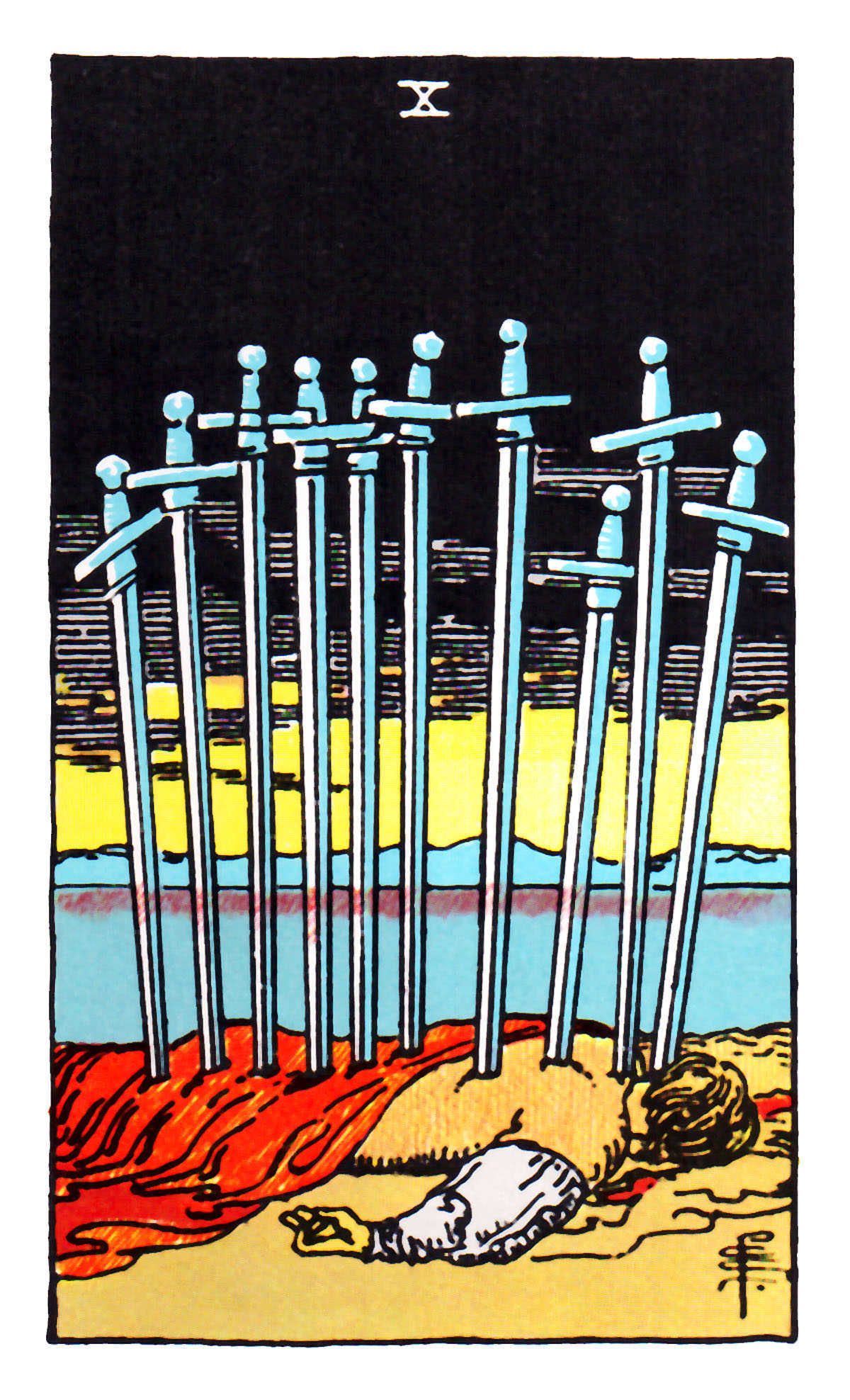
“Then you will have to stand up, fool, as that’s what I just asked you to do. Come on,” he said, and with very little effort reached down and hoisted Curufin to his feet. Now face-to-face, Curufin simply wilted forward. He entrusted himself to Tyelko, who kissed him on the lips, once, and then twice, and deeply. He put his arms around Curufin’s waist, clenching him so tight that he couldn’t move, and Curufin’s body flushed hot with desire wherever they were pressed together. To have his king’s arms around him, to be not merely invited but installed into his place, was all Curufin or anyone should have ever wanted.
There was no one more blessed than him, who would have every attention from the one most deserving, as brother, son, and husband. The fact that everyone else misunderstood meant they were less able to understand. He would never doubt again and he was so relieved. He allowed Tyelko to feel the dip of his waist with firm fingers and pet the inside of his mouth with his tongue. He considered parting his thighs for him too, but the boys were in the room. It was nowhere near the right time for them to learn that lesson.
Curufin reluctantly parted enough to say, “the children”, and since this was good sense, Tyelko grumbled his agreement. He pulled himself back, his hands clenching around Curufin’s waist.
“I will follow you anywhere,” said Curufin.
“Then follow,” said Tyelko, his grin crinkling his crescent-moon eyes. “Put yourself together, compose yourself, get the boys ready while I rouse the men. We will leave immediately and anyone who hesitates to come can stay in this crumbling pit.” He released Curufin. Without another word, without a backward glance, the true king turned his back and left to ready his men for war. The majesty, the nerve, to be dropped as soon as he was picked up made Curufin briefly weak with desire.
He collected himself. He mastered his emotions. He hurried to dress the children and gave Arasron, who was old enough to ask questions, such answers as a child deserved. Within the hour the men who were loyal to them were gathered outside the gates of Nargothrond. Neither Orodreth nor his few faithful had even risen from slumber to see that they were gone. At midnight, as the owl called, Celegorm commanded them to ride to Himring.
To Himring they would ride, and then to Angband, and then Amon Ereb, and when the day came, despite everything, that a hero did win a Silmaril from the crown of the Enemy and brought it then to the Kingdom of Doriath and her King, then they would ride once more and for the last time out and onto the road to Doriath, which they found was the road that they had always been on, and its bloody destination always clear before them, as it had been from the start. They had never taken a single step off of it. They had always been on the road to Doriath.
Epilogue: Swords into Plowshares
“Well,” Gil-Galad said, eventually, “however it fits best.”
The builder, who had been trying to convince him to make aesthetic decisions about his own palace for hours, glared down at him with a malcontent approaching genuine hatred.
Gil-Galad found making decisions about his own palace uncomfortable because he didn’t really want one. He had been leading from the longhouse for years now, since the war was over and he couldn’t lead from a tent any longer, and it had served him well. In that structure there was no confusion about who had a say: everyone, clearly. One practically couldn’t hear anything over the equality.
His unamused, dour-faced sister stood beside him, her onyx-ringed hands clutched primly before her. She said, “It would fit best if you had any vision at all for it, instead of letting stones fall as they may as the heavens pour out rain.”
Gil-Galad sighed.
Finduilas had not once been wrong about anything since she had come back, perpetually wearing black widow’s weeds, always looking like she was at death’s door, never crossing that final threshold. On the one hand, her altered state was upsetting. But on the other, he had not even hoped to see her again. He had expected that she would choose mortality along with her partner, but she had for reasons she would not divulge (except that they were fate-related) chosen to carry on instead. Once again, she had found herself on a path that no elf had ever been on before, and where that path went was known only to her.
Many assumed life was now all bitter and pale to her. Her unsmiling face might suggest that. Gil-Galad, however, recognized very well the gleam that came into her eyes when she was amused. It was there now as she made fun of him.
“I don’t care how it looks. It’s for the people. They’re the ones that want a palace.”
“Who shall you house in the master bed?”
“Oh, I don’t know. Aunt Galadriel, maybe. You can have it if you want it.”
“Shall you keep the stable for yourself, or perhaps the garden?”
“Why don’t you tell me?” he asked politely. “You know everything now.”
“Alas!” she responded, completely straight-faced. “I know one thing for certain: we are all doomed. How often this turns out to be true, though, I never can be sure.”
Gil-Galad patted her twice on her shoulder. Her eyes gleamed.
By the time Gil-Galad and Finduilas reunited, her having journeyed to the blessed continent and back and him having been taken to the pits of Angband when Nargothrond collapsed and only crawling back out to find the world at war, they had lived lifetimes without each other. The ease, the immediacy with which he had found his heart in her and her in him had been called a blessing, miraculous, or divine by people who had no idea what they were talking about. Gil-Galad had seen divine power; it rent mountains. He had also seen love, which flourished in the cat and the swan and the honey-bee, in miserable captives, in crawling things, in babes. He flattered himself that he had more of that and credited it to more good works.
“My lord,” shouted an exasperated mason from inside the structure, “have you no preference for the design on the eaves?”
“No, none, really,” Gil-Galad promised. But then the typical round of groaning was suddenly halted by Finduilas hissing and holding out her arm to the air.
There was a rustle of wings, a shadow across the sunlight. Not five seconds later, a great, brown owl landed on Finduilas’ arm, his wingspan enfolding both their heads. Finduilas lifted her arm once again and it sprang off and backwards. The owl glowed with an inner light before its wings wrapped around its body, obscuring its shape. After a moment, instead of an owl, there stood on the ground a very odd elf.
“My lord, my lady,” Elrond said, with a brief and subtle shake of his head as he fixed the disarray that flight had done to his hair.
“Dear boy,” Finduilas said, with all the unconditional (and unsmiling) fondness she had for every one of Luthien’s descendants.
“Hello Elrond,” said Gil-Galad, beaming.
He loved Elrond. He held an intensity of fondness for the perpetually honest healer, quick to lend a hand and slow to speak, that belied the short amount of time they had known each other. Elrond’s occasional transformations, entirely self-guided and done through some innate magic that Elrond himself didn’t fully understand, always made him feel like he had opened his window to see the first blooming crocuses or snowbells of spring, or spotted the first leaf gilded in the autumn. He could not explain that feeling, either, except that even around Elrond, healing, transforming, considering, he felt renewed. It made Gil-Galad think, oddly, of Elrond’s human ancestors, their quickness and changing.
“Hello Gil,” Elrond replied. “I’m here to let you know that someone is coming to challenge you for your crown.”
“Oh no,” said Gil-Galad.
“I’ll miss you,” lamented Finduilas, stone-faced.
“Thank you, dear sister.”
“You’re welcome.”
“Is it anyone we know?” Gil-Galad asked Elrond.
“I didn’t know him.”
“Did he introduce himself?”
“No. I was an owl at the time, so when he noticed me, he told me to ‘go the fuck to sleep’ and then walked on.”
“This stranger has some wisdom,” Finduilas noted.
Gil-Galad laughed. “How, then, do you know that he’s searching for me? Was he walking through the woods this way talking out loud about his plans to challenge me for my crown?”
“Not as such? I don’t know if he actually knows that you have that crown. It seemed to be the crown he was objecting to.”
“The crown?”
“Well, specifically, he was objecting to ‘them’ (I am not sure who ‘they’ are) ‘digging up some new fucking asshole to put on the throne’ to ‘give us all more grief’. He seemed to be of the opinion that there should be no ‘King of the Noldor’ whatsoever. Specifically, he said, ‘There won’t be any fucking High King of the Noldor when I get there.’”
“He’s not alone in that opinion.”
“I honestly think we’ve run our course,” Finduilas agreed.
“I think—” Gil-Galad began, but was interrupted by an ungodly noise. It came from behind them, not before. They all turned, slowly, to face the half-built palace, from whence the awful crash had come. In another moment, they heard bellowing laughter.
“Ah, Hungron,” said all three at once, and returned to their conversation.
Celegorm’s sons came with their own set of disturbances, especially awkward introductions and the difficulty of fitting the especially gigantic men (Draugron in particular) through doorways in most normal houses, but it was still well-worth having them. As if their rescue of Elrond’s uncles after they deserted the Feanorean army rather than attack Doriath wasn’t enough, as if their attempt to remove him and Elros from the Feanorean’s clutches (though failed) was not enough, as if their brave conduct in the War of Wrath and their defense of Gil-Galad not enough, they were simply fine people.
Finduilas claimed it was their animal parts. She had met very many animable animals.
“I think we should go out to meet him, then,” Gil-Galad decided. “I’d rather someone that irate not get into the town proper and cause a stir.”
“He had a very large hammer,” Elrond noted, “and seems to know how to wield it as a weapon. I presume he is a smith.”
“What kindred is he?” asked Gil-Galad, concerned.
He had seen quite a few Sindar and Avari already who were understandably upset about the ‘new High King’ business and had regretted not altering the title many times because of that. ‘King of Noldor’ was no longer a flattering title, but he certainly wasn’t going to claim to be king of all elves. For one thing, he wasn’t. For another thing, that claim would have him dead in a week. For a third thing, his beloved father’s kindred kept persistently asking for structured hierarchies of authority until they received them. ‘High King of the Noldor in Exile’ it was, unfortunately.
“Noldor.”
“Are—that sounded certain.”
Elrond opened his mouth, but seemed to fail to find a way to express how noldorin this irate hammer-swinging smith was. He just nodded instead.
“I think Curufinwe has come for you,” Finduilas said serenely.
“That’s not funny.”
He did not know how Finduilas managed to laugh when she never smiled, but she did. The same way a crow mocked without speaking, perhaps. Gil-Galad sighed and reflected on how important it was to him to build the kingdom they all deserved, where everyone was welcomed and treated as kin, and opened his mouth to tell Elrond to lead the way.
Even as he did so, however, he heard a quickly approaching crashing that told him it was far too late. The owl had been tracked; the irate man was heading toward him, and his grumbles and complaints grew closer.
He was not roaring with his anger. It was more like a sustained, unhappy rant. The hammer, as threatened, was not exactly swinging, but clunking steadily against stones and trunks as he went, clink-clank, like the tick-tock of a wound clock. Soon, Gil-Galad could pick out just enough distinct words, enough sharp consonants and lilted syllabants, that instead of trying to pick between the hilt of a sword and an open palm he instead put a hand over his mouth to hold in a stifled cry.
“I will be fucked before I let them put some power-hungry red-handed shit-for-brains bastard on the throne again. I will be fucking dead first,” came the unmistakable voice of Curufin Celebrimbor, drawing steadily closer. His speech was peppered with Khuzdul words; all curses, if Gil-Galad knew them right. “Fuck me if I even known which fucking ‘no lesser blood’ bastard they dug out of a fucking hole to put a crown on, but he’s going back in the hole if I have anything to do with it. It’s fine. ‘If you kill a killer all you’ve done is make another killer.’ Nice morals, desk-fucker, you haven’t seen the body count these bastards wrack up. No, trust me, if you kill a kinslayer, you’ve done a good deed. They’ll thank me in the Halls. ‘Thank you, heather, you notched him before he could massacre a city and finished yourself off too. Two services done to Endor this day.’ I will be literally fucked before I see some other blood-drinking hypocrite—YOU THERE!” He shouted, close enough to see that there stood three people through the trees, but not who they were. “WHO STANDS THERE?”
Gil-Galad had his hand over his mouth. He didn’t trust his voice because his throat was so tight.
Elrond answered for him. “You stand before the King of Noldor and his sister, and before him his herald.”
“Perfect,” said Celebrimbor, close enough now that they could see him striding through the leaves, with a tenacity and disregard for what brambles were doing to his person that only good liquor could provide. “Prepare yourself to see your home again,” he shouted in Quenya, assuming that his opponent spoke it as well as he did. “Move aside, herald, unless you want the same fate as him.”
“What quarrel have you with the King?” asked Elrond, one hand, not clenched, on the hilt of his sword.
“That he is a King.” Emerging from the treeline, Celebrimbor drew up his hammer with his swift approach. “If it comes to force, then it comes to force; by whatever means necessary I will assure that we are having no more Kings —FUCK,” he screamed, halting in place with his hammer above his head, ten paces back and finally close enough to see the person he was addressing.
Celebrimbor was wearing what was unmistakably dwarf-made clothing, though sized to fit him. His hair, too, was in dwarrow braids, cinched with not gold but brass beads and hair-pieces, with runes and geometric designs. There was no jewelry of his house visible on him, no signet rings, no sigil except for one eight-pointed star on his upraised hammer, and under that were the only Tengwar letters on his person, which spelled, with inelegant phrasing, ‘Anvil Use Only, Idiot.’
Gil-Galad swallowed, and mastered the tears in his throat enough to say, “Hail, cousin.”
Celebrimbor stood completely still for a moment. He dropped the hammer, nearly to the ground, but still did not speak.
“Hail,” Finduilas echoed, quietly.
“What,” whispered Celebrimbor.
“You’re alive,” said Gil-Galad.
Five or six different ugly emotions crossed each other in Celebrimbor’s face and he flushed dark. He turned around, then said, “It’s fucking Gil-Galad.” He threw the hammer on the ground, indignant. “I can’t kill Gil-Galad.”
“Tyelpe…” Gil-Galad choked, but Celebrimbor did not wait for what he was about to say.
“FINE,” he bellowed, furious, to the sky, or perhaps to someone invisible, “ONE MORE KING OF THE NOLDOR.”
Gil-Galad did cover his eyes after that, but only for a moment. Memories of the dark days could still take him by surprise, of the slow dark descent from the death of his uncle to Nargothrond’s destruction by dragon-fire, the desperate days of survival in the wilderness, until some made it finally to the Havens, and some did not, but he did not let them linger. “I’m so happy to see you,” he finally said.
“I thought you were going to be one of my line, and I was not going to hesitate,” Celebrimbor said, and turned back around to face him. “Blood and guts. You’re making me do this again? You’re making me do King and kingdom again?”
“You don’t have to.”
“Well, if I know you’re here trying to manage it by yourself, yes, I have to. Someone’s going to take your head off.”
“If it helps, I’m very bad at being King,” Gil-Galad promised. “I won’t tell anyone what to do, and they hate it.”
“The one good man left in the entire line actually succeeds. Fuck off,” Celebrimbor groaned, covered his eyes and surreptitiously wiping them dry. Then, “You were in Angband, weren’t you.”
Gil-Galad’s high collar and long sleeves hid most of the scars, but there was no hiding his clipped ears. “A short while, yes.”
“A short while. He’s being humble about his stay in Angband.”
“It was between the time of the fall of Nargothrond and the arrival of my grandfather’s army. It truly wasn’t long.”
“Why not go back with them, you lunatic? They would have taken you.”
Quietly, Gil-Galad responded, “I have no desire to see their kingdom.”
“That’s fine. It’s shit. I mean, it’s beautiful, but all the worst people I know are from there. Fuck’s sake, Tyelpe, your cousin was in Angband while you were making bracelets.”
“I should introduce Elrond, son of Elwing,” Gil-Galad said shakily.
“I don’t know who that is. I am Celebrimbor, called Curufinwe, son of Curufinwe, who was the son of Curufinwe called Feanaro; I can’t say I’m at your service, but I’m not here to kill you.”
“Oh,” said Elrond, his eyes going wide. (Celebrimbor, of course, had no idea of what was going through his mind and presumed it was an ill reaction to the threatening lineage).
“He is a descendant of Luthien Tinuviel; his father comes from the line of Nolofinwe, through Turgon, through Iridl,” Finduilas informed him.
Celebrimbor stared at her. “Well, congratulations, but how did you knock up Luthien?”
Finduilas replied, “Elwing his mother was the daughter of Dior, who was the son of Luthien and Beren.”
“He was dead, though?”
“Yes.”
Celebrimbor opened his mouth, but they were interrupted. Through the open maw of the palace, a little late, underdressed, but ready to defend Gil-Galad to the death, came three warriors, some bearing more steel in their hands than cloth on their chests. First came quick-stepping Draugron, his white hair in a single unadorned braid behind him, then rushing, laughing, red-headed Hungron, and finally, stumbling behind as he buckled a quiver to his bare chest, brown-eyed Arasron.
“For the King!” bellowed Hungron, who needed neither weapon nor provocation to charge in and was currently supplied with both.
Gil-Galad had very little time to react. As usual, he immediately decided that the best thing to do was to absorb the danger himself. Turning, he pulled a spear from his back and flipped it so that the blunt end was facing charging Hungron, the effect being nearly a parody of a boar-hunt. “No —”
Hungron, incorrigible, swerved just enough so that he could grab the end of the spear as he ran. Yanking it, he turned Gil-Galad on his heel. Hungron laughed and jumped back, letting him go, watching him regain his balance. “Got you! What’s all the shouting? We thought one of the builders had lost their patience with you and started throwing rocks again.”
“Who’s he?” asked Draugron, voice light, curious. He had gone far quickly and now stood holding the blunt of a blade before him, half-pointed at Celebrimbor’s face. His lupine eyes, slit in the sunlight, stared him down.
“Put it away, Draug—Hello, Rarro—nothing’s wrong, all of you, put your weapons away.”
Celebrimbor was not looking at the incredibly large, white-haired man looming above him. His eyes had gone past and were fixed now at the uncomfortably shifting shirtless man who was now awkwardly fixing his black braids. His brown eyes, which looked odd in a way that was hard to catch at first glance, were looking low, maybe at Gil-Galad’s legs, or maybe at Elrond’s feet, just past him.
“Sorry,” Arasron fussed, “Sorry, alright. Seriously, both of you.”
“Come on, Rarre. We’re defending the King here.”
“Rarro,” Draugron complained, “the blood debt. ”
Holding one hand up, the other still adjusting a braid, Arasron sighed, “Yes, yes, the blood debt—”
“No,” interrupted Gil-Galad, physically putting a hand on both Hungron and Arasron’s shoulders. “No blood debt. There is no blood debt.”
“Gil-Galad, we would never—”
“Stop telling people that there is a blood debt.”
“Gil-Galad is very gracious about the blood debt,” Draugron informed Celebrimbor, “which was incurred when our mother killed his father.” Just as before, his voice, which one might expect to be as great and powerful as his frame, was so quiet and understated that it had to be an intentional choice. He stopped speaking and tilted his head when he saw that the unknown Noldo still wasn’t looking at him but instead was fixed on his elder brother.
“Especially before I’ve even had a chance to introduce you, thought that is going to be—” Gil-Galad paused, his eyes drifting to Celebrimbor. “...Odd.”
Celebrimbor lifted a hand to his face.
Finduilas, who had been serenely watching the proceedings, began to walk over to Celebrimbor. Elrond, who had put the pieces together silently, stepped back. Arasron, who had a sharp intuition when his anxiety was not confounding it, finally looked away from Gil-Galad and to Celebrimbor. A blank, open-eyed, mask-like look came over his face.
“Tyelpe,” said Gil-Galad.
“I,” said Celebrimbor, and then he started crying. All the effort he and Gil-Galad had put into not dissolving into tears upon seeing each other was wasted in a syllable.
“This—well, I think you know, but, this is…” Gil-Galad began, and then covered his face with his own hand.
Hungron was understandably startled. “Gil,” he said, closely approaching him.
Gil-Galad cleared his throat and tried again, but his voice was still riven through. “These are the sons of Celegorm and Curufin, the sons—of—”
Finduilas reached Celebrimbor. She took Draugron’s sword from him, which he fought not at all. With her unshakable, emotionless voice, she continued, “The sons of Celegorm and Curufin, the sons of Feanor the Dispossessed; the eldest called Arasron, the second Hungron, and the youngest Draugron. You already know the circumstances of their birth, so it does not need explained. Should I introduce you as well? Come on, now,” she sighed, and herself tried to wipe the oncoming tears from Celebrimbor’s face. “My lords.”
“Sh,” Celebrimbor began, and swallowed. “Oh, shut up. Lords, lords; men, men of the Noldor, princes, lords, Kings, shut up. I never want to hear it again. I thought a few centuries would be a long enough break from it all that I could take it again, but why I would think that—Damn,” he complained, as his tears made it too hard for him to speak again.
“It was meant in jest,” said Finduilas.
“Let him cry, Faele,” said Gil-Galad, himself gently pushing Hungron away. “Let me as well. I’ll try to explain; it’s been a very long time, since…”
“I was told everyone died,” interrupted Celebrimbor, voice thick. “I was told the family took them to their deaths too, in Doriath.”
“They deserted. They ran away. They didn’t want to be found, so, some rumors…”
“Gil-Galad.”
“You would have been so proud—they were told to join the assault on Doriath but they refused; they were put in irons for it, at their own mother’s command. They all agreed to run away rather than fight. They released all of the other captives. They rescued Luthien’s grandsons, who had been left for dead, and ran away with them. You would have been…”
“Gil, don’t tell everyone that I’m a deserter,” asked Hungron. “Also, quit crying, or I’m going to cry too—”
“And you should be proud of yourself,” Gil-Galad informed him, making Hungron flush and turn away, “Like I’ve told you a hundred times.”
“Gil-Galad,” whispered Arasron.
“I know, I know. I’m—Faele, maybe you should.”
Finduilas opened her mouth, but Celebrimbor shakily clasped her shoulder. “I’ll do it myself.”
“Are you alright?” asked Draugron, hesitant. His pupils had dilated to dog-like softness. He had, of course, never met this man in his life, but all the same he seemed concerned for Celebrimbor’s well-being, as though that were the most natural thing. “You don’t have to…”
“I do. There’s—you never fucking know, do you? This is so unfair. This is as monumentally unfair as everything else that has led up to this moment, except that it is good. Don’t think that means I’m fine with the rest of it now,” he threatened, though it was unclear who he was threatening. “What I know about this world is that it is so unfair, and it doesn’t care who you are when it rips people from you; sometimes, I suppose, it doesn’t care who you are when it gives them back.
“I am Curufin Celebrimbor, the eldest son of Curufin Atarinke, born in Tirion to his first-wed wife. I don’t know if you already knew that I existed or if I was omitted from your education.”
As Celebrimbor paused to swallow his tears and breathe, Finduilas said, “Your father did not ever mention you to them, as you suspected. I believe one of your uncles first told them something about you, but Gil-Galad informed them properly.”
“Thank you, Faele.” Addressing his brothers again, he said, “I want to say I’m sorry, for everything. For how I’m sure you were treated. For not being there. For leaving. I’m sorry I left you.”
“...It wasn’t all bad,” said Draugron, standing nearby, still and uncertain. “We’ve… I’ve always felt very fortunate, actually, in life. There have been bad times, but there are such wonderful people… are you really?...”
“He looks like him,” Hungron said, leaning forward, “in a way. I’m supposed to have met you, if you are who you say you are, but I don’t remember it. I don’t even remember Nargothrond, though everyone tells me I was there when I was a baby. I tend to just let things go. Rarre remembers—Rarre?”
When he said nothing in response, Hungron looked to Arasron; everyone did. But Arasron was silent, open-eyed, still as a doe caught in a moonbeam. Everything that the man who looked like his father said made him feel a strange, painful, deep feeling, a rattling that rattled again with every syllable, the mere sound of his voice, as if he were trying again and again to fit a key he had just found into the lock of a trunk he had buried inside himself years and years ago. He had not thought it could ever be opened again. He hadn’t looked at it in years.
There was a little room he could remember, though only in flashes, the memories cut into pieces by the sharpness of things which happened later; a little playmate, an unkind nurse, a woven rug, a silver set of toys. There was a man who read him stories from a book with gold letters and his voice had sounded just like this. Gil-Galad had told him that that was his brother; Gil-Galad had told him so many times that he was so much like his brother. Arasron had never had the heart to tell Gil-Galad that he could remember Gil-Galad in Nargothrond, he could remember his mother and father, his nurse, the cooks, even King Orodreth and Queen Nauraith, but as a child, pushed by a pain that itself he could only barely remember, he had boxed up the memories of his brother and locked them away. He had always felt ungrateful and hateful for doing it.
The chest rattled, and rattled, and opened. Life was unfair again, incredibly; the memories were just where he left them, all of them, untouched, unblemished, even though he had neglected them for so long.
“I know,” he said. “I know you didn’t want to leave me. You told me so.”
Epilogue in Heaven
Like a bed of pistil and stamen inside the thousand furled petals of a peony, the very center of the labyrinth held a small round room, lavish with feather-stuffed cushions, silk and crushed velvet, shaded lamps and a steaming samovar. A spark suddenly lit in the suspended pendant of a room; Orome lighting a cone of incense with the touch of his hand before setting it in a small brazen cage to spill smoke out of its mazing enclosure. A fiery waft of musk slowly filled the room.
“That’s more like it,” spake Orome. “As I have said before, they still live on the fallen continent and I think it will be a long time yet before they leave it. They flourish and they have won much fame for themselves. I am not supposed to tell you any specifics. Stop tempting me. No one is ready to see you yet. Forgiveness is an awful thing to rush, which I hope you have learned.
“You seem comfortable. I wasn’t sure, at first, but you do seem to prefer that form. In the end it is better for you. I’ll introduce you to some others once I know you’re ready. You are still too quick to take offense to a slight, even after everything. It is who you are. Some people are hard people to be.
“It makes me wonder about The One, sometimes. It’s not only that They make such difficult people, it’s that They truly seem truly more fond of those difficult ones than the simple ones, seeing how generous They are with allowances for the cruel and how stingy with retribution for the meek.
“I suppose I understand that well enough, now that I say it that way.
“The ritual silence is sweet, but it isn’t necessary. You can talk if you’d like to. But you don’t have to. You can take as much time as you like before you’re ready to talk.
“I think this form is more comfortable for you. I cannot cut out your elven mind entirely. I’m sorry. That is something the One has made impossible. I will continue to dull it for you, like you asked. It is far from where you are now. You shouldn’t be having many worries, or any pain, or confusion.
“Are you—you are falling asleep already. I’m glad you’re comfortable. No one will come here, don’t worry about that. The labyrinth walls will lead anyone I do not permit inside astray.
“I was against growing the walls at first, but I have to admit now how useful they are. You’d see so many meddlers coming through otherwise. You wouldn’t believe the trouble I’ve had about you, precious creature.
“How sweet. Sleep. No need to worry about your dreams. I’ll weave you a dream about chasing rabbits through the golden fields and I’ll be back when you awake. Shh.
“No. None of that. What do you have those nightmares about? You shouldn’t be having any. I don’t know anyone who can even lay a curse like that. I’ll fix it, once I figure it out. But sleep for now.”
When Orome left, the exit to the room at the center of the labyrinth vanished behind him. There was no other exit. A labyrinth has only one path.
A man in a maze, of course, can make many choices, sometimes futile, often leading him nowhere, often false from the start, but choices nonetheless. A man in a labyrinth knows he has only one way to go, and no roads which lead anywhere but there. He only knows this, of course, if he has seen the labyrinth from above. Otherwise he thinks only that he is on the path, going forward, to arrive after years of walking somewhere new. But the labyrinth of heaven begins in heaven and ends in heaven, its turns leading to one point of perfection, one eternal home, one final convergence, and no other fate, not for man nor animal, nor divinity, nor mortal nor immortal. The man who knows he walks the labyrinth of heaven, and walks it in faith, will return as promised to his Lord. No matter what.
The smoke of incense filled the room, lingering for hours after the spark died out. The she-wolf did not dream of rabbits. She dreamed of pups.
—
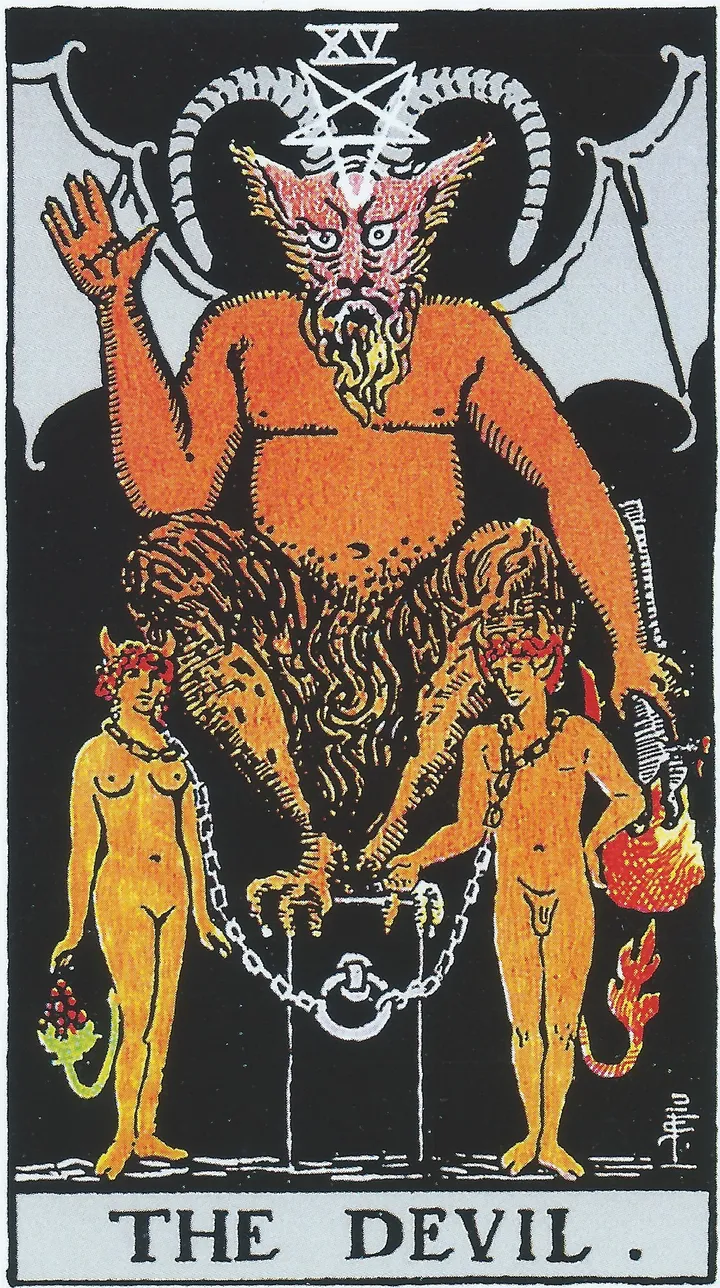
Orome came out of the labyrinth and saw that he had walked right up to the end of things, which stood like a wall before him. He was like a man at the very edge of a stage, as far as he could go without teetering forward into the darkened pit beyond the stage-lights. He gazed forward, and addressed it.
“What, me, for a final word?” he asked. “It’s not inappropriate. From a word was all things made; a word followed a word. A divine final word is traditional, appropriate here and eventually inevitable. The mortal men have said their parts, meandering and false, and a true and perfect couplet is asked to cap it, issued by highest authority.
“Should I descend from the clouds, dispense justice, straighten out guilt and innocence? But I did so already. I came out of the machine and adjusted its creation to my design. I had it straightened out, laid flat. The Good King reigns, the wronged maidens are vindicated, the villains consigned to silence and shame. We are now so far past that part that I can’t imagine what word would encompass it all, round and cinch it, and hang it all like a locket on dove-white neck, made sense and shut tight.”
That with which he conversed was not a speaking sort of thing, so there was no response. With an air of rehearsal, Orome considered it, as though looking into a mirror, adjusting a costume.
What was the role, what the part? In aspect, does a Vala act? In action, in adjusting thought into form, do they dissemble? Does the division of fullness into bodies pierce or divide them, make them less than what they were when left in concept? Does intercession reduce them? Could he be Orome still while so divided, cut up for a role, portrayable, observed? Or would the audience decide, with great relief, that it was not really him , that such Good Spirits, as we know, are too pure to take such base actions, that it could only be an actor, and a poor one, that stood above them. That the lights will come on, any minute, very soon now, and with their brightness they will sear through all deception and we will finally see what was really there all along.
“This is about convention, so I will be conventional,” he decided. “The Good King reigned for three thousand years. All his people loved him, and all were happy. The maiden was returned to her true love. Those villains were never heard from again. From high above on his cloud-shrouded throne the King of Heaven watched and he saw that all was well.
“All has gone according to the divine plan, without deviance, and all has turned right in the end. From my height I saw it all and did what needed to be done to set all things straight. Keep this glimpse of the heavens with you as you descend again into the mortal world of foul airs and filthy ground, that even from your low perspective you may see things for what they truly are, as I do.”
He bowed, thought there was nothing at all there that a great Vala needed to bow to. There was only the wilds of the woods outside, the calls of birds, the green undergrowth going on and on until it swallowed sight. And beyond that fields, and beyond that wastelands, and beyond that the dark waters of the sea of night, and the edge of the world, the black boundary of all things, the absolute, implacable end, frozen in space, looming in time, a fact as slow as a glacier that everything, everyone in The One’s world, from blessed ones from blades of grass, would find themselves beyond the end of things some day, unmade.
Notes
These notes are internal links; after reading the note, hit the back button once to return to your place in the text.
—
1: Here and elsewhere I reference content found not in The Silmarillion but in Laws and Customs among the Eldar, another posthumously-published work of Tolkien's that Silm fans have a complicated relationship with. As the content in LaCE is not printed in the Silm it is my opinion that Silm-based fiction does not have to contain or reference material in LaCE whatsoever, but I am intrigued by much of it and like to play with it in Silm-based fiction. The sections from LaCE I include in this work are its claims that Eldar (elves in Tolkien's works) can only marry once, and that death does not dissolve these marriages, as their souls are as melded as their bodies. LaCE directly states that intercourse causes marriage immediately: "It was the act of bodily union that achieved marriage". (I reccomend this essay by Ansereg for some quick and dirty details for anyone who doesn't want to buy another book.) Therefore, should two elves have sex, they become immediately, permanently married in both body and soul, a bond that even death does not dissolve. The implications of this are extreme in any circumstance, and how to apply them to some of the only known cases of sexual violence just confounds me. Much of how I write Celegorm here stems from me trying to decide how a person even becomes a rapist (Celegorm threatens to rape Luthien in the Silm; in light of LaCE, his threat to force Luthien's father to give her to him in marriage against her will is unquestionably a threat of rape) in a setting where they commit that violence with an understanding that it comes with an undissolvable bond of the soul.
—
2: Finduilas, the daughter of Orodreth, took a surprisingly pivotal role in this story because of one line in MfM. I mapped certain Silm characters to characters in MfM: Curufin plays the part of Gwydion (albeit badly), Celegorm Gilfaethwy (spitefully), and Luthien Goewin. A line in MfM mentions that maiden Goewin has other maidens with her, presumably attendants or servants. I wanted to give Luthien a similar attendant and realized Finduilas was the best for the role. Finduilas' role in The Silmarillion is itself complex and tragic, which compelled me to flesh out this unnamed attendant now that she had such a significant inspiration.
—
3: Gil-Galad, famously, has a confused paternity. Since he becomes the Noldoran, the High King of the Noldor in Exile, it is assumed he is from King Finwe's line somehow. None of the works published in Tolkien's lifetime makes a claim of who his father was and subsequent publications claim both Fingon and Orodreth. It seems Tolkien changes his mind about Gil's father over time as he changes his mind about how the kingship passes on. Fans enjoy making up their own theories about where Gil-Galad came from; for the purposes of this fanfiction, I chose to make him Orodreth's son and Finduilas' twin (the fact that Finduilas is Orodreth's daughter is Silmarillion canon as published). Since Orodreth's wife is never mentioned, fan authors have free reign in inventing her if they like. I chose to make her a Sinda woman from the north named Nauraith, whose name comes from two Sindarin words meaning 'fire' (naur) and 'spearhead' (naith). She grow up in the Tol Sirion area and Orodreth met her after he claimed and colonized it. I made this choice largely becauuseI had thematic reasons for wanting Gil-Galad and Finduilas to be half-Sinda, half-Noldo.
—
4: While there are plenty of dragons in Tolkien's work, this dragon, called 'The Bitch', is my invention. I will reproduce my original note about her from the AO3 version here:
Say hello to my best friend and the coolest OC I have ever made. She is a dragon and her name is The Bitch. Well, Sauron didn’t give her a name, so that’s just what everyone calls her. She is 300 years old and has 1,000 children. Make babies is her job and the good ones get sent away to kill elves. She is very big and her charm point is having the most limbs out of everyone. She hates you and wants to eat you. She is not from canon though if you wanted you could pretend she was there all along. It’s honestly so incredibly rude that they forgot she was in the tower when everyone else ran away. Some people are going to feel bad about killing all her little babies later, but honestly, what were they supposed to do?
Most readers declined to call her by her given name ('The Bitch'). One renamed her Erica, which I found rather charming. I still do think of her as 'Erica' sometimes, actually.
I mentioned in the comments that one of my subtle implications here was that the father of these dragons was Sauron himself, though I didn't go out of my way to make that explicit in the text. Glaurung and Smaug both prove that Tolkien's dragons are sapient creatures, with thought and speech and magic; they cannot be simply animal, then. Morgoth is able to 'pervert' pre-existing beings to make his own, though he cannot create; orcs are debatably 'perverted' elves. Like Balrogs, it is most likely that dragons started as maiar or have maiarin heritage, though since they reproduce physically it is unlikely they are just maiar (early versions of the Silm have children born to Ainur, but later have none, with theimplication it's not possible). My solution is to make dragons half-maiar, coming from Sauron specifically, and half... well, animal. As Luthien proves, half-maia is a formidable thing to be.
There are other theories for where dragons came from within the bounds of Morogth and his servants being unable to create whole-cloth but able to adjust and reform. The reason I chose something so uncomfortable, the breeding of maia and animal, is a thematic choice that ties into other themes in the work about parentage, nature vs. nurture, the lines between human/animal and human/inhuman (and human/divine), and the nature of selfhood.
—
5: The title ‘Prologue in Heaven’ is a reference to Johann Wolfgang von Goethe’s ‘Faust’, a drama with (among many other things) two prologues, the “Prologue in the Theatre” and the “Prologue in Heaven.” The “Theatre” prologue sets the artistic context of the play, and the “Heaven” prologue, which literally takes place in heaven, sets the theological context of the play. (Faust’s Heavenly Prologue purposefully resuses the set-up of the biblical book of Job, in which God gives a silver-tongued demon the right to tempt and torture a human who He believes will faithfully withstand the torture.) ‘Prologue’ is also being used literally here; this section takes place temporally before anything else in this story and in theory should have been placed before them. But, as you can plainly see, that would have ruined everything.
—
6: On Osanwe and Apacenye/Foresight: While often treated as so in fanworks, osanwe is not strictly canon to the Silmarillion. Characters, especially powerful ones, can have their thoughts 'go out' to others in a way that sometimes has an effect on the world, but this power is never called by a name or explicitely stated to be a power at all. Osanwe is explained in later writing (specifically the essay 'Osanwe-Kenta', which can be found online if one is determined), and saying it is absolutely not canon to the Silm is also questionable as the book contains passages like "Felagund discovered also that he could read in the minds of Men such thoughts as they wished to reveal in speech" or "[Maeglin's] thought could read the secrets of hearts beyond the mist of words", and because Osanwe-Kenta describes Morgoth's actions in the Silm in terms of osanwe. In the Return of the King we see Gandalf potentially send a thought phrased in words to Frodo; I will let you know if I think of an example of anyone actually using osanwe for casual telepathy in Tolkien's published works, but at the moment, I can't think of it.
I, too, write osanwe for casual telepathy often in fanworks, more casually than Osanwe-Kenta implies I should. I do try to always imply it is intense and risky, since the truth comes out too easily; I admit there is some influence of Elfquest's 'sending' on my personal use of osanwe. By the book(s), using this power to speak inside someone else's mind is rare. Osanwe-Kenta specifies that the three elements that may make using osanwe for telepathy easy/possible are 1. affinity/kinship, 2. urgency/desperation, and 3. authority, which is what villains typically depend on to impress their minds on others. Finrod above is discovering joyful affinity; Maeglin, I believe, is a hypervigilant abuse survivor who learned to live on constant urgency and has unlocked powerful but dangerous osanwe that way, but that's me theorizing. Here, Luthien and Finduilas are, like Finrod, exploring a sudden but heartfelt affinity, and due to her nature as half-maia, Luthien has some authority she is using loosely but with permission.
Foresight (called 'apacenye' in Morgoth's Ring, literally after-seeing, that is, seeing after the present; for some discussion of elven conceptions of time, I like Strack's discussion of 'epe' and 'no') is unambiguously part of the Silmarillion. This one I do not need to prove; maiar, valar, and eldar all correctly predict the future several times in the text. What I am doing here that is off the beaten path is implying someone can expand their foresight abilities with the assistance of a teacher transmitting ability into them, but even that isn't that much of a stretch as Tolkien will casually let study or contemplation increase ability in his works. Finduilas is just more of a... ah... hands-on learner.
Another word found in the milleu stew of osanwe and apacenye, by the by, is tercenye—through-sight, or insight. Tercenye is discussed in the context of mothers giving prophetic names to their children (their amilessi). I think it would be rather taking from the power here to try to litigate what abilities are osanwe, what are tercenye or apacenye, or if we should be using these terms for powers of elven open-mindedness at all; my point is despite what some say they do all exist in the corpus and have a wide range of potential, though Tolkien tends to write characters that are judiciously sparing in thir personal use of them.
—
7: The Robber Bridgeroom, Grimm Tale number 40, is a fairy tale that comes in many variant forms. The version I recall from my childhood was, as many of them are, quite similar to Bluebeard. In sum, a woman is married to a widower who has been married several times before. She is warned away from a certain room and finds the bodies of the previous wives chopped up in that room. She typically uses the bodies in some way to bring the murderer to justice and attain her freedom and single status again. Like many of the things I reference in this story, my reference to the robber bridegroom is not an exact 1:1 comparison; it is part of the mixture, a background track with similarities, but not perfectlt straight parallels.
—
8: "...thy rod and thy staff shall comfort me." (Psalm 23)
Though there are many named weapons in the Silmarillion, and swords in particular, but great smith Feanor's sword has no name and the book says nothing about what happens to it after his death. Perhaps it just melted in his spontaneous pyre. The choice to have Feanor's sword live on without him, a particularily unhappy ghost, was mine. Blackening it contrasts it to the white weapons of Valar that have been mentioned a few times, though the comparison does not mean here that they are opposites. The destructive fire, I assume, brings Feanor's death to mind; it has comparisons also in dragons, the weapons of the Balrogs that killed him, and the Battle of Sudden Flame that drove so many of these characters away from their homes.
—
9: It is time to talk just a little about the events of Math fab Mathonwy.
This punishment is not my invention. It is word-by-word what is done in MfM; in fact, this is the first time I have had a character quote MfM exactly. Other characters can paraphrase or approximate lines from the Mabinogion, but only Orome is permitted to recite it, reaeching out of narrative bounds as he does. Compare Orome's dialogue (in divine italics) above to this from MfM:
Then he took his magic wand and struck Gilfaethwy, turning him into a sizable hind. He seized the Gwydion quickly - and though he would have liked to escape, he was not able. He was struck with the same magic wand, turning him into a stag.
“Since you have been in league together, I will make you fare together and be mated. You will have the same nature as the beasts whose shapes you are in; and during this time, they will have offspring - so you will have them too. A year from today, come to me here.”
The punishment as I wrote it is taken directly from the medieval source material and frankly it is the reason why I felt so compelled to write this story. The unknown author of the Mabinogion, circa 1150, sat down and, with I assume an amount of self-confidence that barely fit inside the kingdom of Gwynedd, wrote about a pair of (male, sibling) rapists being punished by being turned into a mated stag and doe to go have a child together and see how they like it.
This idiosyncratic nightmare has been disturbing casual readers and scholars alike for as long as we've had records of modern readership. Older editions censored or altered it, even serious scholars have to drop their academic tone just to express disgust for the material. Parker notes that part of the motivation for this extreme punishment might have actually been engagement in theological debates at that time about magic and the ability to transform another against their will and nature. I have seen it argued that the people of Gwynedd (Gwydion, Gilvaethwy, Arianrhod, and Math) were purposefully othered and written as both more sexually risque and more magical in MfM because the author was most likely writing from a different Welsh kingdom in which Gwynedd, with its lingering matriarchy, was sterotyped as backwards. I now can't find the article with that claim—I'll link it when/if I do. Sheehan also argues it comes from a matriarcal context that feels foreign to us, and part of the punishment is Math strictly imposing patriarchal rule over female, animal wildness with magic rod.
(As brief digression, Orome/Orodreth's weapon here is a magic wand largely because Math's tool for casting this curse in MfM is a magic wand. I have seen it argued there is deliberate phallic imagery in the use of this wand, and its later use in revealing Arianrhod's secret pregnancy is strong evidence for that case. For my purposes, the tool is simultaneously a fey lord's magic wand, a king's royal sceptre, and a weaver's shining needle. Recall Celegorm's discussion in chapter two of shining tools that could hurt maiar by unweaving them.)
It is perhaps a little harder for a scholar to say that Math's punishment has immense appeal as the only fictional punishment for rape I have ever seen that feels like enough. It should be mentioned that in the original tale, both brothers rape the maiden; the lovesick one first, then his helper, utterly shattering the narrative claim that any of this was about 'love'. They both rape her and then flee the kingdom, leaving her behind. The stunning medieval strangeness of the punishment, to force the rapists into violation of each other, is, I believe, the only time I've seen a 'punishment' for rape and said 'yes, that's enough. They might actually come out of that understanding what they did.' My less-scholary but, I believe, sound addition to the centuries-old untangling of Math's punishment is that we may simply be reading the work of an author who intimately understood the crime they were writing about.
I hope writing it helped them feel a little lighter.
Because I was using LaCE elements in my depiction of eldarin sexuality, Curufin, who is married, was literally unable to rape Luthien. I found a way to implicate him in the crime so that the punishment could apply to him as well without breaking my worldbuilding; don't worry, his half-participation in the crime will come up again and continue to be taken seriously.
Before I move on, I will take one more moment to bask in the strangeness of this story. It is so weird to modern audiences it feels alien, but was pinned by a human hand nonethless. I love the moment of peering back through history and not understnading what I see at all.
—
10: For all three animals, I chose species that would have been familiar to the Welsh Medieval author of the Mabinogion; first the red deer, then the wild boar, then the common wolf, all in their European varieties. In the world in which they lived, all three could be found on the British isles, though the time they would hunt both boar and wolf out of existence wasn't far away. The goal was to choose the exact species I believe MfM meant to indicate.
—
11: It is also in the original text of MfM that, in the course of their punishment, the brothers switch genders back and forth. Translators have an infamously hard time making this easy to parse, since the original does not refer to the two with their human names/identities for as long as they are animals, enforcing the totality of the change. To keep it easy in this story, just remember that in any ‘animal’ section, marked by the millefleur background, the POV character is always the beast formerly known as Celegorm, regardless of gender.
—
12: ADD NOTE: Names
—
13: MfM does actually specify that the second child, Hychdwn, has red hair, though it doesn’t specify hair color for the other two. I assume the author thought giving him red boar hair was visually appealing. From this one detail I have loaded up all three of them with animal characteristics and thematic coloring. If one gets that throw-back red Mahtan hair, then obviously, it makes sense to give one (the deer) that Finwe black, and the last one (the wolf) will get the white Miriel hair, which I also, following a fandom convention, wrote Celegorm having.
—
14: Something else that critics really seem tohate about ‘the punishment’ in MfM is that the narrative clearly considers it correct and sufficient. After this point, the matter is closed. There is no further mention, no (textual) lasting effects. The three sons, who we are told will become heroes, are not mentioned again; neither is Gilfaethwy, the younger brother, who promptly disappears from the narrative. (I imagine him mothering the children, at home, and who knows what he thinks, or how he feels.) Gwydion, however, returns to being Math’s court magician, sister-son, friend, and confidant; he is debatably the protagonist of the rest of the tale, raising his own sister-son, bickering with his sister, casting enchantments and playing tricks. His last act of the narrative—listen to this shit—is to turn his nephew’s unfaithful and homicidal wife into an owl for the rest of her life, informing her as he does so that it is ‘a fate worse than death’ and that is a direct quote. He would know, but other than that 'worse than death', he does not say.
After this, I am not following the plot of MfM. Consider this the point where we split from Mabinogion plot points and are instead focused on the characters as they have been set up. So, if anyone was reading along, the rest of MfM is about something completely different, and won’t be referenced with any more than an easter egg or two.
—
15: Part three of this story was always intended to be one grotesquely large and unwieldy chapter. The chapter is named 'Noldor'; a species name, just like the three chapters preceeding it. While I was uploading it onto AO3, however, I split it into three parts to make it easier to manage (and because it does follow a three-part structure as well, though more subtly than the last part.) They were subtitled 'Eight of Swords', 'Nine of Swords', and 'Ten of Swords', 8S, 9S, and 10S for short. I will insert the titular tarot cards into the places where those subchapters began and ended here.
—
16: I regret to say I cannot find and no longer recall where I read the sentence that has had perhaps the single strongest influence on my thoughts in this entire chapter. I believe that the context was settler colonialism forcing strict gender roles on colonized peoples that previously had fewer gender divisions and/or functional acceptance of genderfluid people. The sentence was this:
Disgust of the body is the root of fascism.
This phenomenal sentence altered my understanding of the world. The author, I recall, went on to explain: being disgusted by or ashamed of the body is the first impulse that leads to the repression of self and then others. Childish squeamishness about adult bodies, about genitalia, about sexuality is one of the original seeds that grow the choking weeds of a society with gender inequality and heterosexism, literally too afraid of discussing differences, of being laughed at for having curiosity or showing acceptance, to allow them to be equal. Colonial projects, empires, cultural genocide all begin with unexamined disgust at color, at the queer, the disabled, at physical differences, and the best way to cut these fascist impulses off the root is to teach that there is nothing disgusting about the body, nothing disgusting about different bodies, and that disgust should be examined, and squeamishness questioned instead of subserviently obeyed.
In a comment on the original work, I went into an unnecessary amount of detail about this moment; Celegorm’s final transformation, the literal regression to his most base and default form with no more introspection or deviation allowed. I will reproduce a small amount of it here to lay down the bare train of thought:
What I was putting down, and which you do not have to pick up if you do not want to, is that the exilic Noldor are a colonial empire; they move from their homeland to one already populated with other people, take it over, install a strict hierarchy that did not exist in the societies that lived there before, and then turn that land into a warzone. In this fic, I take two guys who are absolutely in the thick of it, the most privileged Noldor of them all, and use them to ask questions about responsibility. I always thought the attempted rape of Luthien was the point in the Silm where the tensions of racism and imperialism are the clearest. A Noldor prince, crouching like a spider in the kingdom he already attempted to overthrow once, attempts to capture and rape a Sindar princess, with selfish motives in mind.
Celegorm’s gender struggles are (in my mind) irrevocably connected with how he is struggling with his ethnicity, species, and culture as well. There is a reason he often mentions man (gender), elf (species), prince (social status), and Noldo (culture) all at once... Here, Celegorm’s punishment/blessing was forcing him to be none of the things which he is so proud of. Those three years were radically different experiences... Celegorm saw that he didn’t have to be any of those things he was so proud of being, that they may not be the things he wanted to be, that he may not even understand what they are. For a few years afterwards he drifts, not certain what he really wants to be, but suspecting that he liked being a she-wolf the most. However, the tensions of life around him... all insist he should want to be a man and an elf again, not this other thing he secretly feels he does want.
On top of all that is the religious dimension where Celegorm derives further identity, belonging, and validation from being a major figure in the state-approved religion. Being a ’priest’ of this religion appears to have been where he got a sense of belonging and validation before in canon, and I have intensified that for this fic. After being an animal, in almost every way, Celegorm is trying to break free from the things he was forced to be (elf, man, noldo, prince, conquerer) and be something more natural instead, but all of those efforts are for nothing because he CANNOT break free from being Orome’s servant. The ties bind too tight. Psychologically, he couldn’t do it. On the surface, he would never, he doesn’t want to. Deep inside, he fears what Orome could do to him if he did.
Celegorm’s final transformation, though he didn’t realize this, was a moment of incredible ability; he did what previously only a Vala could do. He chose a gender, species, and identity for himself. However, it could be argued that he only managed it because he ran back to the default, rejecting all change, all growth, all possibility, because there was one final tie in the knotted fascist rope of correct gender/correct sexuality/correct class/correct race/correct hierarchy that he just could not shatter—correct religion. And that’s one reason conservative/state-approved religion keeps becoming a fucking fascist snakepit, it’s so damn good at keeping people fascist.
In light of this, I would love for the reader to note that there is one more animal transformation in the first epilogue. It isn’t discussed; it’s presented as an interesting detail. It is a very different transformation, however, than the rest of them here.
Amends
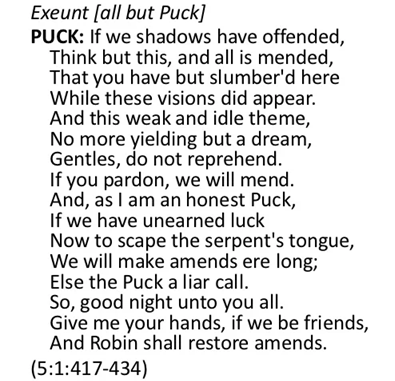
Bibliography
Currently in unedited form from original fanfiction; will be improved.
Parker, Will. https://mabinogi.net/ This is the translation of the Mabinogion I am using in writing this. It’s online, it’s free, it has every sign of being faithful to the original language. Parker’s thorough notes also informed some of my creative choices here, especially his notes on translation.
Parker, Will. https://www.mabinogion.info/ Parker’s website where he goes more in-depth into the context of the Mabinogion and the world in which it was written. He links a bunch of mini-essays from his book on the subject that are each individually enlightening.
Rider-Bizerra, Sebastian, writing for the Camelot Project. This is a history of english-language translations of the Mabinogion. It won’t help you understand this fic so much as it will help you understand a. The history of the thing itself (if you are interested) and b. Why I personally love it so much.
Sheenan, Sarah. Matrilineal Subjects: Ambiguity, Bodies, and Metamorphosis in the Fourth Branch of the Mabinogi. ( on JSTOR, you can sign up for a free account and read it online.) The essay that best informs what I have written here. HIGHLY recommended. It also contains the passage from which I took a title:
"The refusal to identify the transformed brothers complicates our assessment of the transgressiveness of their copulation. The sexual act preformed by the transformed brothers is both simple and natural—two animals of opposite sexes mate and produce offspring—and illegible, monstrous: two human siblings of the same sex (but magically in the form of animals of opposite sexes) copulate and produce animal offspring. Can there be a name for this act?"
Welsh, Andrew. Doubling and Incest in the Mabinogi. (on JSTOR). Welsh digs into the themes he sees in the Mabinogion as a whole. Welsh writes my favorite broad discussion of the canon incest in Math though he get a little too Jungian for my taste in his conclusions.
Zeiser, Sarah E. Performing a Literary Paternity Test: "Bonedd yr Arwyr" and the Fourth Branch of the "Mabinogi" ( on JSTOR ). This essay is technically about straightening out the family lines in MfM based on other contemporary Welsh texts, which the author believes all once belonged to a folklore canon now mostly lost. However, the author spends a LOT of her time firmly disagreeing about other academic's MfM Incest Ships and instead suggesting her own MfM Incest Ship (which has more citations than theirs), and how could I not recommend that? It does have less to do with the content of this fic than some others, but it is a shining example of how oddly 'the punishment' is treated in scholarship. This essay is literally about incest in MfM and YET the author relegates the actual obvious canon incestual relationship (it's Gwydion and Gilfaethwy) to brief and awkward footnotes.